
 Available in US
Content
Golf Doesn’t Sleep for Four Hours — Neither Should Your Bets
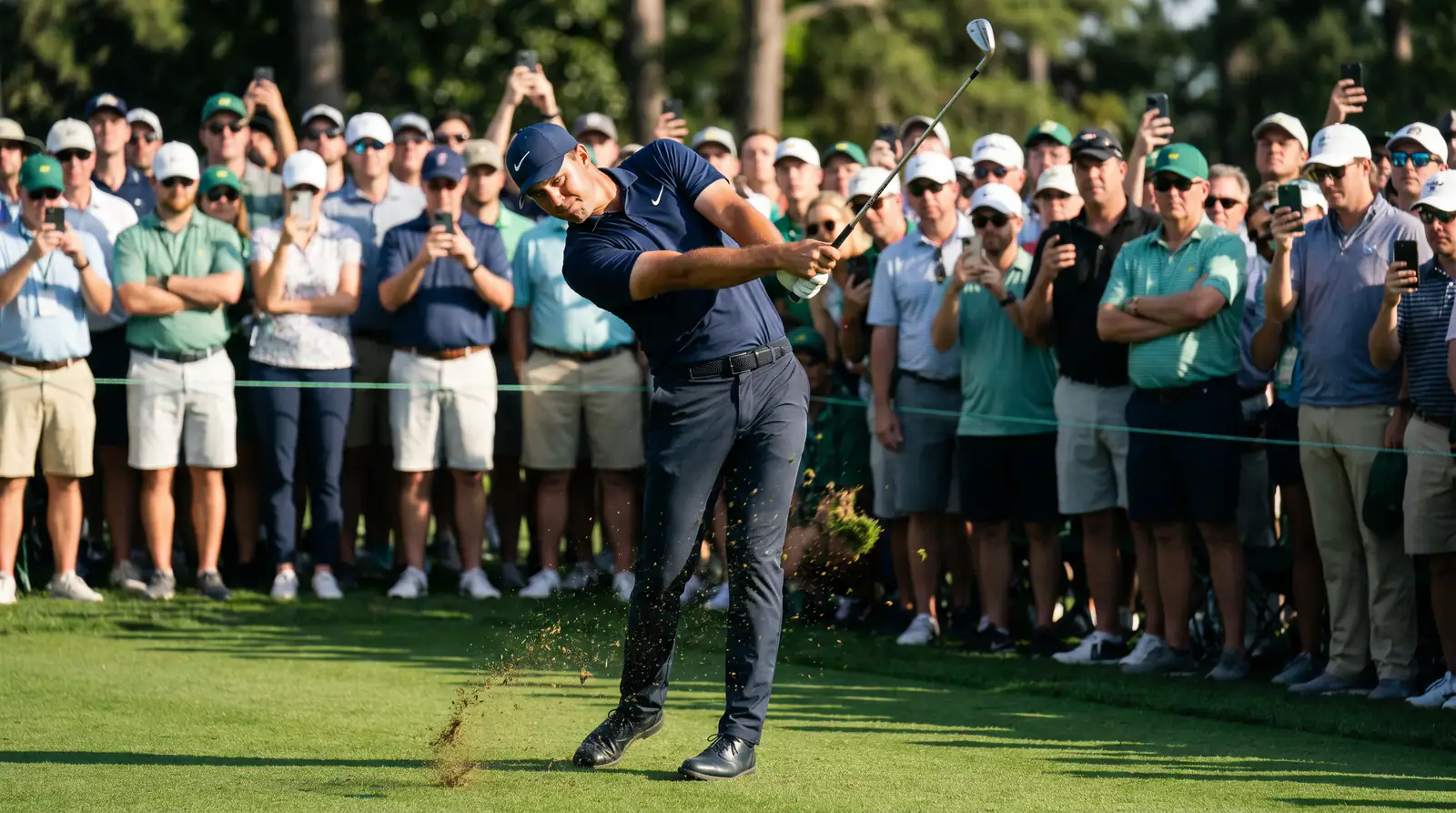
A Thursday afternoon at the Players Championship in 2024 changed the way I think about golf betting. I’d backed a player outright at 50/1 before the tournament, watched him birdie three of his first six holes, and then sat there as his price tumbled to 20/1 without me being able to do anything about it. Meanwhile, a friend who’d placed nothing pre-tournament waited until hole 12, identified a player at 80/1 who’d just eagled the par-5 and was surging up the leaderboard, and backed him in-play at 45/1. Same tournament, same day, vastly different approach — and my friend’s bet had better expected value than mine because he had more information when he struck.
That’s the core appeal of golf live betting: information advantage. Every completed hole reveals new data. A birdie run compresses a player’s odds. A double bogey on a par-3 sends them drifting. Weather changes mid-round. A tee time draw that looked neutral in the morning turns punishing when the afternoon wind picks up. Pre-tournament betting locks you in before any of this unfolds. In-play betting lets you react to it.
The PGA Tour’s live betting infrastructure has scaled dramatically, from 50 hours of Betcast coverage across six tournaments in 2025 to more than 400 hours across twelve tournaments in 2026. That eight-fold expansion reflects both supply and demand — the data feeds are more comprehensive, the bookmakers’ pricing engines are faster, and the audience appetite for real-time engagement with golf is growing in lockstep with the sport’s broader handle growth.
In-play golf betting isn’t a niche any more. It’s becoming the primary format for a growing segment of punters, especially those who follow tournaments shot-by-shot through scoring apps and live streams. What follows is a framework for navigating it: how odds move, when to strike, what the Betcast actually offers, and how to avoid the specific pitfalls that make live betting more dangerous than the pre-tournament version if you’re not disciplined.
How Live Golf Odds Move Round by Round
Golf odds don’t move like football odds. In football, a goal changes the match state instantly and the market adjusts in seconds. In golf, movement is gradual, cumulative and multi-dimensional — because the “score” is being updated simultaneously across 78 two-ball groups spread over five hours on a course with 18 different holes, each with its own scoring characteristics. Understanding this rhythm is the foundation of any live betting approach.
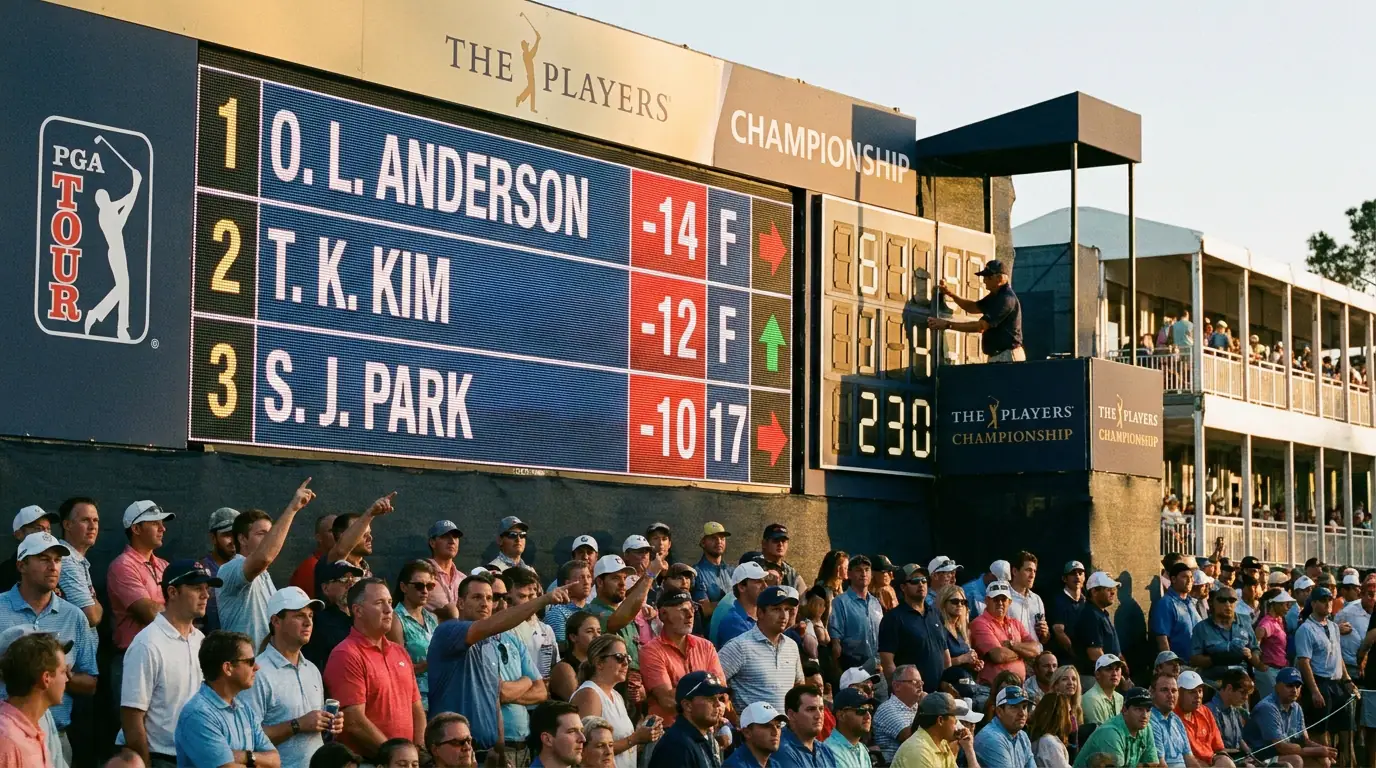
During round one, odds movement is relatively slow for outright markets. With 155 other players still in contention, one player’s birdie run has a limited impact on the overall probability distribution. The outright market is too diffuse for individual results to create dramatic price swings. Where you do see sharp movement is in round matchups and first-round-leader markets, where a two-shot swing between a pairing can shift the matchup odds by several points within half an hour.
Round two changes the dynamic. As the cut line becomes clear, players on the bubble see their outright odds lengthen rapidly or shorten as their survival becomes more certain. This is often the best window for live betting, because the market is simultaneously processing cut-line uncertainty and early leader-board formation. A player at 60/1 who’s four under through 10 holes of round two, safely making the cut, might offer value that wasn’t available pre-tournament — especially if his round-two scoring pace suggests form that wasn’t visible in his recent results.
Rounds three and four are where the action concentrates. The field has been halved, the leader-board is forming, and every birdie or bogey by a contender produces visible odds movement in the outright market. Sportradar plans to stream more than 700,000 sporting events in 2026 — up from 525,000 in 2025 — and golf’s data feeds are part of that expansion, enabling faster and more granular in-play pricing than ever before.
The pattern I’ve observed over thousands of in-play sessions: odds overreact to early-round birdies and bogeys (because recreational punters pile in on momentum) and underreact to mid-round scoring trends (because the market is distracted by the leader-board leaders). A player who’s quietly one under through 11 holes after starting the day four off the lead has often drifted in price more than the underlying probability warrants. That patient, against-the-grain approach is where I’ve found the most consistent live betting value.
When to Bet In-Play: Timing and Triggers
Not every in-play moment is a betting moment. I learned this the expensive way during my first season of live golf betting, when I was placing two or three bets per round, reacting to every leaderboard change like a dog chasing cars. My strike rate was abysmal. The lesson: in-play discipline is harder than pre-tournament discipline, because the temptation is constant and the information flow never stops.
I’ve developed five specific triggers that tell me when to engage the in-play market and, equally important, when to stay out.
The first trigger is weather-driven advantage. When a split tee-time draw creates a significant scoring gap between the morning and afternoon waves — typically more than a stroke difference in field scoring average — the afternoon wave is playing a harder course than the market expected. Players in the easier wave whose odds haven’t yet adjusted downward offer value. This is most common at links courses and exposed venues where wind is the primary variable.
The second trigger is round-two cut momentum. As I mentioned in the previous section, the transition across the cut line produces mispriced players. Specifically, I look for players at 40/1 or longer who are safely making the cut with a scoring pace that suggests top-twenty or better potential. The market often prices these players on their pre-tournament odds with an insufficient adjustment for the positive information revealed by their first 30 holes.
The third is what I call the “quiet mover” — a player who’s steadily gaining strokes in the current round but hasn’t hit the featured-group leaderboard coverage yet. Bookmakers and recreational punters focus on the names at the top of the leaderboard. A player who’s moved from 60th to 25th during round three has already demonstrated the form to contend, but his odds may still reflect his starting position because the attention is elsewhere.
The fourth trigger is a specific type of overreaction: a leader or co-leader who drops a shot or two on the back nine of round three and sees his odds drift significantly. If the bogeys were on genuinely difficult holes (course scoring average over par) rather than soft holes, the market is overweighting the raw score change and underweighting the context. That drift can create value on a player who’s still well-positioned and whose ball-striking quality hasn’t deteriorated.
The fifth is the Sunday back nine, specifically holes 10-14 for players within three shots of the lead. This is where tournaments are won and lost, and the odds volatility per hole is at its peak. I don’t bet routinely in this window — the market is efficient and fast-moving — but when a player I’ve been tracking all week reaches this point with strong current-round stats, I’ll take a position if the price is right.
Outside these five triggers, I stay out. The key to profitable live betting is recognising that most in-play moments are noise, not signal. The market is broadly efficient, the odds update quickly, and the edge — when it exists — is narrow and fleeting. Acting only on predefined triggers prevents the emotional, reactive betting that turns live golf into a slot machine.
The PGA Tour Betcast: What It Means for Punters
I watched my first PGA Tour Betcast in early 2025 — a Thursday afternoon feed from a Signature Event — and the immediate thought was: this changes the information landscape for golf betting permanently. It wasn’t just a broadcast with odds overlays. It was a purpose-built viewing experience designed to feed the live betting market with real-time data, visual context and integrated wagering prompts.
The Betcast is a collaboration between the PGA Tour, ESPN and DraftKings. Scott Warfield, the Tour’s Vice President of Gaming, announced the 2026 expansion plainly: the PGA Tour would present “more than 400 hours of live betting coverage in 2026 alongside our collaborators at ESPN and DraftKings.” That’s a transformative amount of content — enough to cover multiple rounds of twelve different tournaments, with dedicated camera angles, shot-by-shot data overlays and live odds integration throughout.
For UK punters, the direct access question matters. The Betcast is primarily distributed through US platforms, and DraftKings doesn’t hold a UKGC licence. However, the data and odds information generated by the Betcast feeds back into global pricing, which means UK-licensed bookmakers benefit from the same real-time market adjustments even if they’re not broadcasting the Betcast directly. The practical effect is that in-play odds on PGA Tour events are now faster, more granular and more responsive than they were when the only data source was the PGA Tour’s live scoring website.
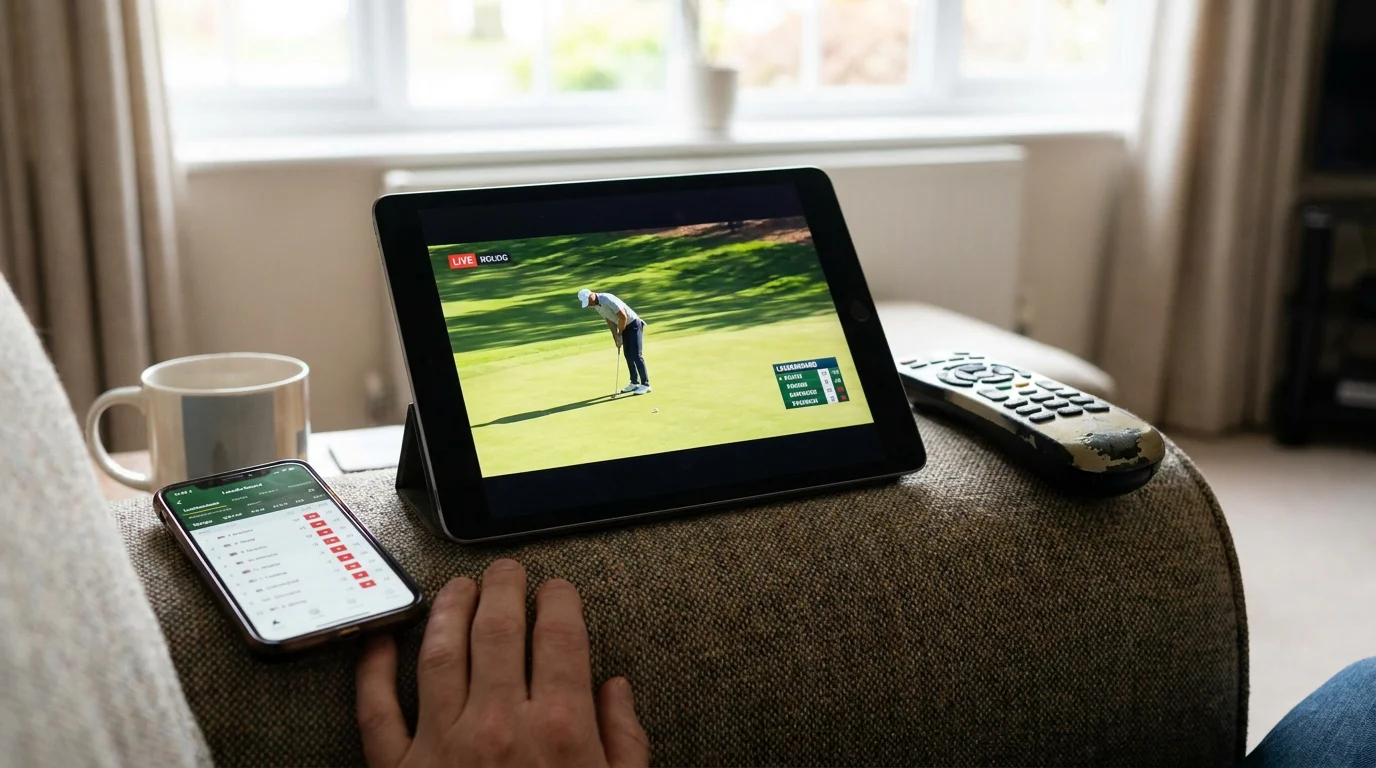
The Betcast also introduces a psychological dimension. Watching a player’s shot-by-shot performance in a betting-focused broadcast creates a sense of urgency and engagement that standard tournament coverage doesn’t. That urgency is both an opportunity and a risk. The opportunity: you see information before the odds adjust, sometimes by a hole or two. The risk: the format is designed to encourage betting activity, and the line between informed wagering and impulsive clicking is thinner when every camera angle comes with an integrated bet prompt.
My recommendation is to watch the Betcast (or follow real-time scoring with shot-level data) as a research input, not as a betting trigger. Let the information flow inform your pre-set triggers rather than creating new ones on the fly. The Betcast is a powerful tool. Like any powerful tool, it’s dangerous in the hands of someone who doesn’t have a plan.
ShotLink and Sportradar: The Data Behind Live Markets
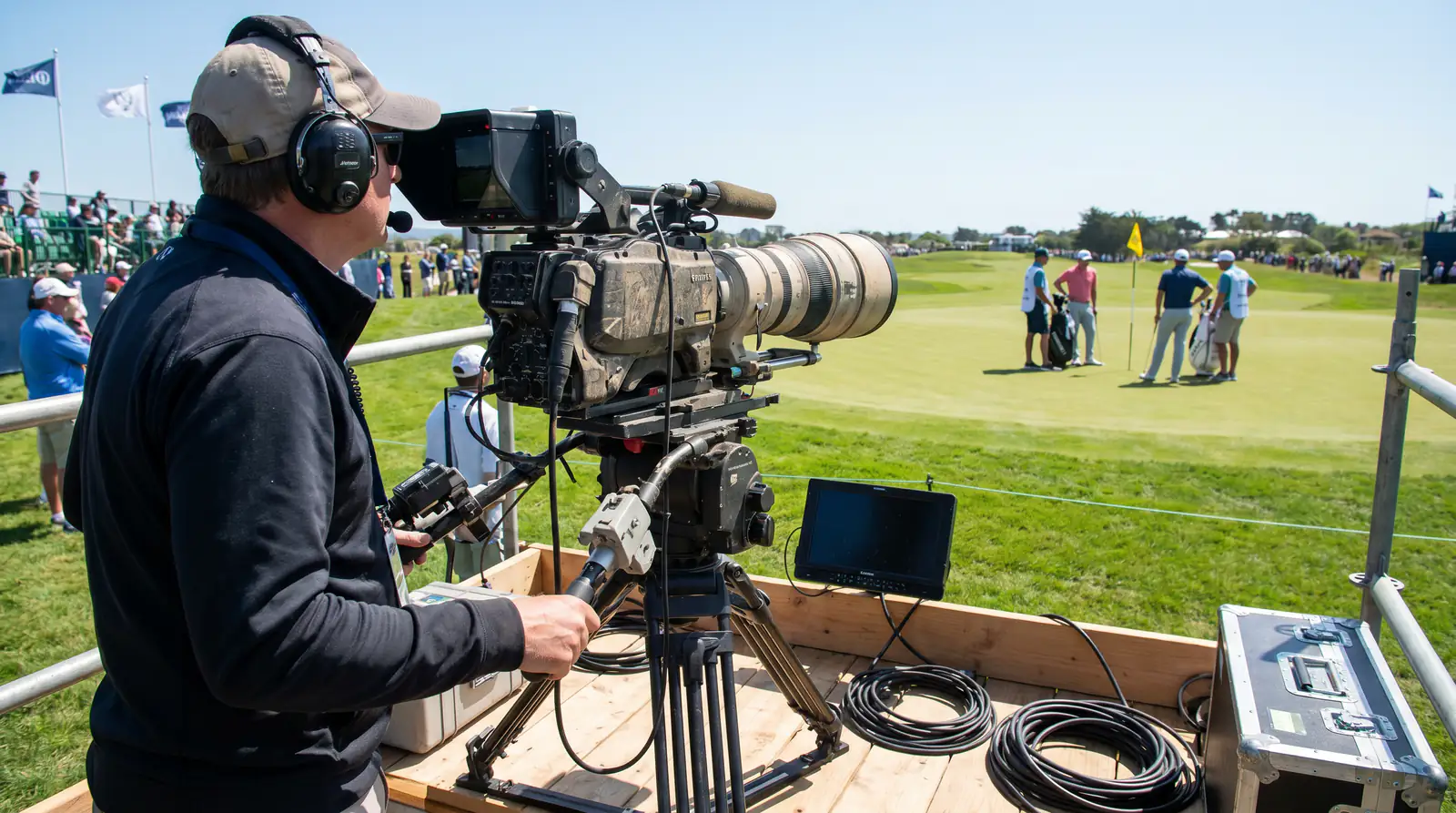
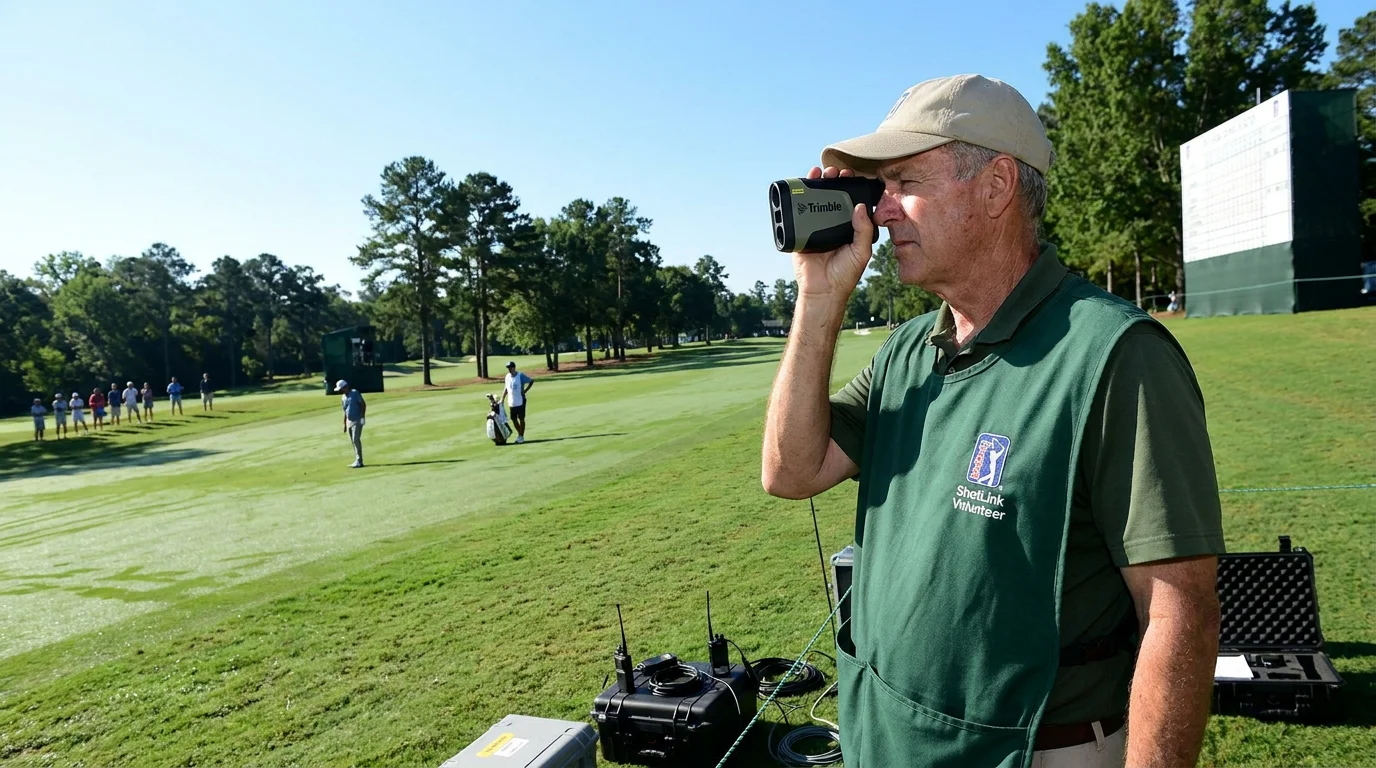
Every live golf bet you place is priced off data that starts with a laser and a volunteer with a handheld device. ShotLink is the PGA Tour’s shot-tracking system, capturing the location and outcome of every shot hit by every player on every hole. That data — over 50,000 data points per tournament — feeds the statistical models that power Strokes Gained analysis, live scoring and, crucially, the real-time pricing engines that bookmakers use to set in-play odds.
Sportradar is the intermediary that brings this data to market. The company expanded its agreement with the DP World Tour and the R&A to provide official data services for live betting, and its infrastructure underpins the majority of golf in-play markets offered by UK-licensed bookmakers. More than 75% of Sportradar’s major betting clients use content from IMG Arena, which produces the visual and data packages that translate raw ShotLink information into usable betting feeds.
For punters, the practical question is: how much of this data can you access, and how does it help? The answer is more than you think. The PGA Tour’s live scoring page provides shot-by-shot data for every player in the field, updated in near real-time. Third-party services like Data Golf and Fantasy National offer live Strokes Gained splits that update hole by hole. These tools let you track not just a player’s score but the quality of their ball-striking in real time — which is often a leading indicator of scoring that the leaderboard position alone doesn’t capture.
Hard Rock Bet’s 2026 launch of micro-markets for the PGA Tour — featuring hole winner, hole score and 3D shot tracking across ten US states — is the most visible consumer-facing application of this data infrastructure. The 3D tracking visualisations show each shot’s trajectory, distance and accuracy, giving punters an unprecedented view of what’s happening between shots and enabling bet types that would have been impossible without ball-tracking technology.
The gap between the information available to sophisticated punters and the information priced into the market is narrowing, but it hasn’t closed. If you’re willing to monitor live SG splits alongside the leaderboard, you’ll see patterns that the odds haven’t yet reflected — and that’s where live value lives.
Micro-Markets at a Glance
If traditional in-play betting is the equivalent of backing a football team to win at half-time, micro-market golf betting is the equivalent of backing a specific player to score the next goal. It’s granular, fast and entirely new to most UK golf punters.
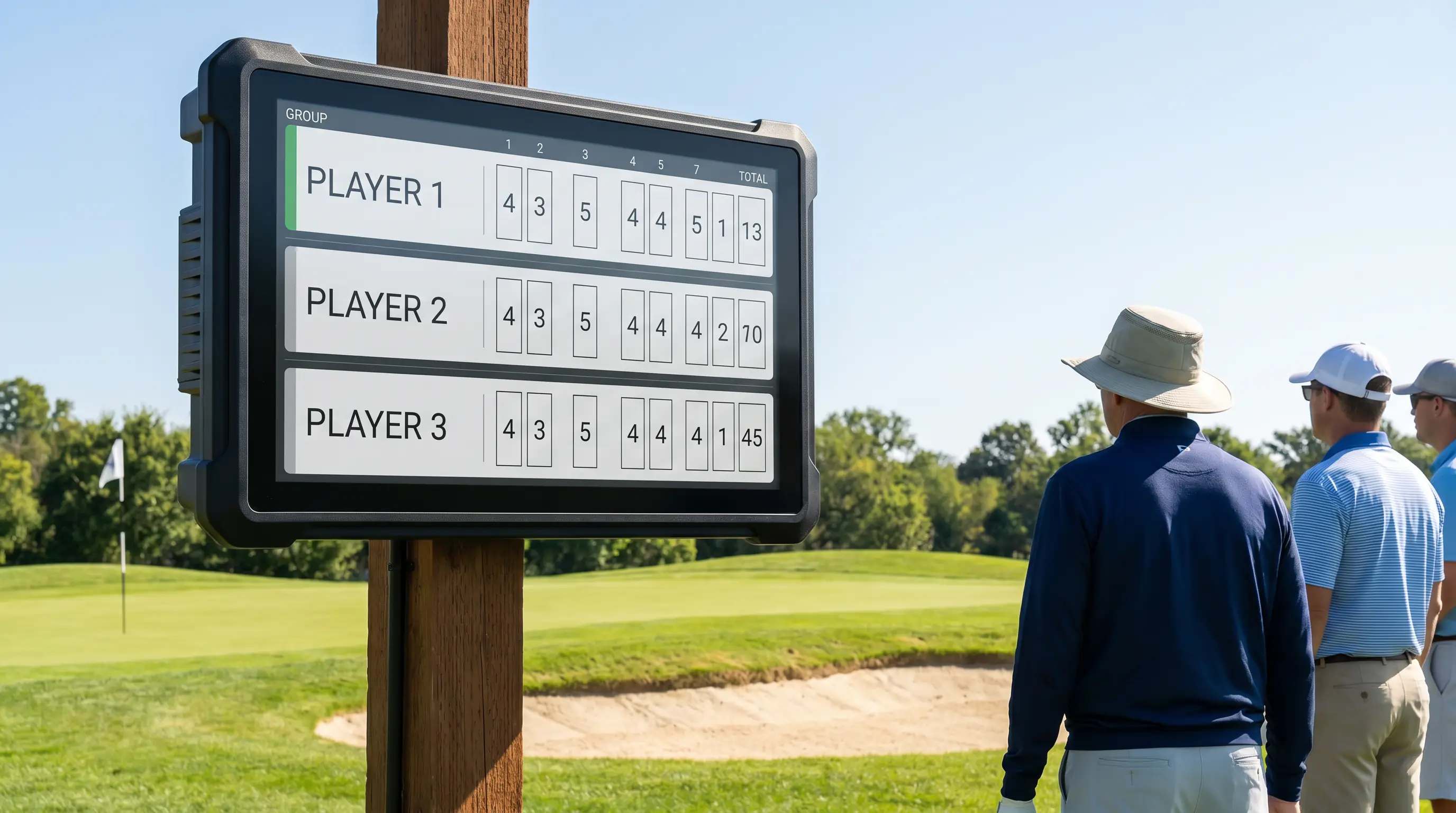
Micro-markets break a round into individual hole-level or shot-level wagers. The most common types currently available are hole winner (which player in a group posts the best score on a specific hole), hole score (will a named player make birdie, par, bogey or worse on a specific hole) and over/under on a player’s score for a stretch of holes (e.g. over/under 1.5 birdies in holes 10-14). Shot-level props — such as whether a tee shot will find the fairway or a specific approach will hit the green — are available on some US platforms but haven’t widely reached UK bookmakers yet.
The pricing of micro-markets relies on real-time ShotLink data and hole-specific scoring distributions. A par-5 where 40% of the field makes birdie is priced very differently from a par-3 where only 12% do. Course knowledge at the hole level becomes a genuine edge, because most recreational punters don’t study individual hole statistics.
I approach micro-markets cautiously. The margins are higher than on traditional in-play markets, the sample sizes for hole-level analysis are small, and the speed of settlement means you can burn through significant amounts in a single round if you’re not disciplined. But for punters who enjoy real-time engagement and are willing to study hole-by-hole scoring data, they represent a genuinely new dimension of golf betting that’s only going to expand in coming seasons.
Common Mistakes in Golf Live Betting
The most dangerous words in live golf betting are “he’s playing well, I should get on.” That impulse — reacting to visible momentum rather than underlying probability — is the single biggest destroyer of live betting bankrolls, and I’ve been guilty of it more times than I’d like to admit.
Chasing leaderboard position is mistake number one. A player who’s just birdied three in a row looks unstoppable, and his odds have shortened to reflect that run. But birdie streaks in golf are largely random — the autocorrelation between consecutive hole scores is weak. Three birdies in a row tells you the player is in form and the conditions are scorable, but it doesn’t meaningfully increase the probability of a birdie on the next hole. The market, however, prices in a continuation effect that the data doesn’t support. By the time you see the streak and react, the value has already been priced out.
Overtrading is mistake number two. Live golf offers eight-plus hours of betting opportunities per day during a tournament round, across multiple groups and multiple market types. The temptation to fill every quiet moment with a bet is real, especially when you’re watching a Betcast or following shot-by-shot scoring. Each additional bet carries the bookmaker’s margin, and a day of 15 micro-bets can consume the profit from a week of disciplined pre-tournament selections. I cap myself at two live bets per round, and I often place zero.
Ignoring the course’s scoring profile is mistake number three. Not every birdie is equal and not every bogey is a disaster. A bogey on a hole where the field averages 4.3 strokes is almost par. A birdie on a hole where the field averages 3.2 is remarkable. If you’re not adjusting your assessment for hole difficulty — which the scoring data provides in real time — you’re misreading the round and misvaluing the odds.
The fix for all three mistakes is the same: have a plan before the round starts, define your triggers, and don’t deviate. Live betting rewards patience, not activity.

Golf Live Betting FAQ
How quickly do golf in-play odds update compared to football?
Golf in-play odds update after each completed hole for featured groups, which typically means every 10-15 minutes per player. For non-featured groups, updates may lag further behind. This is much slower than football, where odds adjust within seconds of a goal or red card. The slower pace of golf actually benefits analytical punters — you have more time to assess information before the market moves, provided you’re monitoring the right data feeds.
Can I cash out a golf live bet mid-round?
Most UK bookmakers offer partial or full cash-out on golf outright and top-finish bets during a tournament. The cash-out value fluctuates based on your player’s current position and the live odds. Cash-out is a useful risk-management tool if your player is in contention but you want to lock in a guaranteed profit. Be aware that the cash-out price includes a margin — you’ll always receive less than the theoretical fair value of the bet at that moment.
Is the Betcast available to UK punters, or US only?
The PGA Tour Betcast is primarily distributed through US platforms, particularly ESPN+ and DraftKings, which don’t hold UK Gambling Commission licences. UK punters can’t access the Betcast’s integrated betting features directly. However, the live scoring data, shot tracking and odds information that feed the Betcast are available through the PGA Tour’s website and third-party data services, and UK bookmakers benefit from the same real-time data infrastructure for their own in-play pricing.
Do all UK bookmakers offer golf in-play markets?
Most major UK-licensed bookmakers offer some form of golf in-play betting, but the range and depth of markets vary considerably. Outright and top-finish in-play markets are widely available during PGA Tour events. In-play matchups and round-specific markets are offered by some but not all operators. Micro-markets at the hole level are still limited in the UK market. Check your bookmaker’s live betting section during a tournament to see what’s currently available.
