
 Available in US
Content

The Major That Punishes Mistakes
I have a rule for the US Open: throw out everything you think you know about form and start with the course setup. The USGA designs US Open venues to be the hardest test in professional golf — narrow fairways, penal rough, firm greens, and pin positions that flirt with disaster. The winning score routinely sits closer to even par than to the double-digit-under-par numbers you see at regular PGA Tour events. That compression changes the entire betting equation.
When the winning score is low relative to par, the variance within the field narrows. The best players do not pull away as dramatically because the course itself acts as an equaliser — one bad tee shot into ankle-deep rough can cost a player two strokes and wipe out a three-hole stretch of good play. This is why US Open outright markets tend to produce longer-priced winners than the Masters or The Open. The setup creates chaos, and chaos favours disciplined bettors who understand what the course is actually testing.
What the Course Setup Tells You About Value
Every US Open venue is different, but the USGA’s setup philosophy is consistent: precision over power. Fairways are narrowed to 28–32 yards in the landing zones, rough is grown to four or five inches, and greens are firmed up to run at 12 or 13 on the Stimpmeter. The practical effect is that driving accuracy and approach-shot precision are weighted far more heavily than raw distance off the tee.

I build my US Open shortlist around three Strokes Gained metrics: Driving Accuracy, Approach from 150–200 yards, and Bogey Avoidance. The last one is the most overlooked. At a standard PGA Tour event, the difference between a birdie machine and a steady player is that the birdie machine makes more birdies. At a US Open, the difference is that the steady player makes fewer bogeys. The leaderboard at a US Open is built by pars, not birdies, and the players who avoid double bogeys have a structural edge that the market often underprices.
The PGA Tour’s total prize money for 2026 reached $450 million, and the US Open purse is among the largest at any single event. That financial weight means no top player skips the tournament, which in turn means the field is as strong as it gets — tighter at the top than any other major, with deeper benches of talent throughout.
Venue Rotation and the Data Problem
Unlike the Masters, which returns to Augusta National every year, the US Open rotates between a broad set of venues. Pinehurst, Oakmont, Shinnecock Hills, Winged Foot, Pebble Beach — the rota is large enough that many venues only host the championship once every 10 to 15 years. That rotation creates a genuine data challenge. Course-specific form is limited because the sample size of recent tournaments at any given venue is small.
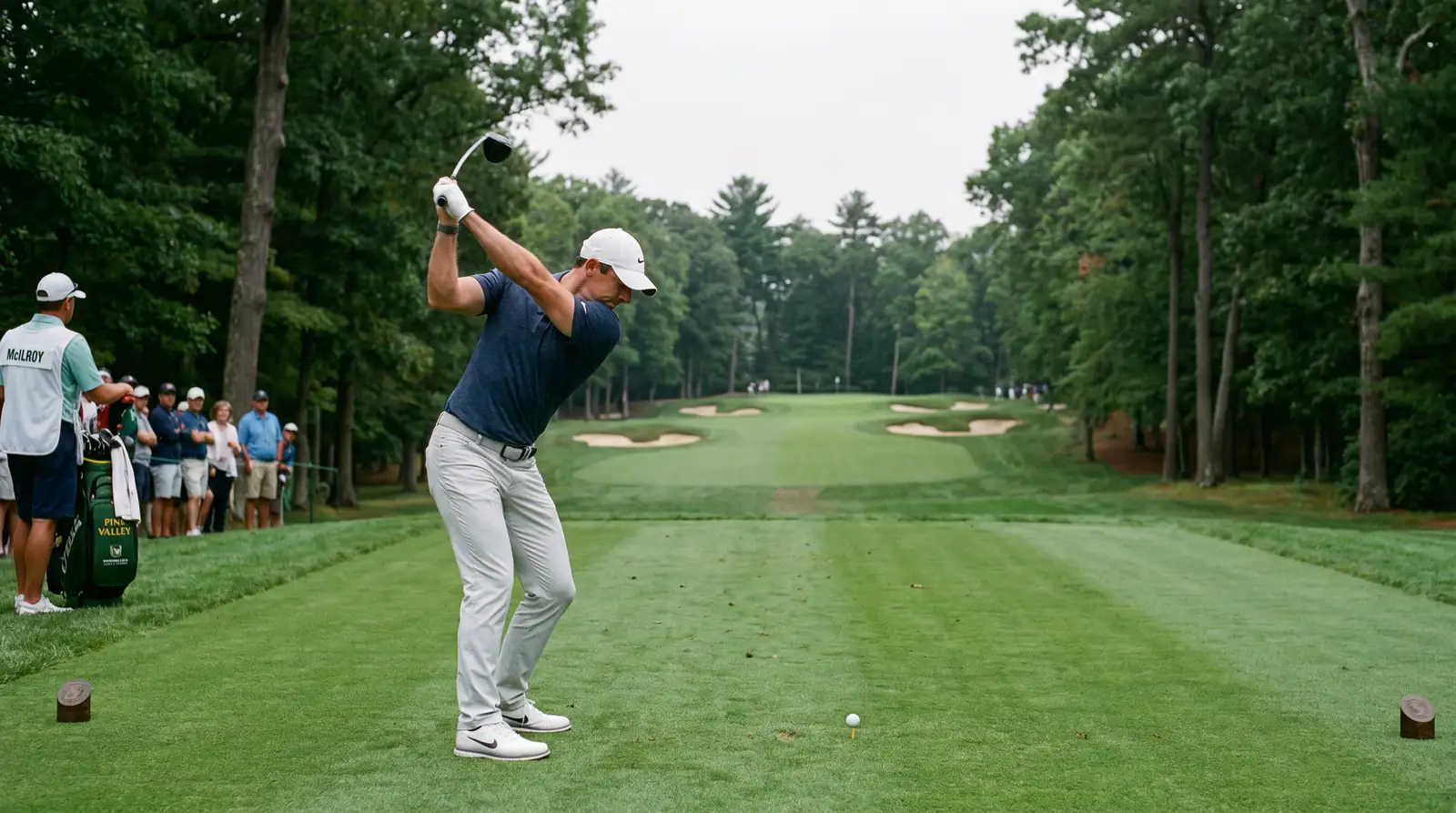
My workaround: I use course-archetype matching rather than course-specific history. If the upcoming US Open is at a venue with long par fours, tight driving corridors, and Bentgrass greens, I look for players who have performed well at other courses with similar characteristics — not just the specific venue. The Strokes Gained approach is particularly useful here because it lets you isolate the skills that matter on a specific course type without being limited to results at that single venue.

Qualifier-route players are another US Open wrinkle. The championship is open through qualifying, which means players who would never contend at a normal PGA Tour event can earn a spot in the field. These qualifiers sometimes offer extreme value in outright markets because they enter at long prices that reflect their general ranking rather than their specific suitability for the course and conditions. A low-profile player who excels in driving accuracy and bogey avoidance on firm, fast courses is a genuine US Open contender regardless of his world ranking.
Betting the US Open vs Other Majors
Each major rewards a different betting approach, and the US Open is the one where I lean most heavily toward defensive metrics. At the Masters, I prioritise approach play and putting on fast, slopey greens. At The Open, it is wind performance and links-course experience. At the PGA Championship, the setup is closer to a regular tour event, so broad Strokes Gained: Total is a reasonable shortcut.

The US Open demands specificity. The scoring conditions are so different from a standard event that generic form is a poor predictor. A player who has been firing 64s on soft, wide PGA Tour courses may struggle to break 72 at a US Open setup where every wayward drive costs half a stroke. Conversely, a player sitting 50th in the FedEx Cup standings who happens to rank in the top ten for driving accuracy and bogey avoidance on firm courses might offer enormous value at 60/1 or wider.
The handle on major championships surges compared to regular events — the FedEx Cup Playoffs see a 50% spike, and individual majors often exceed that. That extra liquidity means the market is sharper, but it also means your bet will be absorbed without stake restrictions that you might face on a thin DP World Tour market. US Open betting is a place where you can deploy your full conviction without worrying about liquidity constraints.
The Scoring Threshold That Separates Contenders
Over the past decade, US Open winners have averaged roughly three to five under par for 72 holes. That might not sound impressive, but at a US Open, three under par through four rounds requires relentless precision. The practical implication for betting: your selected player does not need to be capable of shooting 62 on a Sunday. He needs to be capable of shooting 69-70-68-71 across four days without a meltdown round.
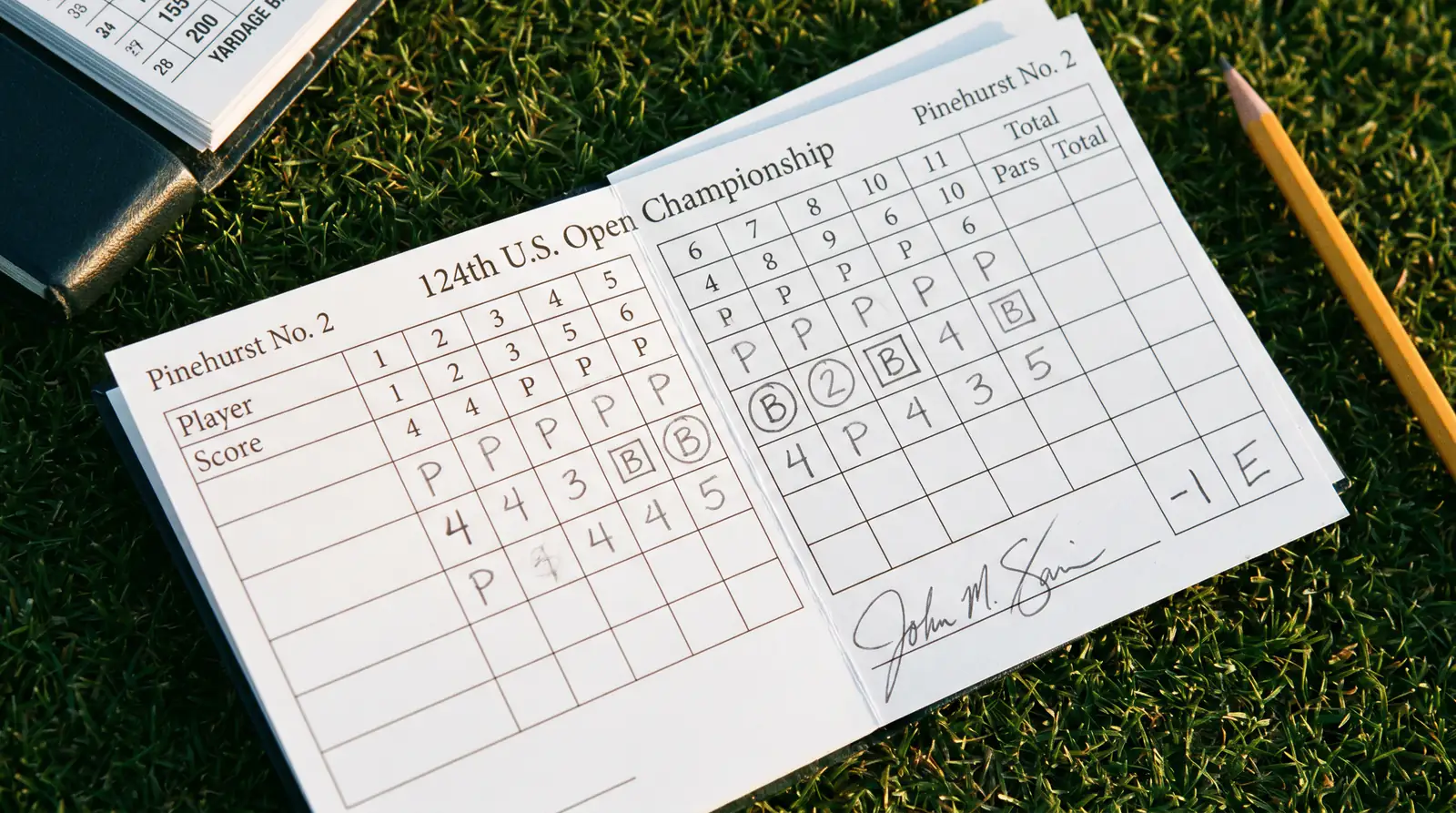
I call this the “floor score” approach. Rather than asking “who can shoot the lowest single round?”, I ask “who has the highest floor?” — which player is least likely to post a 76 or worse on any given day? The player with the highest floor survives US Open setups while others self-destruct. Four steady rounds beat three good rounds and one disaster every time at this championship.
Is the US Open harder to predict than other majors?
In terms of outright winner variance, yes. The severe course setups compress the scoring range and increase the influence of a single bad hole, which introduces more randomness than events where the best players can separate themselves from the field. Historically, US Open outright winners have been priced at longer odds on average than Masters or Open winners.
Should I back favourites or longshots at the US Open?
The US Open produces more mid-priced winners — players in the 20/1 to 50/1 range — than other majors. Pure longshots above 100/1 rarely win because the field quality is so high, but short-priced favourites also underperform expectations because the setup limits the ability of elite players to dominate. Focus your analysis on the 15/1 to 60/1 band where value is most likely to appear.
