
 Available in US
Content
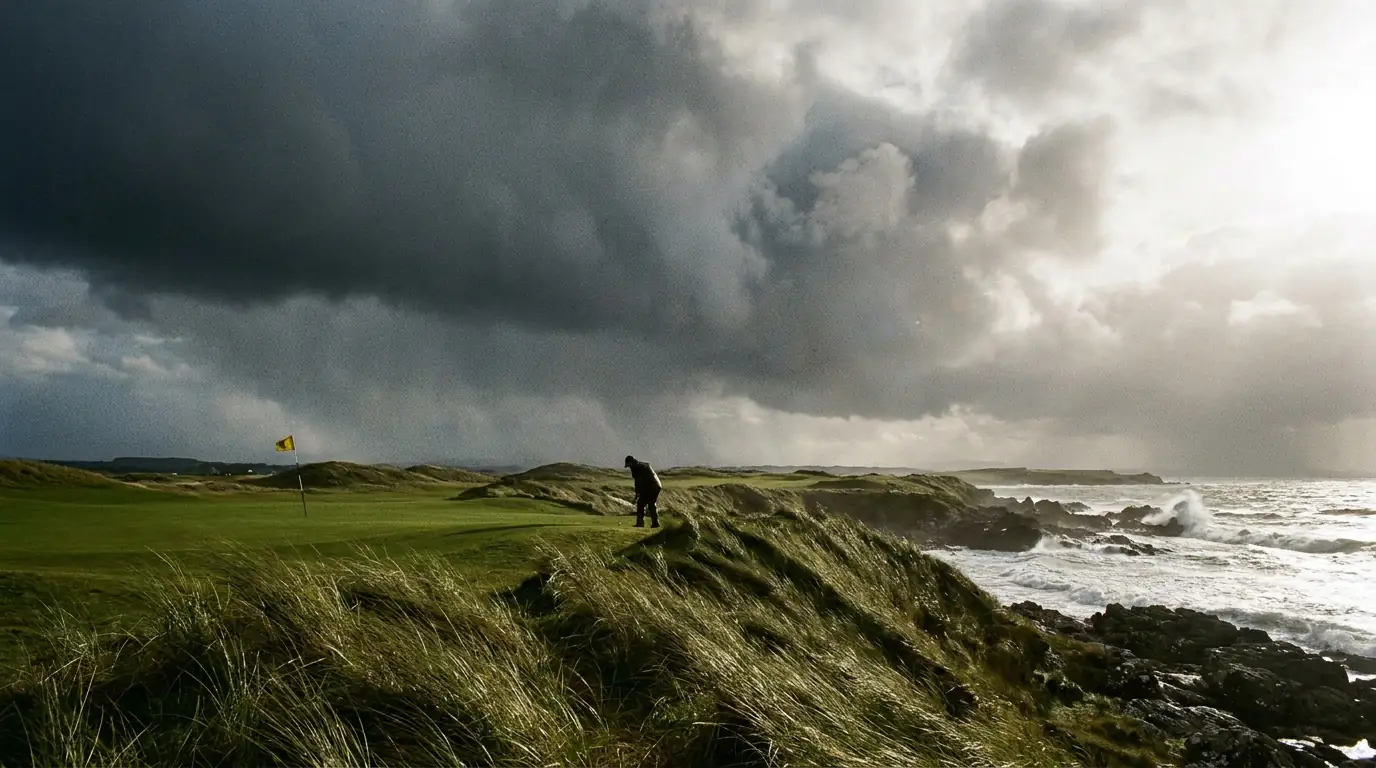
The Morning I Learned Weather Wins Bets
At The Open in 2019, I backed a player in the afternoon wave on Thursday at 80/1 for the first-round lead. By midday, the wind had picked up to 30 mph, the afternoon scoring average ballooned by three strokes compared to the morning, and my player — a solid ball-striker who keeps it low — shot level par while the rest of his wave scrambled to break 75. He led after round one. That single experience taught me more about golf betting than a year of studying Strokes Gained tables.
Weather is the single largest external variable in professional golf, and it is chronically underpriced in betting markets. A 15 mph wind swing between the morning and afternoon waves can create a two-stroke scoring differential that the outright market barely acknowledges. Rain softens greens and eliminates the advantage that distance players hold on firm, fast courses. Temperature drops reduce ball flight by measurable distances. Every one of these factors shifts the probability distribution within a field, and the punter who incorporates weather into their process gains an edge that most recreational bettors ignore entirely.
Draw Bias and Wave Advantage
In the first two rounds of most professional tournaments, the field is split into two waves — one teeing off in the morning, the other in the afternoon. The draw is semi-random, but the weather is not. If the forecast calls for calm conditions in the morning and building winds in the afternoon, the morning wave has a structural advantage. The reverse applies when morning fog lifts into a clear, still afternoon.

I track draw bias obsessively during The Open and any coastal event. Links golf amplifies weather effects because there are no trees to block the wind and the terrain funnels gusts across open land. At a typical inland PGA Tour stop, a draw advantage might be worth half a stroke. At a links course in a stiff breeze, it can be worth two full strokes or more. That difference is enormous when you are pricing first-round leader markets or 3-ball bets within a specific wave.

The data backs this up. Historical wave splits at Open Championship venues show that the disadvantaged wave scores, on average, 1.5 to 2.5 strokes higher than the favoured wave on days with significant wind differentials. Bookmakers adjust for this to some extent, but the adjustment is often incomplete — particularly in outright and top-finish markets where the four-day nature of the event makes it harder to isolate the wave effect.
Wind Speed, Direction and How They Change Player Value
A 10 mph headwind on a 450-yard par four turns it into a 470-yard par four in terms of effective playing length. That shift benefits long hitters who can still reach the green in two, while shorter players are forced to lay up or hit longer irons into the green. Conversely, a strong tailwind shortens the hole and neutralises the distance advantage, putting accuracy and short-game players on a more level footing.

Wind direction matters as much as speed. A crosswind from the left favours players who shape the ball right to left with a draw, because they can ride the wind rather than fight it. A right-to-left crosswind rewards faders. I build a simple wind-direction matrix for each event: which holes play into the prevailing wind, which play downwind, and which are exposed to crosswinds. Then I cross-reference that matrix with each player’s shot shape tendencies. The player whose natural ball flight aligns with the wind on the most holes has an underappreciated structural advantage.
Scott Warfield, the PGA Tour’s senior vice president of media rights, has described the Betcast product as designed to “create a stickier viewing experience” — and real-time weather overlays are becoming a standard feature of that product. The integration of wind data into live betting feeds means in-play odds are increasingly responsive to weather shifts, but there is still a lag between conditions changing on the course and the market fully repricing.
Rain, Soft Greens and the Scoring Equation
Rain changes the entire character of a golf course. Soft greens hold approach shots, which rewards aggressive iron players who attack pins. Firm greens, by contrast, reward players who land the ball short and let it roll out — a different skill entirely. When I see heavy rain in the forecast for an event, I immediately reassess my shortlist through the lens of proximity to the hole. Players who rank highly in Strokes Gained: Approach on soft-condition courses move up my list; those who rely on firm-and-fast conditions to generate scoring opportunities move down.

The less obvious effect of rain is on the rough. Wet rough grabs the clubface more aggressively, making it harder to advance the ball from off the fairway. Driving accuracy becomes more valuable in wet conditions because the penalty for missing the fairway increases. A player who hits 70% of fairways in normal conditions has a measurable edge over one who hits 55% when the rough is wet and thick.
Practical Weather Workflow for Your Bets
I check the forecast three times before placing a tournament bet: Monday evening when the market opens, Wednesday morning when the field is confirmed, and Thursday at dawn before the first tee time. The Monday check shapes my initial shortlist. The Wednesday check filters for wave advantage — if one wave is clearly favoured, I bias my 3-ball and first-round-leader bets toward players in that wave. The Thursday check is the final adjustment, confirming that conditions have not shifted from the mid-week forecast. Golf betting handles have grown 30–35% annually, and the sharpest segment of that growing market is the cohort of bettors who systematically incorporate weather data into their pre-round analysis.

The tools are straightforward. Any aviation weather service provides hourly wind speed and direction forecasts at a level of detail that consumer weather apps do not match. I use the nearest airfield’s METAR reports — the standard meteorological reports issued for aviation — because they include gust data, visibility, and barometric pressure, all of which affect ball flight. You do not need a meteorology degree. You need a 60-second check of the hourly forecast and the discipline to adjust your bets when the weather tells you to. Building bankroll management discipline around weather-driven opportunities means treating draw-biased rounds as high-conviction spots worthy of slightly larger stakes.
How much does a draw advantage matter in golf betting?
At links courses and exposed venues, the favoured wave can score 1.5 to 2.5 strokes lower on average than the disadvantaged wave when wind conditions differ significantly between morning and afternoon. At sheltered inland courses, the effect is smaller — typically half a stroke or less. The advantage matters most for first-round leader bets and wave-specific 3-ball markets.
Where can I find detailed golf course weather forecasts?
Aviation weather services provide the most useful data for golf betting. METAR reports from the nearest airfield give hourly wind speed, direction, gusts, visibility and pressure. Several free websites aggregate METAR data in an accessible format. Consumer weather apps are a reasonable starting point but lack the hourly granularity and gust data that aviation reports provide.
