
 Available in US
Content

The Biggest Stage in Professional Golf Betting
My first serious golf betting season was built entirely around the PGA Tour, and nearly a decade later it still accounts for 70% of my annual action. The reason is straightforward: no other tour offers the same combination of elite fields, deep data, and liquid betting markets. When you can access Strokes Gained breakdowns for every player, historical hole-by-hole scoring data for every venue, and outright markets with 156 runners from a dozen bookmakers, the PGA Tour becomes the natural home for data-driven golf betting.
The numbers back that up. The PGA Tour recorded 20% year-on-year handle growth in 2025 — the fourth consecutive year of double-digit increases. The betting handle on the FedEx Cup Playoffs surged 50% year over year, and the Tour Championship’s handle more than doubled. Money follows opportunity, and the PGA Tour has deliberately positioned itself at the intersection of sport and wagering in a way that benefits punters and operators alike.
The 2026 PGA Tour Schedule and Event Tiers
The 2026 season runs from January through August, ending with the FedEx Cup Playoffs in late summer. The schedule is structured in tiers that directly affect how I approach each week’s betting.
At the top sit the four major championships — the Masters, PGA Championship, US Open and The Open — plus The Players Championship. These events attract the strongest fields, the most betting volume, and the tightest odds. Total PGA Tour prize money for 2026 is $450 million, with every Signature Event carrying a $20 million purse. The Players Championship has a purse of $25 million, and the Tour Championship — the season finale — hit $40 million in 2025.
Signature Events occupy the next tier: limited-field, no-cut tournaments featuring the top 70–80 players in the FedEx Cup standings. The smaller fields (typically 70 to 80 players rather than 156) change the market dynamics. Outright odds are compressed because there are fewer runners, and the absence of a cut means every player completes all four rounds. I treat Signature Events as a distinct category in my handicapping — the analytical framework is the same, but the staking adjustments reflect the shorter odds and reduced variance.
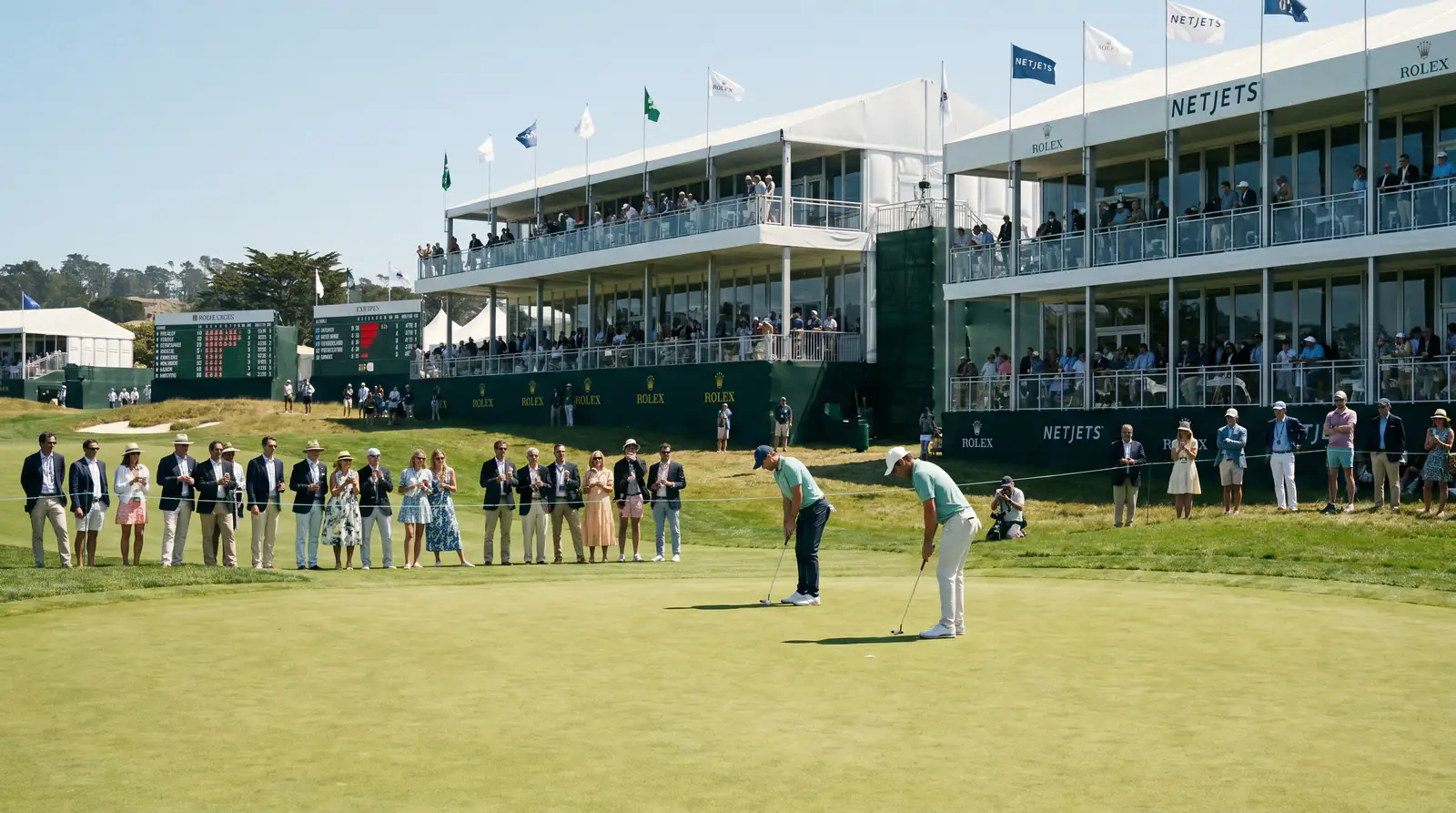
Regular-season events make up the bulk of the schedule. Full 156-player fields, a 36-hole cut, and a wide spread of talent from top-ten players to Monday qualifiers. These events produce the longest odds, the highest variance, and — in my experience — the most exploitable pricing inefficiencies. Bookmakers dedicate less resource to pricing mid-table players at a standard event than they do for a major, which creates gaps for punters willing to do the work.


Signature Events: Smaller Fields, Bigger Purses
I was initially sceptical about Signature Events as a betting vehicle. Fewer players, shorter odds, higher-quality fields — it sounded like a recipe for tighter margins and less value. Two full seasons later, I have revised that view. The value is there; it just lives in different places.
Without a cut, every player finishes the tournament. That is significant for matchup bettors and top-finish players. In a regular event, a large part of your matchup analysis involves estimating cut probability — will both players make the cut? In a Signature Event, that variable disappears entirely. You can focus purely on 72-hole scoring, which simplifies the analysis and reduces one source of randomness.
The limited field also means that bookmakers price a smaller number of players, which tends to sharpen the outright market. Overrounds at Signature Events are often tighter than at full-field events because competitive pressure among bookmakers is higher for marquee weeks. I have measured overrounds of 115–125% at Signature Events versus 130–145% at regular stops. That difference in margin directly benefits the bettor.
FedEx Cup and Playoff Betting Angles
The FedEx Cup Playoffs compress the season’s drama into three weeks, and the betting markets respond with a spike in volume and variety that creates short-term opportunities. Scott Warfield, the PGA Tour’s Vice President of Gaming, described the 2026 ambitions by saying, “The PGA TOUR is pleased to present more than 400 hours of live betting coverage in 2026 alongside our collaborators at ESPN and DraftKings.” A significant portion of that coverage centres on the Playoffs, where every shot carries FedEx Cup points and every round reshapes the standings.

The Playoff events progressively shrink the field — from 70 players to 50 to 30 at the Tour Championship — which mirrors the Signature Event dynamics of shorter odds and lower variance. The Tour Championship uses a staggered-start scoring system where players begin the tournament with strokes relative to their FedEx Cup standing. The leader starts at 10-under; the 30th-place player starts at even par. That format changes the outright market fundamentally: you are not betting on who will shoot the lowest 72-hole total, but on who will overcome (or protect) their starting position.
I approach Playoff betting in two layers. Pre-Playoff, I look at FedEx Cup futures — who will win the overall season title — using accumulated points, remaining schedule, and form trends. During the Playoffs, I switch to individual-event analysis with heightened emphasis on recent form, because the Playoff field has been competing intensely for months and fatigue patterns emerge. Players who peaked in the middle of the season sometimes fade by August, while late-bloomers carry momentum into the Playoffs. For the season-long view of these markets, the LIV Golf comparison highlights how the two tours differ in their competitive and betting structures.
PGA Tour vs LIV: A Quick Market Comparison
The core difference for bettors is data depth. The PGA Tour’s ShotLink system captures every shot hit during competition, feeding Strokes Gained analytics, shot tracking, and the real-time data that powers in-play markets. LIV’s statistical infrastructure is developing but remains less granular. That data advantage makes PGA Tour events easier to handicap with statistical models, which is why the majority of professional golf bettors I know concentrate their activity on the PGA Tour schedule.
Field size is the other variable. PGA Tour events run 156 players with a cut; LIV runs 48 with no cut. The PGA Tour’s larger fields create wider odds ranges and more opportunities to find mispriced players in the tail. LIV’s smaller fields produce a more concentrated market where the favourites dominate pricing. Both tours offer value — the question is which analytical edge you bring to each.

PGA Tour Betting FAQ
Are Signature Event fields capped and how does that affect odds?
Yes. Signature Events typically feature 70 to 80 players with no cut. The smaller field compresses outright odds — a player who might be 30/1 in a 156-player field could be 16/1 or 18/1 in a Signature Event. The overround also tends to be lower, which means you pay less margin per bet. However, the reduced variance means longshot winners are rarer.
Can I bet on the FedEx Cup season-long winner ante-post?
Yes. Most UK-licensed bookmakers offer FedEx Cup winner futures from the start of the season. The odds evolve as the season progresses and points accumulate. Early-season prices are wider because the uncertainty is greater; as the Playoffs approach, the market narrows around the leaders in the standings. I find the best value in mid-season when the early contenders are established but the odds have not fully contracted.
