
 Available in US
Content

The Bet That Made Me Love Thursdays
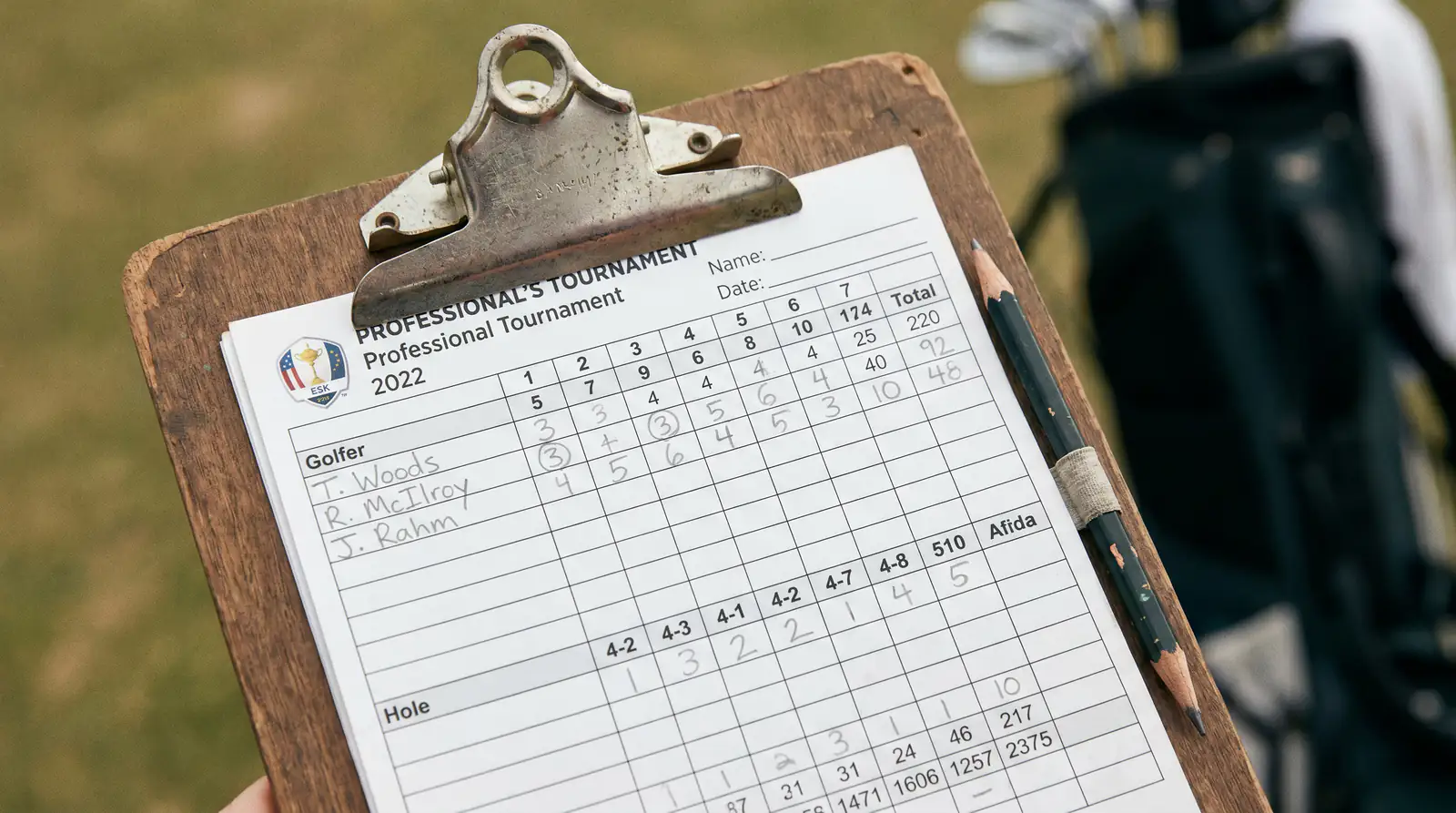
My Thursday ritual used to be simple: check the outright market, place a tournament bet, and wait four days. Then I discovered 3-ball betting, and suddenly every grouped tee time became its own contest. A 3-ball bet asks you to pick which of three players in a grouped tee time will post the lowest round score. No need to predict a tournament winner from a 156-player field — just identify which of three specific golfers will outperform the other two over 18 holes.
The format strips away the noise that makes outright betting so volatile. You are not competing against the entire field. You are comparing three known quantities over a single round, which means the analytical work is focused and the results arrive the same day. For a punter who enjoys the process of breaking down matchups, 3-ball betting is the sharpest tool in the golf wagering kit.
How 3-Ball Markets Are Structured
Walk into any 3-ball market on a Thursday morning and you will see three player names with three sets of odds. The favourite — typically the highest-ranked or most in-form player — might be priced around 6/5 or 5/4. The middle runner sits at 5/2 or 3/1. The outsider drifts to 7/2 or beyond. Those prices reflect each player’s perceived probability of shooting the lowest score in the group, with the overround baked in across all three selections.

The critical difference from head-to-head matchup betting is the dead-heat possibility. If two players in a 3-ball tie on the same score, your payout is halved under standard dead-heat rules. If all three tie, the payout is divided by three. Dead heats are not rare in golf — roughly one in every four or five 3-ball groups produces a tie on at least one round. That frequency means dead-heat reduction is not an edge case; it is a core part of the expected value calculation. Ignoring it leads to systematic overestimation of returns. For a full breakdown of how those reductions work, the dead-heat rules guide covers the arithmetic in detail.
Analysing a Three-Player Group
Last spring I spotted a 3-ball where two of the three players were bombers — long off the tee but erratic with their irons — and the third was a precision player with elite Strokes Gained: Approach numbers. The course that week was tight, tree-lined, and punished wayward drives. The precision player was the 3/1 outsider. He shot 67, the other two made 72 and 74. That is the kind of group-level mismatch that outright markets cannot surface.

The analytical framework for 3-ball betting revolves around three factors. First, recent form over the last four to six starts, weighted toward the most recent event. A player who missed two consecutive cuts and then fired a 65 in his last competitive round is a different proposition from one who has been grinding out 25th-place finishes. Second, course fit — the same Strokes Gained profiles you use for outright handicapping, but applied to a direct comparison between three specific players. A course that demands accuracy off the tee neutralises a long hitter’s advantage and shifts value toward the more accurate player in the group. Third, round-one history. Some players are notorious slow starters — their Thursday scoring averages are measurably worse than their weekend numbers. Others are front-runners who fire low on day one and fade by Sunday. In a Thursday 3-ball, the front-runner has a structural advantage.
Thursday and Friday vs Weekend 3-Balls
Most 3-ball markets are available for rounds one and two, when the draw determines the groups. After the cut, players are re-paired based on their position on the leaderboard, and the grouped tee times become two-balls rather than three-balls. Some bookmakers still offer 3-ball markets for the weekend when Saturday morning tee times go out in threes at selected events, but the core opportunity sits in the first two rounds.

Thursday 3-balls tend to offer the most value because the draw is random — or at least semi-random within ranking bands. That randomness creates mismatches. A red-hot player coming off a win might be grouped with two mid-pack players who have been struggling, and if the market has not fully priced in the form differential, the favourite’s price can represent genuine value even at a short number.
Friday 3-balls are subtly different. Players who shot poorly on Thursday are often grouped together, creating tight markets where all three are priced similarly. The value in Friday groups comes from identifying which player in a struggling trio is most likely to bounce back — and Strokes Gained data over recent starts is the best predictor of that recovery. Golf betting handles have grown 20% year on year through 2025, and the expanding popularity of round-specific markets like 3-balls is a significant driver of that growth.
Common Mistakes in 3-Ball Betting
The most frequent error I see is treating 3-ball bets as lottery tickets — backing the outsider every time because the price “looks big.” An 8/1 shot in a 3-ball is 8/1 for a reason: the other two players are expected to outperform him. Blind longshot backing across dozens of 3-balls produces a predictable loss over time. The outsider needs a data-supported reason to win — a course-fit advantage, a form surge the market has not caught, or a specific weakness in the other two players that the conditions will expose.
The second mistake is ignoring the weather. Tee times are split between morning and afternoon waves, and conditions can shift dramatically between the two. A morning group might play in calm, soft conditions, while the afternoon wave faces 25 mph winds and firm greens. If you are comparing 3-ball prices across different waves, you are comparing apples to oranges. Stick to analysing groups within the same wave, and factor the forecast into your assessment.

Overcommitting to a single round is the third trap. I limit my 3-ball exposure to two or three bets per round, maximum. The margins in these markets are tighter than outright betting, and the variance over a single round is high enough that spreading ten bets across ten groups almost always leads to a losing day. Selectivity is everything.
What happens if one player in a 3-ball withdraws before the round?
If a player withdraws before tee-off, most bookmakers void the 3-ball market entirely and refund stakes. If the player withdraws during the round — after hitting at least one shot — the remaining two players form the market and the withdrawn player is settled as a loser. Rules vary by bookmaker, so check the specific terms before placing the bet.
Are 3-ball bets available for all four rounds of a tournament?
They are most commonly available for rounds one and two, when players are grouped in threesomes by the tournament organisers. After the cut, most events switch to two-balls based on leaderboard position. Some bookmakers offer weekend 3-balls for events that use three-player groups on Saturday mornings, but availability is less consistent.
