
 Available in US
Content

Cutting a 156-Player Field Down to Two
I spent my first couple of years betting golf exclusively on outrights. The returns were exciting when they landed, but the losing runs were brutal — weeks of nothing. Then a friend who worked at a racing desk told me something that changed my approach entirely: “You don’t have to beat 155 players. Just beat one.” That is matchup betting in a sentence, and it remains the market I turn to most often when I want a higher strike rate without abandoning the analytical work that makes golf betting worthwhile.
The PGA Tour has seen 30–35% annual handle growth for several consecutive years, and matchup markets have been a significant driver of that expansion. The reason is accessibility. Instead of picking a tournament winner from a field of 156, you compare two players and decide which one will finish with a lower total score. The bookmaker pairs them, sets a price, and you choose a side. It feels closer to a boxing match than a lottery — and the analytical framework is completely different from outright betting.
England alone recorded 5.75 million scorecards submitted through the World Handicap System in the first half of 2025, a 29% jump year on year. More people playing means more people watching, and more people watching means deeper matchup menus from bookmakers. Where you once might have found 10 or 15 pairings per event, a busy PGA Tour week now generates 40 or more head-to-head markets.

72-Hole, Round and Group Matchup Formats
Not all matchups are the same bet. The three main formats — 72-hole, single-round, and group matchups — each have their own rhythm, and I approach them differently.
A 72-hole matchup runs from Thursday morning to Sunday evening. Whichever player posts the lower cumulative score wins. This is the format I favour for data-heavy analysis because four rounds give form time to assert itself. A player who is genuinely better-suited to the course tends to show that advantage across 72 holes more reliably than across 18. The variance is lower, and that plays into the hands of anyone willing to crunch the numbers.
Single-round matchups cover just one day — usually Thursday’s opening round or Friday’s second round, though some bookmakers offer them for every round. These are faster-paced, higher-variance bets. One bad hole can swing a round matchup. I use these selectively: when I have strong evidence that a player performs well in early rounds but fades on weekends, a Thursday matchup lets me isolate that edge without exposure to the full tournament.
Group matchups — most commonly three-ball bets — pit three players against each other, usually mirroring the actual groupings set by the tour. The pricing is different because you are now choosing one from three rather than one from two, which shifts the implied probabilities. A player who might be 4/6 in a head-to-head could be even money or bigger in a three-ball, depending on the strength of the third player. I find three-balls useful when one player in the group is clearly overmatched on course fit — essentially you are betting on a two-horse race at three-horse prices.

Withdrawal, Cut and Dead-Heat Rules in Matchups
Here is where matchup betting gets messy, and where I have seen too many punters caught out by the small print. Each bookmaker handles edge cases slightly differently, but the broad principles are consistent.
If one player withdraws before the tournament starts, the bet is typically voided and your stake returned — provided it was not an ante-post matchup. Mid-tournament withdrawals are trickier. Most bookmakers settle the bet in favour of the player who completes more holes, but some void the bet entirely if neither player finishes 72 holes. Read the rules before you bet, not after.
The cut introduces another layer. In a 72-hole matchup, if both players make the cut, the bet runs to completion. If one misses the cut and the other makes it, the player who made the cut wins the matchup — straightforward. But if both miss the cut, settlement varies. Some bookmakers settle on the 36-hole score; others void the bet. This distinction matters. I once had a matchup where both players missed the cut by a stroke, but one had a 36-hole total two shots better than the other. The bookmaker settled in my favour because their rules used the 36-hole score. Had I been with a different operator, it would have been a void.
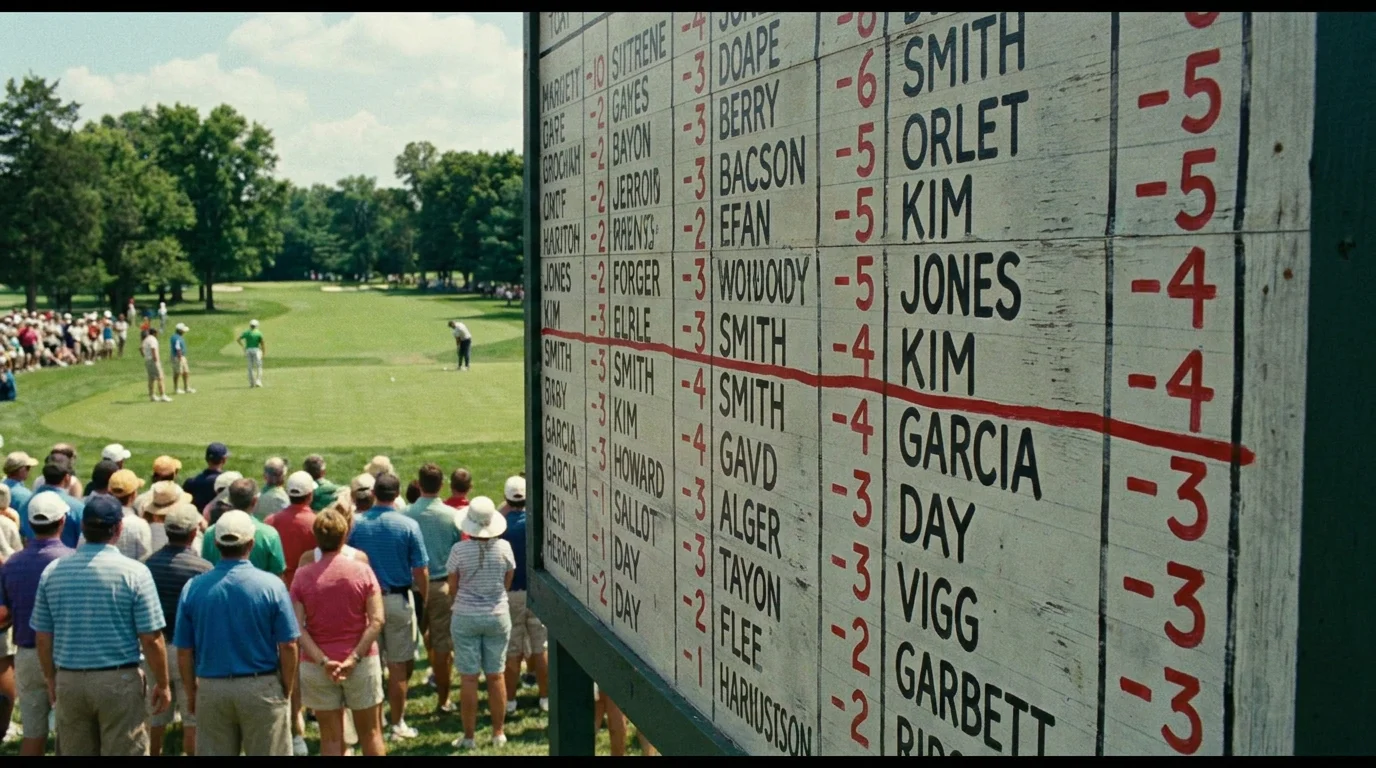
Dead heats — where both players finish on the same score — typically result in a half-win settlement. Your potential winnings are halved, and half your stake is returned. In a 156-player field where dozens of players can finish on the same score, ties are surprisingly common in matchup markets. I factor dead-heat probability into my analysis, especially in round matchups where the scoring spread is narrower.
How to Assess a Golf Head-to-Head
Every Wednesday evening, I run what I call a “matchup scan” — a 20-minute routine that narrows the week’s pairings to the two or three I want to bet. The process is not complicated, but it is structured, and structure is what separates a betting system from a hunch.

First, I check current form over the last six to eight tournaments. Not just finishing positions, but Strokes Gained data — specifically SG: Approach and SG: Off-the-Tee, because those two categories correlate most strongly with final results. A player who ranks in the top 30 for SG: Approach over a rolling eight-event window is performing at a level that matchup markets do not always fully price in, especially if their recent finishing positions were dragged down by poor putting weeks.
Second, I overlay course fit. If this week’s venue is a par-70 with tight fairways and small greens, I want the accurate iron player, not the bomber. Conversely, on a 7,500-yard par-72 with generous landing areas, distance off the tee dominates. The mismatch between a player’s skill profile and the course profile is where I find the most exploitable matchup edges.
Third, I look at the price. A matchup is only worth betting if the implied probability leaves room for error. If my analysis says Player A should beat Player B 58% of the time, I need a price that implies 50% or less — something around 11/10 or better. The margin has to be there. Without it, the analysis is interesting but not actionable, and I move on to the next pairing without placing a bet.

Matchup Betting FAQ
What happens to a matchup bet if one player withdraws mid-round?
Settlement depends on the bookmaker’s specific rules. Most operators settle the bet in favour of the player who completes more holes or rounds. If neither player completes the round, the bet is usually voided with stakes returned. Always check the matchup settlement rules before placing the bet, as policies differ between bookmakers.
Are 72-hole matchups better value than single-round matchups?
72-hole matchups tend to reduce variance because form has four rounds to assert itself, which can favour the better-prepared punter. Single-round matchups carry more randomness — one bad hole can swing the result. Neither format is inherently ‘better value’; the edge depends on your analysis. I use 72-hole matchups when I have a strong course-fit thesis and single-round matchups when the edge is round-specific.
