
 Available in US
Content

Golf’s Oldest Major and a Punter’s Favourite
The Open is the week I circle on the calendar every year — not just as a golf fan, but as a bettor who has learned that links golf produces the most unpredictable and rewarding betting outcomes of any major championship. I have backed more winners and near-misses at The Open than at the other three majors combined, not because I am better at links analysis, but because the conditions create variance that the market consistently underprices.
The 2025 Open Championship at Royal Liverpool carried a purse of $17 million, with the winner collecting $3.1 million. Sportradar has expanded its agreement with the R&A to cover The Open with official data services, meaning the data pipeline feeding bookmakers’ in-play models is stronger than ever. For UK punters, The Open is the home major — the one event where local knowledge of links golf, British weather patterns, and course characteristics provides a genuine information edge over the broader market.
Key Markets for The Open
The outright winner market is the headline, but The Open generates a wider range of betting opportunities than most punters explore.
Each-way terms at The Open are typically generous — eight places at 1/5 the odds is common among UK bookmakers, compared to five places at 1/4 for a standard tour event. That difference in place terms materially changes the expected value of an each-way bet. A player at 40/1 each-way with eight places at 1/5 has a substantially different payout profile from the same player at 40/1 with five places at 1/4. I always calculate the each-way EV separately for Open Championship markets rather than relying on rules of thumb from regular events.
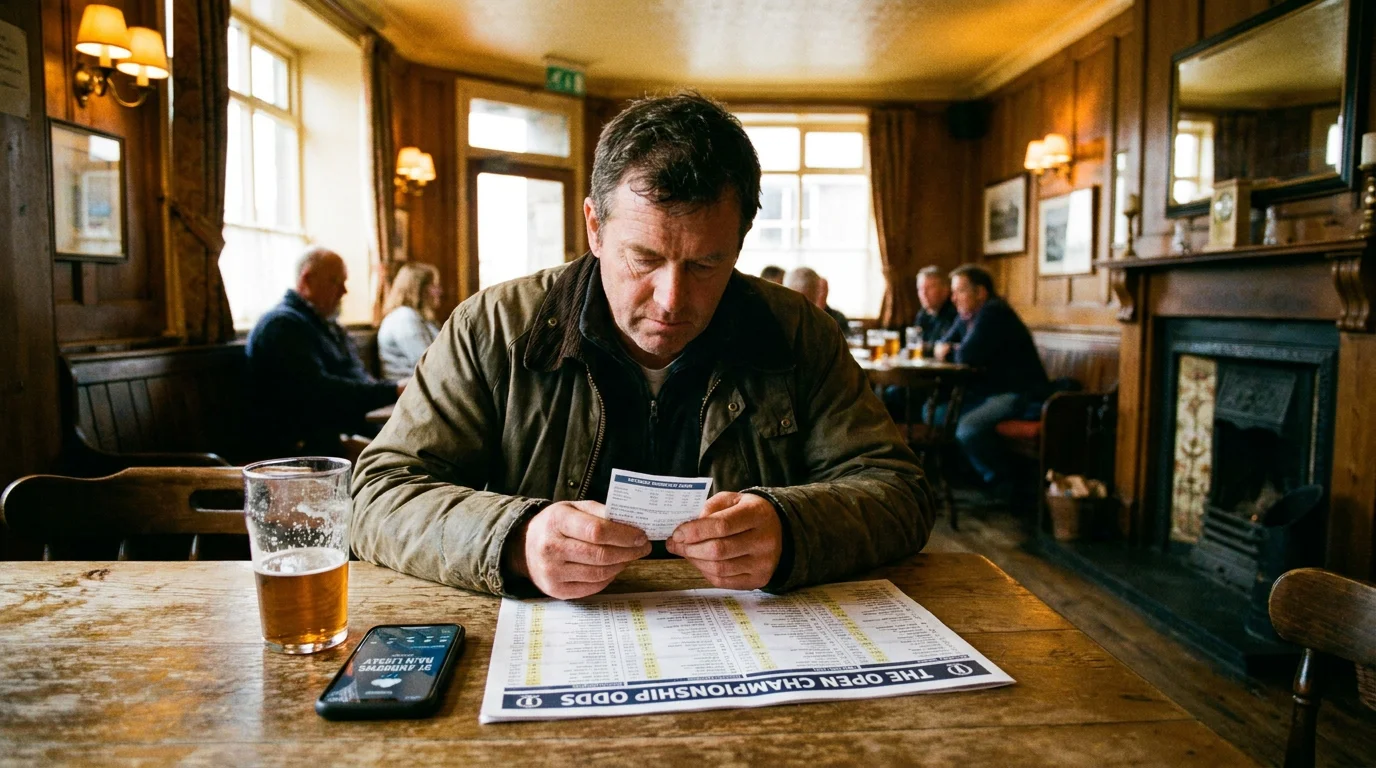
Top-twenty and top-ten markets attract significant volume because The Open’s unpredictable conditions make it harder to pick the winner but easier to identify players who will contend. A player with strong links form who thrives in wind and rain might not win, but a top-twenty finish is well within reach. I often allocate more of my weekly budget to top-finish and each-way plays at The Open than to outright singles.

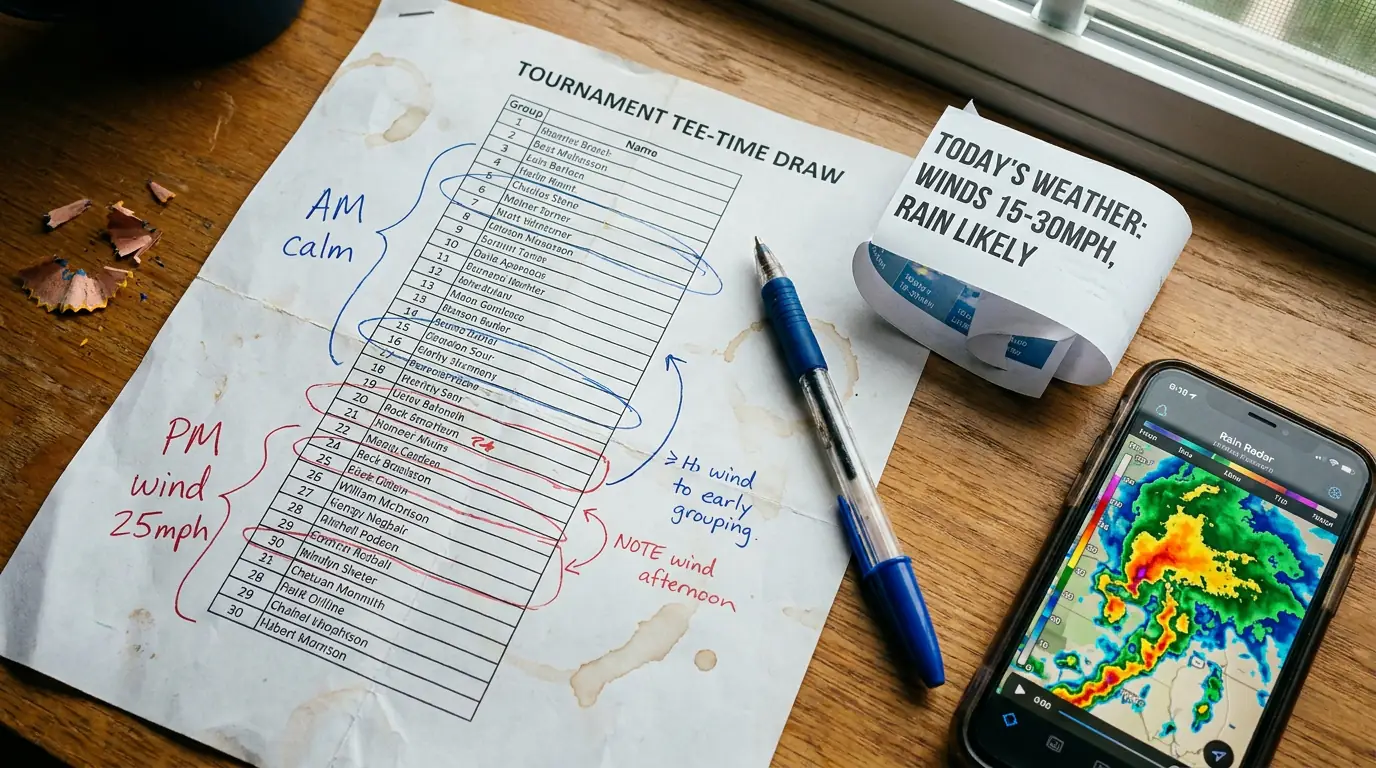
Matchup markets at The Open carry an extra layer of interest: the tee-time draw. Players starting at different times face different conditions — a morning starter might play in relative calm while an afternoon player battles 30 mph gusts. Bookmakers set matchup prices before the draw is announced, which creates a window of opportunity on Wednesday evening when you can identify asymmetric weather exposure between paired players.
Why Links Conditions Flip the Form Book
Links golf is a different sport from the parkland game played on most PGA Tour venues. The ground is firm and fast, the wind is constant, and the ball bounces unpredictably on fairways that were never watered to PGA Tour softness. Players who rely on a high ball flight and spin control — the dominant style in American golf — can struggle when the wind demands low, running shots and creative recovery play.
This is where UK punters have an edge. If you play links golf yourself, you understand instinctively that controlling trajectory matters more than distance. The player who can flight the ball low into a headwind and use the firm ground to run approach shots onto the green has a structural advantage over the bomber who tries to fly every iron pin-high. Sportradar’s expanded data deal covering DP World Tour and R&A events means the statistical infrastructure is catching up to this intuition, but the market still underweights links-specific skills in its pricing.

I look specifically at players with a track record in windier conditions. The PGA Tour does not publish a “wind performance” stat, but you can approximate it by filtering results at venues known for wind — Kiawah Island, Torrey Pines, Pebble Beach — and checking which players maintain their scoring average in exposed conditions. Cross-reference that with actual links experience (Open Championship history, Scottish Open results, DP World Tour events on links courses) and a shortlist emerges that often diverges from the pre-tournament favourite list.
For a fuller picture of how to match player profiles to course demands, the course form guide provides a framework that applies directly to links venues.
The Weather Draw and Its Impact on Odds
I once watched a Thursday morning wave at The Open shoot an average of 68 while the afternoon wave averaged 73. Same course, same hole locations, same pins — but a weather front moved through after lunch, turning a manageable breeze into a full gale. That five-stroke swing is an extreme example, but asymmetric weather draws are a feature of The Open, not a rarity.

The Open Championship uses a split tee-time draw: half the field starts in the morning, the other half in the afternoon. The groups are reversed for round two, so every player gets one morning and one afternoon start across the first two days. In theory, this balances the draw over 36 holes. In practice, the balance is imperfect because weather can be dramatically worse on one afternoon than another morning.
For betting purposes, the draw creates two separate opportunities. First, FRL and round-one matchup markets are directly affected — a player drawn in the favourable wave has a lower expected score for that round. I check the four-day forecast on Wednesday night, identify which wave is likely to face tougher conditions, and adjust my round-one bets accordingly. Second, the 36-hole cut is influenced by the draw. A player who faces brutal conditions in both rounds (bad draw on Thursday morning combined with bad draw reversal on Friday afternoon) can miss the cut despite playing well relative to conditions. That affects make/miss the cut markets significantly.
The key is timing. Weather forecasts update frequently, and the odds adjust — but they adjust slowly. A significant forecast change on Wednesday evening may not be fully reflected in Thursday morning’s prices. That lag is where the value sits, and it rewards the punter who checks the weather forecast as part of their betting routine rather than as an afterthought.
The Open Betting FAQ
How does the weather draw affect each-way value at The Open?
A favourable weather draw — playing in calm conditions while the other half of the field battles wind — can be worth several strokes over the first two rounds. This shifts cut-line probabilities and top-finish likelihoods. Each-way value increases for players drawn in the better wave, because their probability of making the cut and finishing in paying positions rises relative to their pre-draw odds. Check the forecast and draw pairings before placing each-way bets.
Are The Open each-way places more generous than a standard PGA Tour event?
Yes. Most UK bookmakers offer eight places at 1/5 the odds for The Open, compared to five or six places at 1/4 for a regular PGA Tour event. The additional places and the 1/5 terms (rather than 1/4) mean each-way bets at The Open have a different expected value profile. Calculate the place part of your each-way return separately to see the impact.
