
 Available in US
Content

A Niche Market With Overlooked Value
I stumbled into top nationality betting almost by accident. It was the 2019 Open Championship, and a friend casually mentioned he had backed “Top Irish” at a price I thought was absurd. Shane Lowry won the Claret Jug that week, and my friend collected a payout that made my outright miss look painful. Since then, I have treated the top nationality market as a quiet corner of the card where bookmakers often leave value sitting untouched — partly because so few punters bother to look.
The premise is simple: which country will produce the highest-finishing player in the tournament? You are not picking a winner. You are not picking a specific finishing position. You are backing a nation — typically grouped by passport, though the exact definition can vary — and whichever country’s best-placed representative finishes highest on the leaderboard wins the market. The R&A’s latest participation report counts 108 million golfers globally, and that worldwide spread of talent is exactly what makes the top nationality market interesting from a betting perspective.
This is a market where the field’s international composition directly shapes the odds, and understanding that composition gives you an edge that most punters — focused on individual player markets — never develop.
How Top Nationality Bets Are Settled
Settlement is based on the official final leaderboard position after 72 holes (or however many rounds the tournament completes). The country whose representative finishes in the highest position wins. If the United States has ten players in the field and the best-finishing American is tied for third, while England’s best finisher is solo fifth, the US wins the nationality market.
What happens in a tie? If the best-placed American and the best-placed Englishman both finish on the same score — say, both tied for fourth — dead heat rules apply. The mechanics are the same as in any other golf market: your payout is reduced proportionally. I have seen this trigger at majors more often than you might expect, especially when two strong golfing nations each have a player in contention on Sunday afternoon.
One detail that trips people up: the market covers the entire field, not just the players you know. If you back “Top Australian” and an unheralded Aussie ranked 180th in the world fires a 62 on Sunday to finish third, that counts. The market does not care about pre-tournament favourites or name recognition. It cares about final position. This is why the market rewards punters who look beyond star names and assess the depth of each nation’s contingent in the specific field.

Historical Nationality Trends at Majors
Majors are where the top nationality market gets genuinely interesting, because the fields are international by design and the stakes amplify every nation’s motivation. I keep a simple spreadsheet tracking nationality winners at each major going back 15 years, and the patterns are revealing.
The United States dominates by sheer numbers. At most PGA Tour events, Americans constitute 60–70% of the field. At majors, the proportion drops to around 40–50% because European, Asian, Australian and South American players earn invitations through world ranking and qualifying. That dilution changes the market dynamics. The US is almost always favourite in the top nationality market, but the price shortens at majors — sometimes to the point where there is no value at all.
Europe offers the richest hunting ground for value. England, with 4.2 million on-course players feeding a deep talent pipeline, regularly produces multiple top-50 ranked players in any major field. But England is priced as a narrower group — three or four players typically — compared to the US contingent. The result is that English odds can be generous when the specific English players in the field match the course profile well. The same logic applies to Australia, South Korea, and increasingly to countries like Norway and Chile, which have produced world-class players from relatively small player pools.
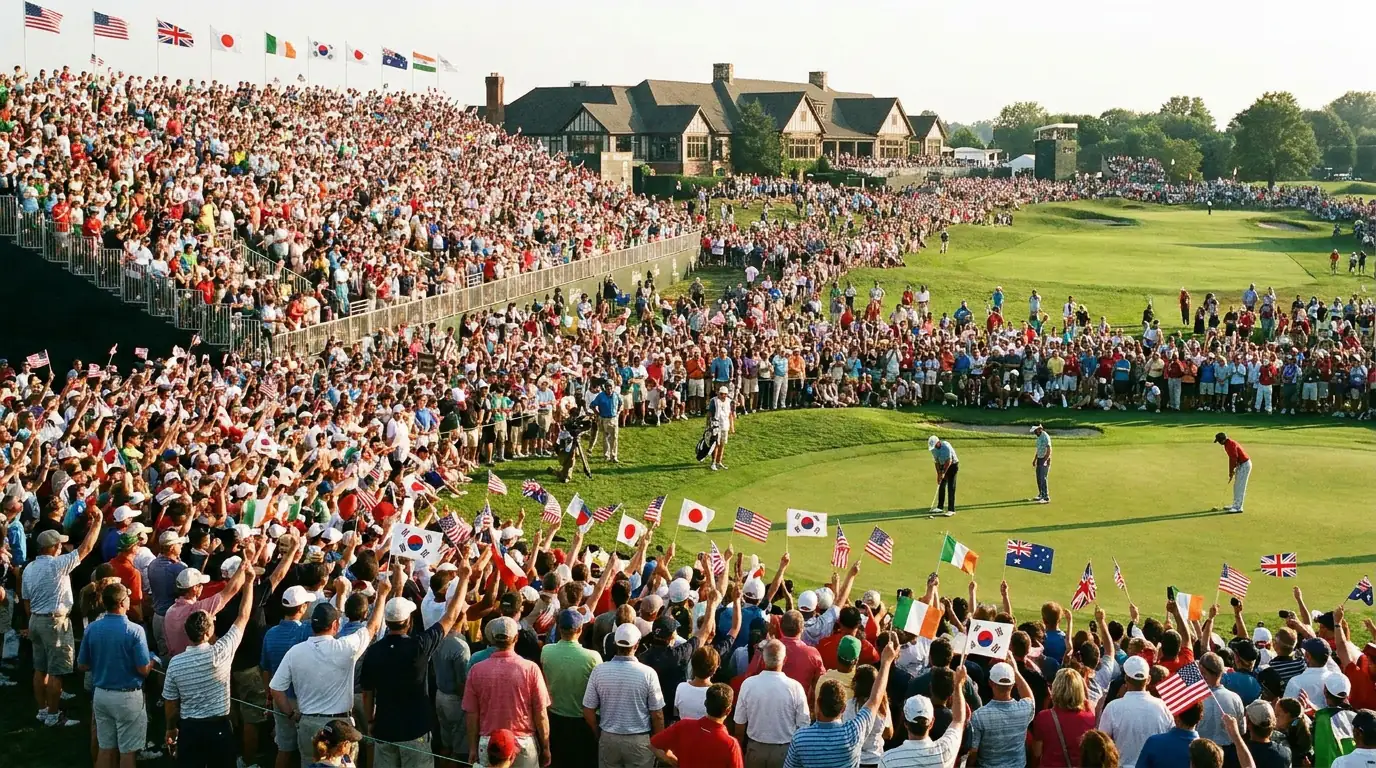
The R&A’s data shows Europe as the second-largest participation region with 20.3 million adult golfers. That pipeline matters at the elite level, and it means European nations collectively provide strong top nationality value when you look at the full picture rather than just the headline favourite.

Spotting Value in International Fields
My process for the top nationality market starts on Tuesday of tournament week, when the final field is confirmed. I count the number of players from each nation, note their current world rankings, and overlay recent form. A nation does not need five top-20 players to win the market — it needs one player in peak form who suits the course.
South Korea is a case I return to often. Korean golfers have dominated the LPGA Tour for years, and the men’s game is catching up. At tournaments in Asia-Pacific or on courses that reward precision iron play, a Korean contingent of two or three players can represent outstanding value at 12/1 or 14/1 — prices that imply a 7–8% win probability when my numbers suggest something closer to 10–12%.

The mistake most punters make is treating the top nationality market like a flag-waving exercise — backing their own country regardless of the field composition. Patriotism is a terrible betting strategy. What works is treating each nation as a portfolio: how many players do they have in this field, what is the quality distribution, and does the course suit their strongest representative? When those factors align and the price is generous, you have a bet. When they do not, you move on — no matter which anthem you sing.

For a broader view of how these niche markets fit into the full range of golf betting options, the golf betting markets explained guide covers every major market type in detail.
Top Nationality FAQ
How is the top nationality bet settled if two players from different countries tie for best finish?
Dead heat rules apply. If the best-placed American and best-placed Australian finish on the same score, the payout for backers of either nationality is reduced proportionally — typically halved in a two-way tie. The same dead heat formula used in other golf markets applies: available positions divided by tied entries, multiplied by the full potential return.
Is the top nationality market offered for every PGA Tour event?
No. The top nationality market is most commonly available for major championships, flagship events like The Players Championship, and tournaments with large international fields. Regular-season PGA Tour events with predominantly American fields may not have the market, or it may be offered with limited pricing. The market tends to appear when the field includes meaningful representation from at least four or five nations.
