
 Available in US
Content

Ready to Place Your First Golf Bet?
My first golf bet was a disaster for all the right reasons. I picked a player because I liked his name, backed him to win a tournament outright at 80/1, and spent the next four days refreshing a leaderboard app while he languished in 94th place. I lost a fiver and gained something more useful — the realisation that golf betting rewards preparation, not impulse. If you are reading this, you are already ahead of where I was, because you are starting with the questions instead of the bet slip.
Around 66% of UK adults bet at least once a month, and 24% place bets on sport online regularly. Golf is one of the fastest-growing segments of that market, driven by expanded TV coverage, new betting formats and prize pools that make headlines. The PGA Tour alone is distributing $450 million in prize money across its 2026 season. But before any of that matters, you need to understand the basics: where to bet, how odds work, and how to place a bet without second-guessing every click.
What to Look for in a UK-Licensed Bookmaker
The single most important thing for a beginner is not the welcome offer or the app design — it is the licence. Every bookmaker legally operating in the UK holds a licence from the UK Gambling Commission. That licence means the operator is subject to player protection rules, fund segregation requirements and dispute resolution processes. If a bookmaker does not display its UKGC licence number, walk away. No exceptions.
Beyond the licence, I look for three things. First, depth of golf markets. Some bookmakers treat golf as an afterthought and offer only outright winner and top-five markets. Others provide head-to-head matchups, first round leader, make/miss the cut, group betting, and in-play options. As a beginner, you do not need all of these on day one, but you want room to grow. Second, the quality of the odds. Prices vary across bookmakers, and consistently taking the best available price across a season adds measurable value to your returns. Third, usability. A clean app or site where you can find the golf section quickly, read the market rules, and place a bet without confusion is worth more than a flashy promotion.
What I deliberately ignore: welcome offers. They exist to acquire customers, and the terms and conditions often include wagering requirements or minimum odds restrictions that limit their practical value. By all means, use them if the terms are straightforward — but never choose a bookmaker solely because of the bonus. The bookmaker you stick with for years matters more than the one that hands you a free tenner on day one.

Golf Odds in 60 Seconds
Odds tell you two things: how much you stand to win and what the bookmaker thinks the probability is. In the UK, you will encounter two formats — fractional and decimal — and switching between them is easy once you see the logic.
Fractional odds look like this: 20/1 (read “twenty to one”). For every GBP 1 you stake, you win GBP 20 in profit, plus your GBP 1 stake back. Total return: GBP 21. The first number is your profit; the second is your stake.
Decimal odds express the total return per GBP 1 staked. The decimal equivalent of 20/1 is 21.0. Multiply your stake by the decimal odds to get your total return. GBP 5 at 21.0 returns GBP 105.
To convert fractional to decimal: divide the first number by the second and add 1. So 20/1 becomes (20 divided by 1) plus 1 = 21.0. And 5/2 becomes (5 divided by 2) plus 1 = 3.5. For a deeper exploration of how odds relate to implied probability and bookmaker margins, the golf betting odds guide goes into the full mechanics.

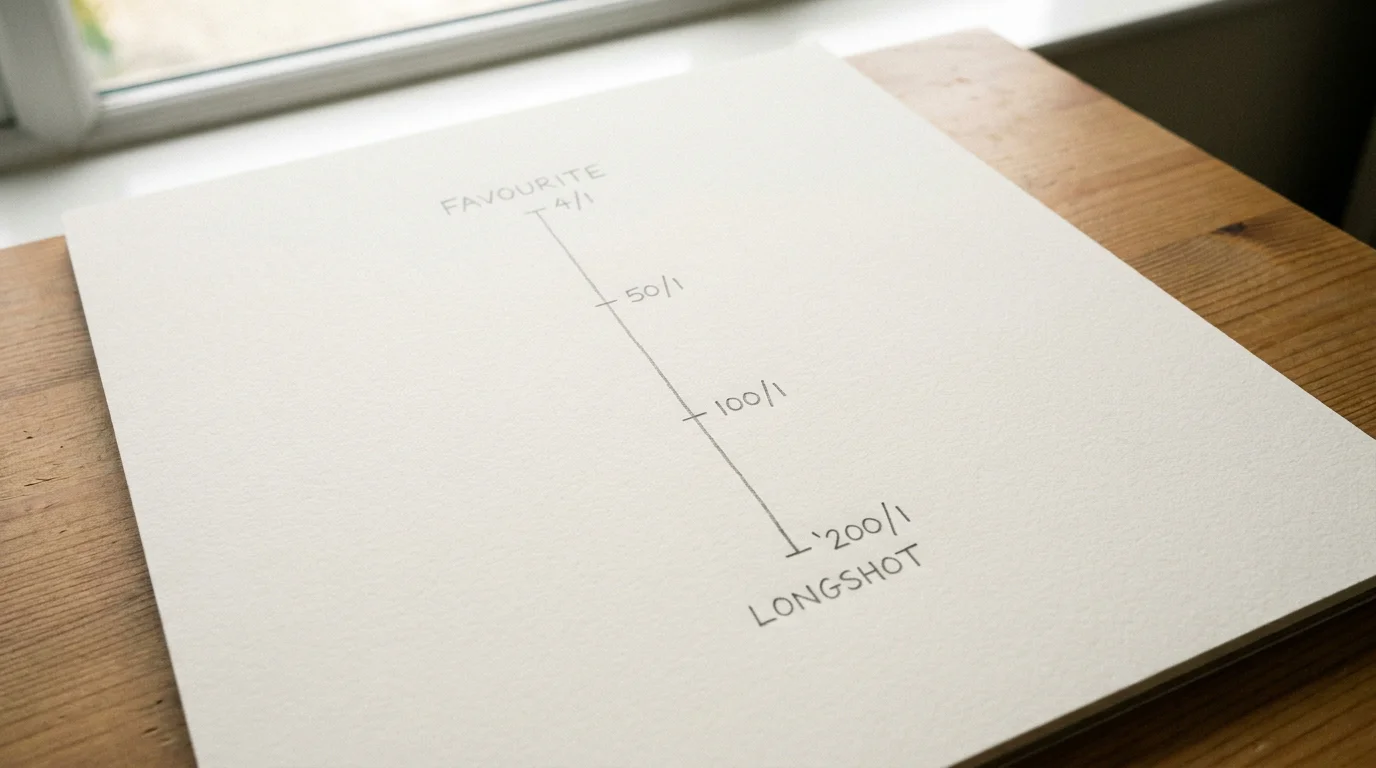
As a beginner, the key insight is this: higher odds mean lower probability and higher potential payout. Golf outright odds are much higher than in football or tennis because the fields are larger — 156 players instead of two teams. That is why a golf tournament favourite might be priced at 8/1 while a football match favourite is 4/7. The sport’s structure makes long odds the norm, not the exception.
Placing Your First Bet: Step by Step
Here is the exact process I follow every time, stripped down to the essentials.
Open your bookmaker’s app or website and navigate to golf. You will see a list of upcoming tournaments. Tap the tournament you want to bet on. The default view is usually the outright winner market — a list of players with odds next to each name. Pick a player you have researched (not one you picked because you liked their shirt colour last Sunday — learn from my mistake) and tap their odds. The selection appears on your bet slip.
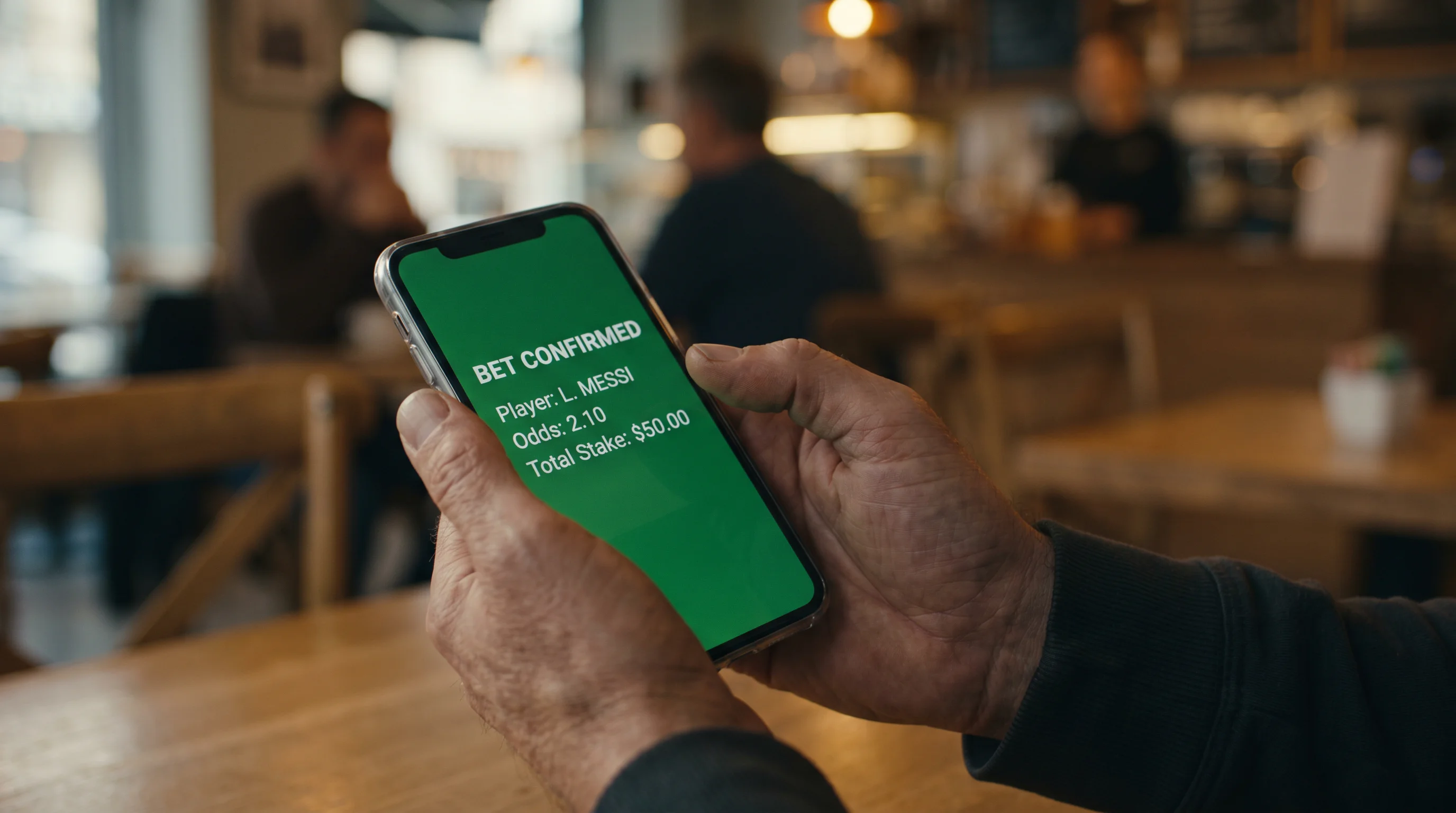
Enter your stake in the bet slip. Start small. A GBP 2 or GBP 5 bet is perfectly sensible for your first wager. The bet slip will show your potential return based on the odds and stake. Double-check three things: the player name, the market (outright winner, top ten, matchup — make sure it is what you intended), and the stake amount. Then confirm the bet.
That is it. The bet is placed. You can track it in your “My Bets” or “Open Bets” section of the app. The tournament runs Thursday through Sunday, and your bet settles when the event finishes. If your player wins, the return credits to your account automatically.
One thing I wish someone had told me early: take a screenshot of your bet slip. Not because you need to dispute anything, but because reviewing your bets after the tournament — win or lose — is the fastest way to improve. Write down why you picked that player, what data you used, and what you learned from the outcome. A month of this habit teaches you more than a year of casual punting.
Five Mistakes Every Beginner Makes
I made all five of these. You do not have to.
The first is betting on every tournament. Golf runs nearly year-round, and there is always an event on the schedule. But not every event is worth betting on. Fields vary in quality, data availability differs between tours, and spreading yourself thin means spreading your bankroll thin. Start by focusing on PGA Tour events and majors, where the data is deepest and the markets are most liquid.
The second is ignoring the course. A player who thrives on wide, windswept links courses may struggle on a tight, tree-lined parkland layout. Course fit is not a nice-to-have — it is the foundational variable in golf betting. Even as a beginner, a quick look at the course’s characteristics and the player’s recent performance on similar tracks will improve your selections.

The third is chasing losses. You will have losing weeks. Possibly losing months. Golf’s variance is extreme because the fields are large and the outcomes are hard to predict. If your response to a losing week is to double your stakes the following week, you will burn through your bankroll before your edge has time to show. Flat staking — the same amount on every bet — is the safest approach for a beginner.
The fourth is backing favourites blindly. The best player in the world wins perhaps two or three tournaments a year out of 20+ starts. That means even at the top of the sport, the win rate is 10–15%. Paying short prices for those probabilities is rarely good value. Your first instinct as a beginner might be to back the world number one every week — resist it.
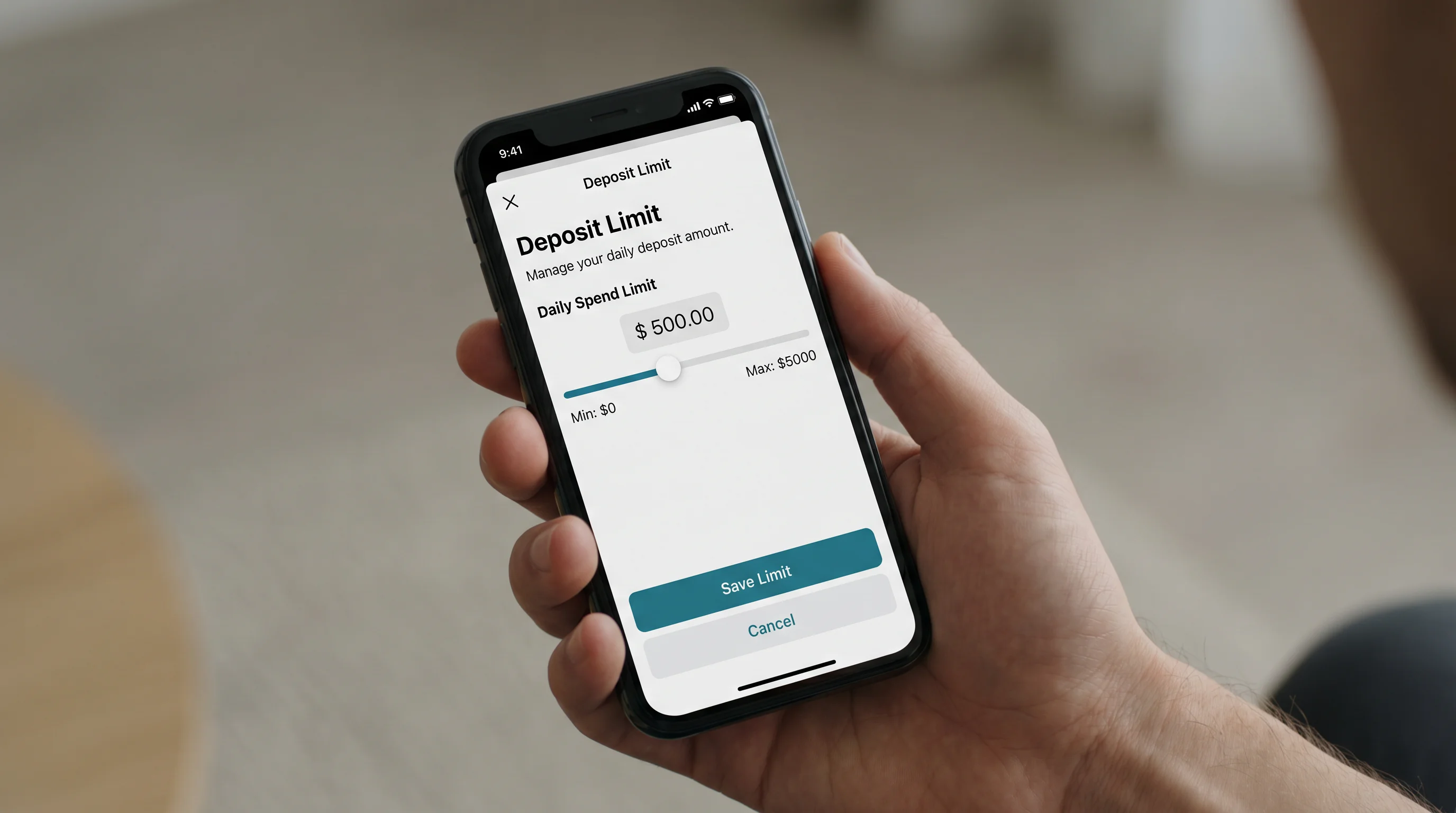
The fifth is neglecting responsible gambling tools. Every UK-licensed bookmaker offers deposit limits, loss limits, session timers and self-exclusion options. Set a deposit limit from day one. It costs you nothing, protects your bankroll, and removes the temptation to chase a bad week with money you cannot afford to lose. Nine percent of UK adults bet on sport monthly, and the punters who last longest are the ones who manage their stakes from the start, not the ones who learn discipline after a painful lesson.
Beginner FAQ
How much money do I need to start golf betting in the UK?
There is no formal minimum, but a practical starting bankroll for a beginner is GBP 50 to GBP 100. This allows you to place GBP 2 to GBP 5 bets across several weeks without risking money you cannot afford to lose. The goal at the start is to learn, not to profit — treat your early bankroll as an education budget.
Is it legal to bet on golf online in the UK?
Yes. Online sports betting, including golf, is legal in the UK for anyone aged 18 or over. All operators must hold a licence from the UK Gambling Commission. Betting with a UKGC-licensed bookmaker ensures your funds are protected and that the operator complies with player safety regulations.
