
 Available in US
Content
You Do Not Need the Winner to Win
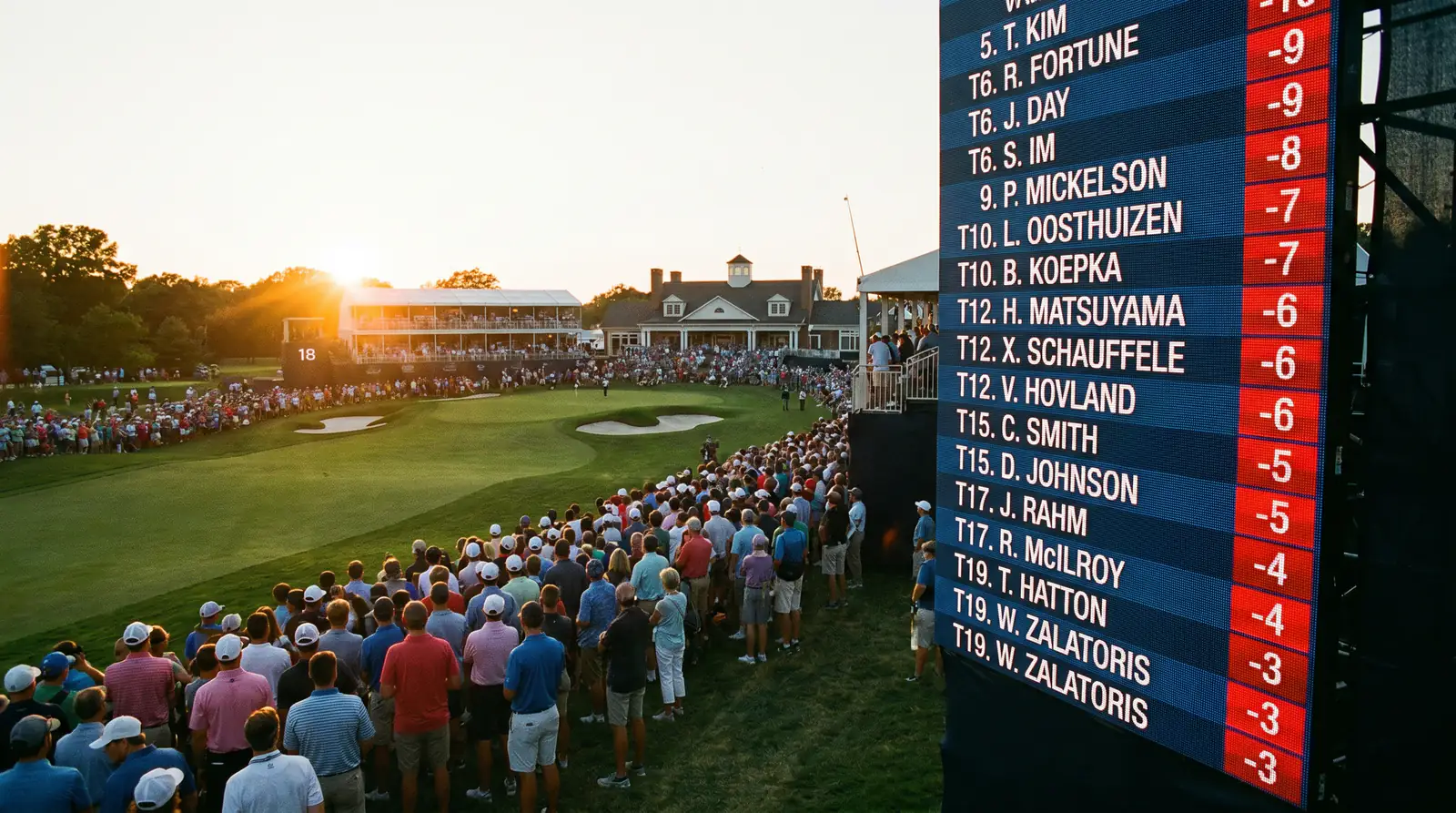
The first time I cashed a top-20 bet, I felt slightly sheepish — my player finished 17th, six strokes behind the champion, and the payout was modest compared to the outright dream. Then I looked at my season-long records and realised something important: my top-finish bets were the only category producing a consistent profit. Outrights were feast or famine. Each-way returns were respectable but volatile. Top-finish betting — specifically top 10 and top 20 — was the quiet engine generating steady returns week after week.
Top-finish markets ask a simpler question than the outright: will this player finish inside the top 5, top 10, or top 20? The reduced ambition lowers the variance dramatically. A player priced at 33/1 outright might be 7/2 for a top-10 finish and 6/4 for a top 20. Those shorter prices reflect a much higher probability of success, and the maths of consistent positive expected value works in your favour over a full season.
How Top-Finish Markets Are Priced
Bookmakers derive top-finish prices from the same probability models that generate outright odds, but the conversion is not always clean. The outright market prices every player’s probability of finishing first. The top-10 market prices the probability of finishing anywhere from first to tenth. In theory, the top-10 probability should be the sum of the player’s probability of finishing in each position from first through tenth. In practice, bookmakers apply a separate overround to the top-finish market, and that overround can vary significantly between operators.
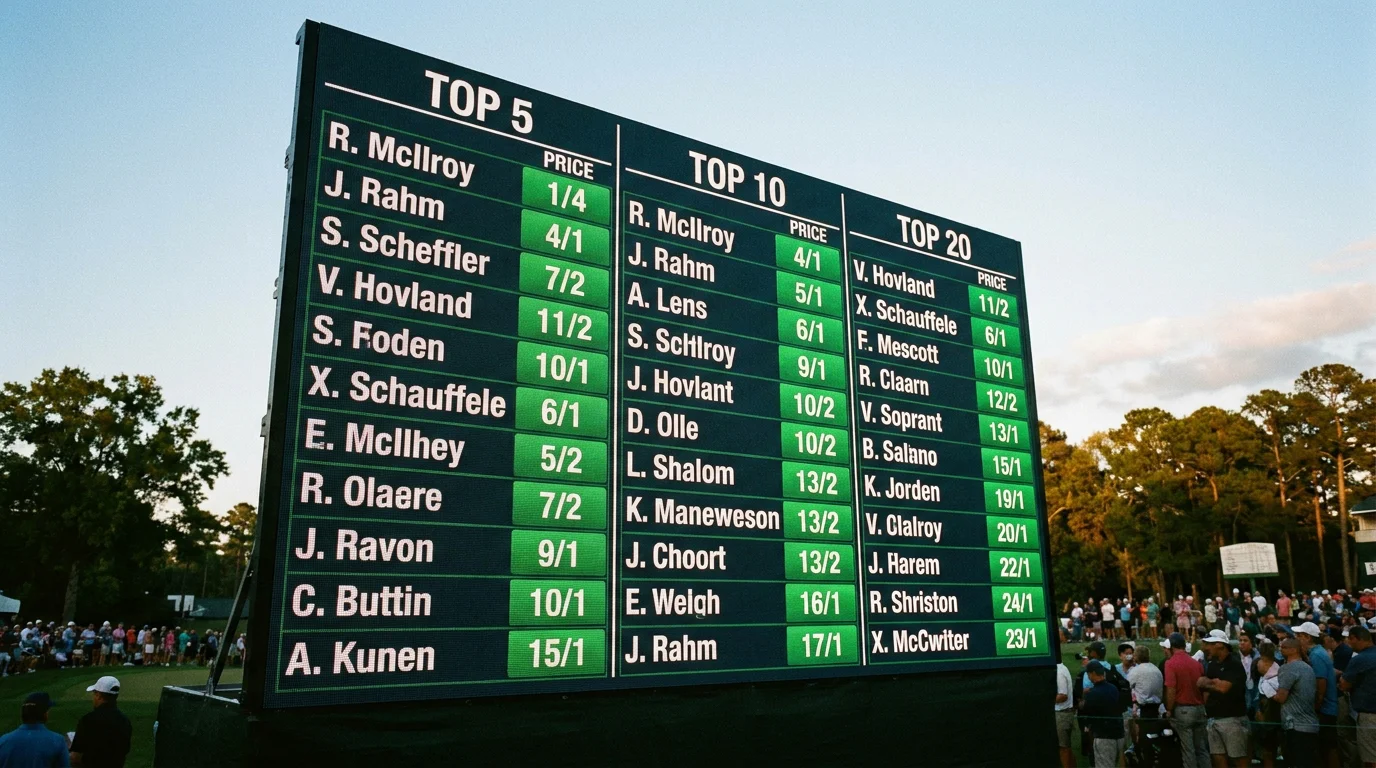
This is where value appears. A player’s outright price might be efficiently priced by the market — the sharp money hammers outright markets hardest — while his top-10 price carries a wider margin and less scrutiny. I have found that top-10 and top-20 markets are priced less sharply than outrights because the volume of money flowing into them is lower and the bookmaker’s models apply less individual attention to positional props. The PGA Tour’s betting handle grew 20% in 2025, and much of that growth has been concentrated in outright and in-play markets, leaving top-finish pricing comparatively soft.
Choosing Between Top 5, Top 10 and Top 20
Each tier asks a different question about the player’s profile and the event’s field strength. A top-5 bet is close to an outright — you need a player who is capable of contending for the title, because the top five in a PGA Tour event are typically within two or three strokes of the winner. If your player is not realistically a victory threat, a top-5 bet is speculative.

Top-10 bets are the sweet spot for me. The top 10 in a 156-player field represents roughly the top 6–7% of runners, which is a wide enough window that a well-selected player with solid form can reach it without needing a career week. The variance is lower than top 5, the prices are still attractive, and the analytical work translates cleanly: if my model gives a player a 15–20% chance of a top-10 finish and the bookmaker prices him at 6/1, that is a clear value bet.
Top-20 bets are the conservative end. The prices are shorter — typically 6/4 to 5/2 for mid-field selections — but the hit rate is higher. I use top-20 bets in two situations: when I have strong conviction on a player’s form and course fit but the outright and top-10 prices do not offer sufficient value, and as part of a prop portfolio where I want to build consistent returns alongside higher-variance outright selections. The total prize pool on the PGA Tour stands at $450 million for 2026, and that prize depth means even a top-20 finish at a Signature Event earns the player a meaningful cheque — the field is incentivised to compete hard for every position.
Dead-Heat Risk in Top-Finish Bets
Dead heats are more common in top-finish markets than most punters realise. If five players tie for eighth place, all five count as top-10 finishers — but if the bet is settled under dead-heat rules, the payout is reduced. The standard dead-heat formula divides your winnings by the number of tied players who fall across the place boundary. So if three players tie for fifth and you have a top-5 bet on one of them, your payout is divided by three.
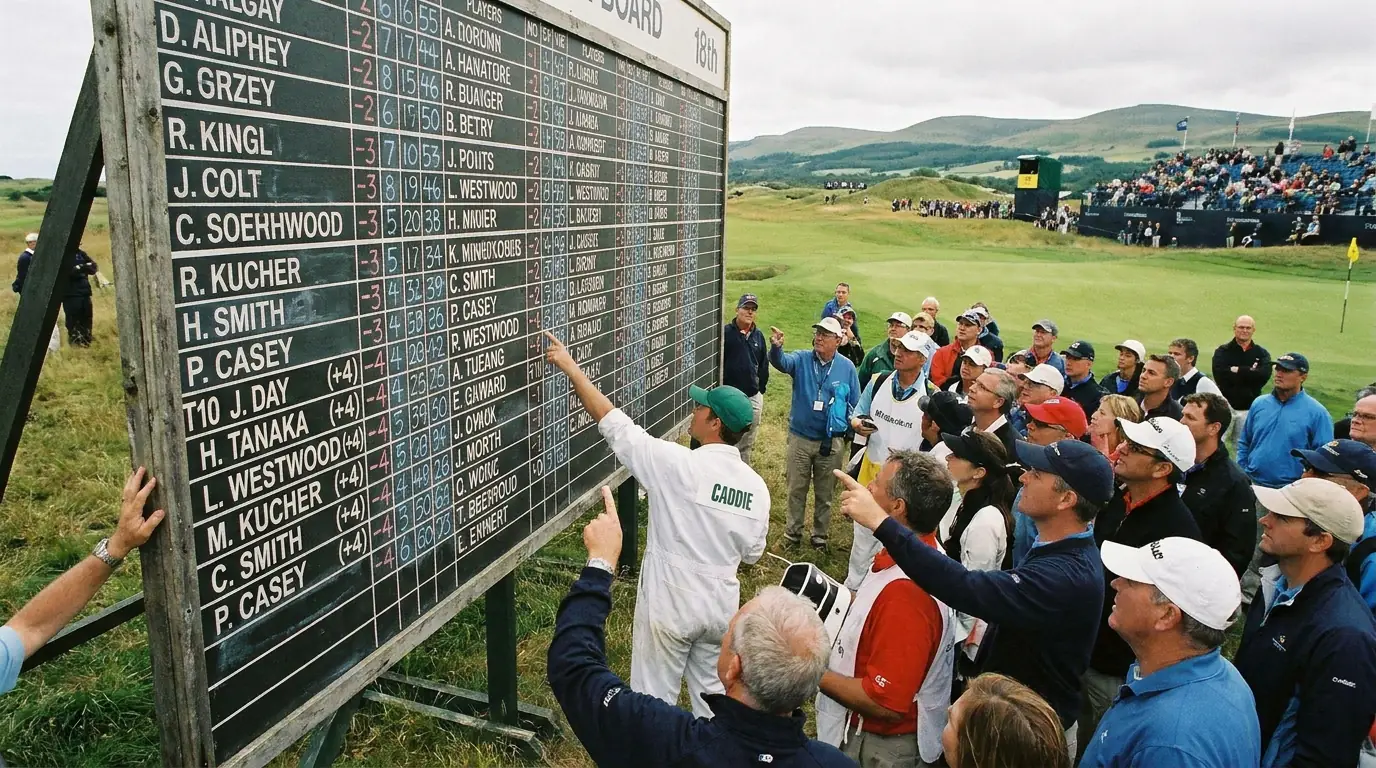
I factor dead-heat risk into my expected value calculations by discounting the projected payout by roughly 10–15% for top-5 bets and 5–10% for top-10 bets. The deeper the positional market, the less impact a dead heat has on your return because more of the tied players will fall inside the qualifying positions. At the top-20 level, dead-heat reductions are less frequent and less damaging because ties at 20th place are less common than ties at 5th or 10th — the leaderboard tends to be more spread out by the time you reach the lower teens.
For a thorough walk-through of how dead-heat arithmetic works across different tie scenarios, the dead-heat rules guide covers two-way, three-way and four-way ties with worked examples.
When Top-Finish Bets Beat Each-Way
A common question I get: should I bet each-way or take a standalone top-finish prop? The answer depends on the specific prices and terms available. An each-way bet is effectively two bets — one on the win and one on the place — and the place part pays at a fraction of the win odds (typically 1/4 or 1/5 for golf). A top-10 prop, by contrast, is a single bet on a single outcome with its own independently set price.

In many cases, a standalone top-10 prop at a UK bookmaker offers better expected value than the place part of an each-way bet, because the each-way place terms are derived mechanically from the outright odds while the top-10 price is set independently. The independence matters — it means the top-10 price can reflect a different assessment of the player’s chances from the outright price, and the gap between the two often favours the standalone prop.
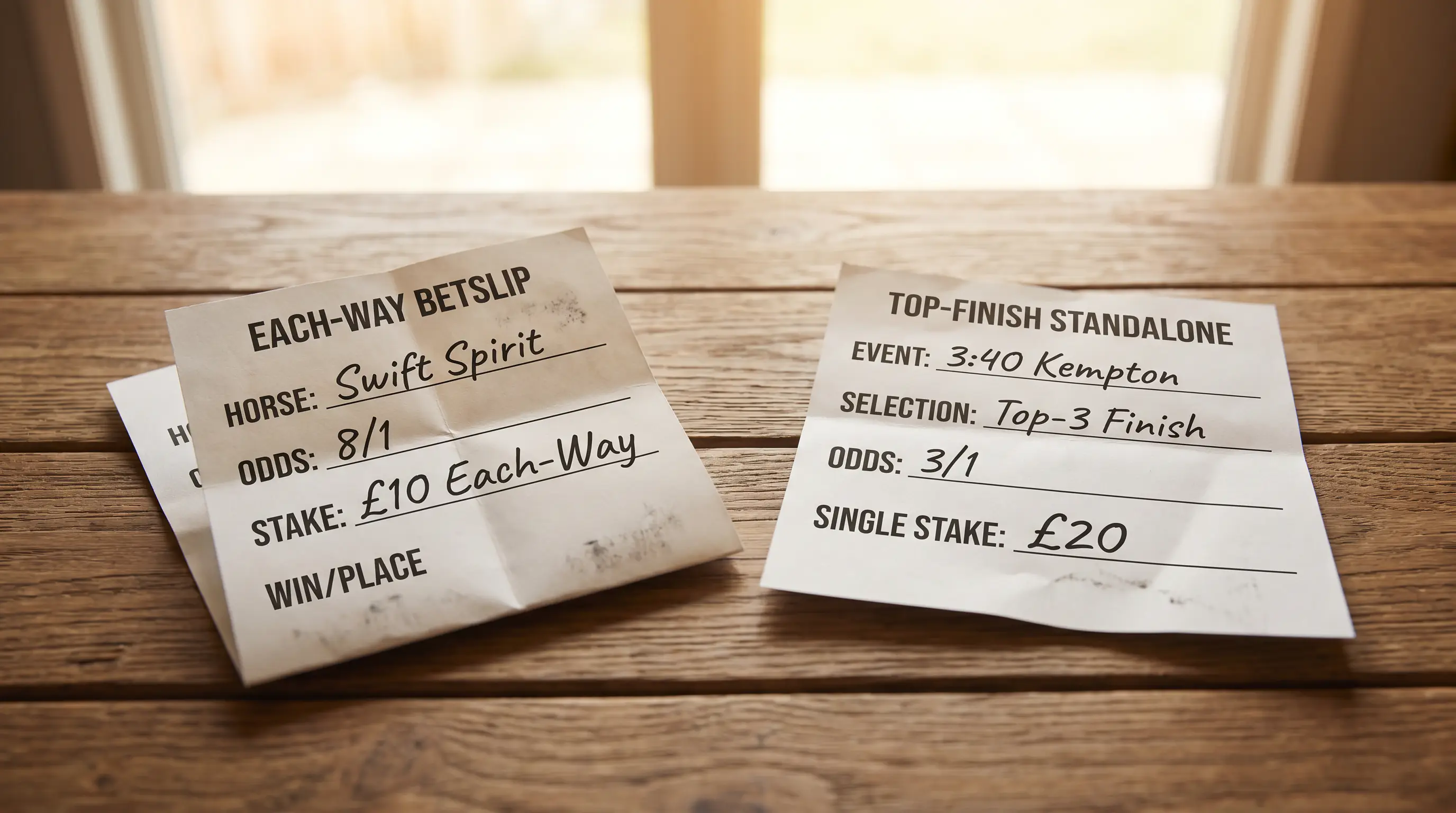
My practical approach: I compare the implied probability of the each-way place return against the implied probability of the top-10 or top-20 prop. If the prop offers a higher implied probability at a better price, I take the prop. If the each-way place terms are generous enough — extended places at 1/5 odds on a major, for instance — the each-way bet can win out. There is no universal rule. The maths decides each case individually.
Is a top-10 bet voided if my player withdraws during round three?
Settlement rules vary by bookmaker. Most UK operators void top-finish bets if the player withdraws before completing round one. If the player withdraws after completing one or more rounds, some bookmakers settle based on the player’s position at the time of withdrawal, while others void the bet. Always check the specific rules before placing the bet — this is one area where bookmaker terms differ meaningfully.
How does a dead heat affect a top-5 bet when four players tie for fifth?
If four players tie for fifth place and you backed one of them for a top-5 finish, the dead-heat rule applies. Your payout is calculated as if only one of the four tied players finished in the qualifying position: the full return is divided by four. This can significantly reduce the payout, which is why factoring dead-heat probability into your expected value calculation is important for top-5 and top-10 bets.
