
 Available in US
Content

Why Bankroll Management Matters More in Golf
I went bust twice in my first year of golf betting. Not because my selections were terrible — looking back, my strike rate was respectable — but because I had no staking plan. I would back a 50/1 outright with the same stake as an even-money matchup. When the outrights lost for six consecutive weeks, as they inevitably do, my bankroll evaporated before the matchup profits could rescue it. Golf’s variance is structurally higher than almost any other betting sport, and without a plan that accounts for that variance, even good analysis leads to empty accounts.
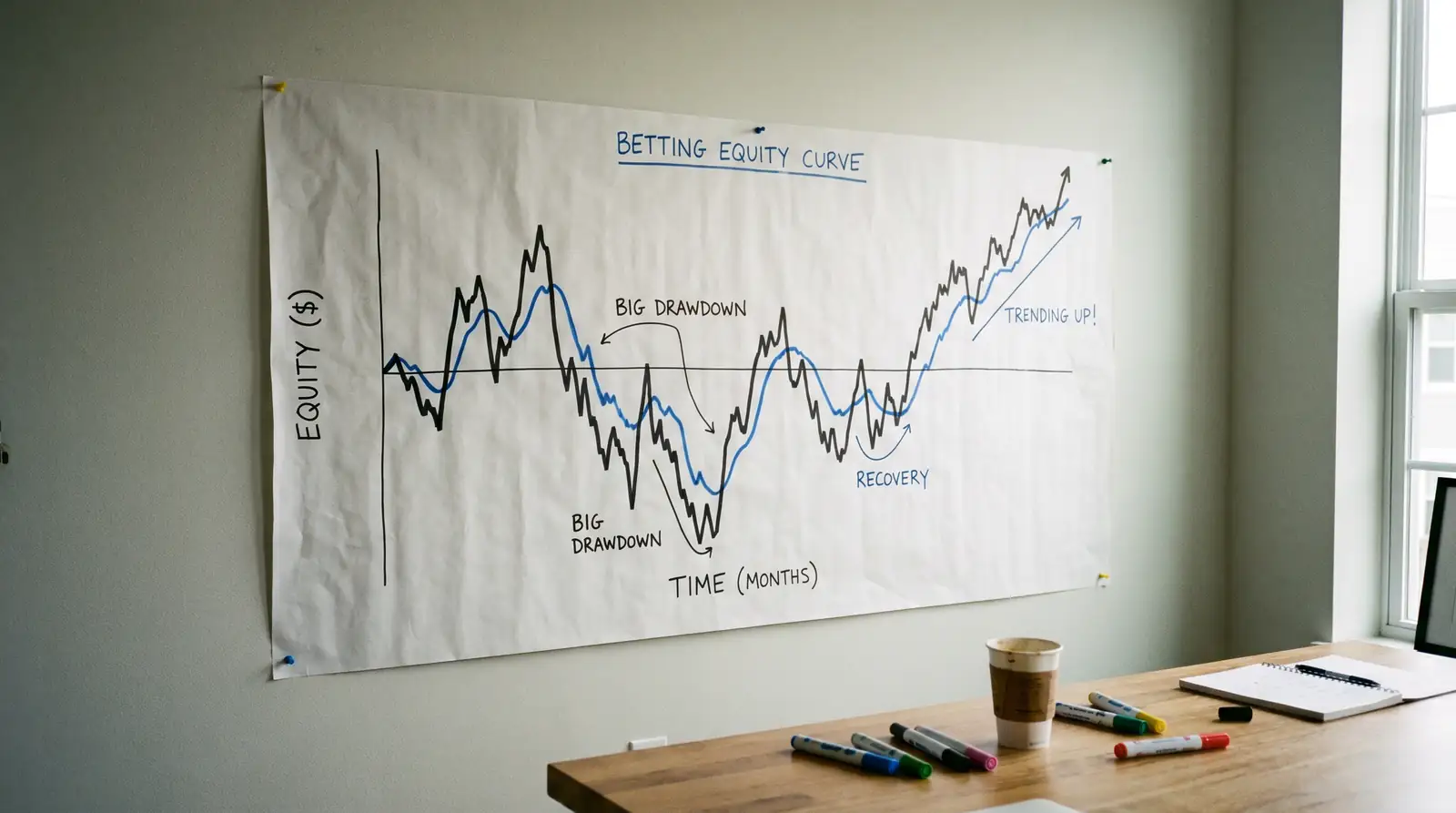
The numbers frame the problem. The PGA Tour has experienced 30–35% annual handle growth for several consecutive years, which means more money flowing into a sport where the tournament favourite might have a 10% chance of winning. Compare that to football, where the match favourite often has a 50–70% implied probability. A golf bettor operating with the staking habits of a football punter will experience longer losing runs, deeper drawdowns, and a far bumpier equity curve. Your bankroll plan has to be built for that reality.
Flat Staking vs Fractional Kelly: Which Suits Golf?
Two staking systems dominate serious betting: flat staking and the Kelly criterion. I have used both, and each has a role in a golf-specific context.
Flat staking is the simplest approach: every bet is the same number of units, regardless of the odds or your confidence level. If your unit is GBP 5, every bet is GBP 5 — the 4/6 matchup and the 66/1 outright get the same stake. The advantage is discipline. You cannot over-commit to a “sure thing” that turns out to be nothing of the sort, and you cannot underweight a long-shot that comes in at huge odds. The disadvantage is efficiency: you are treating every bet as equally valuable, which they are not. A bet where you estimate a 15% edge is objectively more valuable than one with a 3% edge, but flat staking does not differentiate.
The Kelly criterion solves that problem by sizing each bet according to the estimated edge. The formula is: stake = (edge / odds), where edge is the difference between your estimated probability and the implied probability, and odds are the decimal odds minus one. A larger edge produces a larger stake. The full Kelly approach maximises long-term bankroll growth in theory, but in practice it produces wild fluctuations because the stake sizes swing dramatically. A single wrong probability estimate can lead to a catastrophic over-bet.
My solution — and the one I recommend for golf bettors — is fractional Kelly. I stake at one-quarter of the full Kelly recommendation. This preserves the principle of betting more when the edge is larger, but it smooths the equity curve and reduces the impact of estimation errors. Golf odds are long and the probability estimates inherently uncertain, so the insurance of fractional Kelly is not just nice to have — it is essential. Roughly 66% of UK adults bet at least once a month, but the punters who last for years, not months, are the ones who manage variance instead of ignoring it.

Setting Your Unit Size and Weekly Budget
Your unit size should be a fraction of your total bankroll that allows you to survive a sustained losing run without going bust. The standard recommendation is 1–2% of your total bankroll per unit. If your bankroll is GBP 500, your unit is GBP 5 to GBP 10. If it is GBP 2,000, your unit is GBP 20 to GBP 40.
For golf specifically, I lean toward the lower end — 1% of bankroll per unit — because the losing runs are longer. A typical PGA Tour event generates between three and eight bets for me: two or three matchups, one or two outright each-way plays, and occasionally a top-finish or FRL bet. That is three to eight units at risk per week. Over a four-week stretch of poor results — entirely normal in golf — I might spend 20 to 30 units without a meaningful return. At 1% per unit, a 30-unit drawdown is a 30% hit to the bankroll. Painful, but survivable. At 3% per unit, the same drawdown wipes 90% of the account.
Weekly budget caps add another layer of protection. I set a hard limit on total weekly exposure: never more than 10 units in a single tournament week. If I have identified seven bets that all look valuable, the eighth does not get placed. This prevents the temptation to over-bet in weeks where the card looks strong — a trap I fell into often before implementing the cap. Discipline is not about restricting winning bets. It is about ensuring you still have a bankroll when the winners arrive.

Connecting Bankroll Discipline to Positive EV
A staking plan without edge is just a slower way to lose. Bankroll management preserves capital; edge generates returns. The two must work together, and understanding the connection between them is what separates recreational punting from systematic betting.
Positive expected value means that over a large number of bets, the average return per unit staked exceeds the average loss. In golf, where individual bet outcomes are highly variable, “large number” means hundreds of bets — not dozens. A 5% ROI on outright golf bets, which would be excellent over a full season, requires a minimum of 200 bets before you can even begin to distinguish skill from luck with any statistical confidence. Your bankroll must survive that 200-bet journey.
This is where the connection to staking becomes concrete. If your unit size is too large relative to your bankroll, you go bust before the edge materialises. If your unit size is too small, you survive easily but the returns are negligible. The sweet spot — 1% units with fractional Kelly adjustments and a weekly cap — balances survival against growth. It assumes that your edge exists but that individual outcomes are uncertain, which is precisely the truth of golf betting. For a deeper dive into how to identify and quantify edge in golf markets, the value betting guide covers the full process of building probability estimates and comparing them to market prices.
One final point that I wish someone had drilled into me earlier: track everything. Every bet, every stake, every return, every loss. Record the reasoning behind each selection and the data you used. After 50 bets, review. After 100, audit. After 200, you will have a dataset that tells you — honestly, without sentiment — whether your process has edge or whether adjustments are needed. The bankroll plan keeps you solvent long enough for the data to speak.


Bankroll Management FAQ
How do I calculate my unit size based on starting bankroll and risk tolerance?
Start with 1% of your total bankroll as a base unit. If your bankroll is GBP 500, your unit is GBP 5. More aggressive bettors can use 2%, but I would not recommend exceeding that for golf given the sport’s high variance. Apply fractional Kelly (one-quarter Kelly) to adjust individual bet sizes based on estimated edge — larger edge means a slightly larger stake, but never more than 3–4 units on a single bet.
How do I adjust my staking plan after a losing streak?
Do not increase unit size to recoup losses — that is the fastest path to going bust. If a losing streak reduces your bankroll significantly, recalculate your unit size based on the current (lower) bankroll. A 1% unit on a GBP 500 bankroll is GBP 5; if the bankroll drops to GBP 350, the unit becomes GBP 3.50. This proportional reduction protects the remaining capital while maintaining the same risk profile as a percentage of your funds.
