
 Available in US
Content
A Smaller Field, a Different Bet
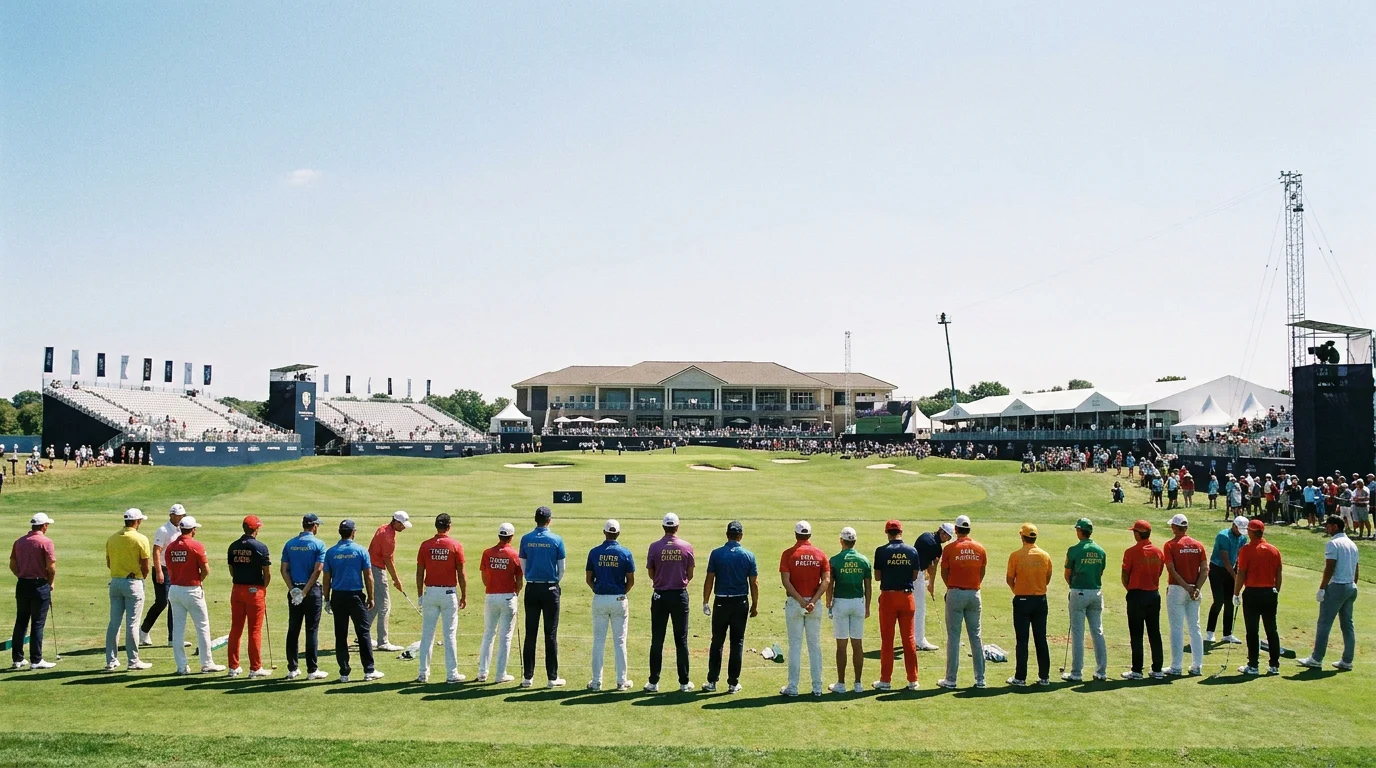
The first time I tried to bet on a LIV Golf event, I went looking for a 156-player outright market and found 48 names instead. That field size difference is not a minor detail — it fundamentally changes the maths, the odds, and the approach. Everything I had built my PGA Tour betting system around — filtering large fields, exploiting long-tail pricing, identifying overlooked players at 100/1 — had to be recalibrated for a format that more closely resembles a European Tour invitational than a standard PGA Tour event.

LIV Golf has carved out a distinctive space in the professional game, and its betting markets reflect that distinctiveness. With total PGA Tour prize money hitting $450 million for 2026 and LIV operating its own lucrative purse structure, both tours attract elite talent. For UK punters, the question is not whether LIV is “legitimate” golf — the UKGC-licensed bookmakers offering LIV markets have already answered that. The question is how to adapt your betting approach to a format with different field sizes, different scoring dynamics, and different data availability.
Which LIV Markets UK Bookmakers Offer
Coverage has expanded steadily since LIV’s launch, though it still trails PGA Tour offerings at most UK bookmakers. The standard menu for a LIV event typically includes the outright winner market, top-five and top-ten finishes, head-to-head matchups, first-round leader, and — at some operators — the team competition winner.
The team element is unique to LIV and creates a market you will not find anywhere else in professional golf. Each LIV event features 12 four-player teams competing alongside the individual competition. The best three scores from each team count toward the team total. Bookmakers price the team winner market with odds that reflect each team’s player quality, recent form, and collective consistency. I find this market interesting because team dynamics — who is carrying the team, who is the weak link — are underexplored by most punters who focus exclusively on individual results.

What you will not always find: deep in-play markets for LIV events. The PGA Tour’s handle has grown 20% year on year with live betting driving much of that expansion. LIV’s in-play offering is thinner because the data infrastructure — shot tracking, real-time statistics — is less developed than the PGA Tour’s ShotLink system. That data gap matters. Scott Warfield, the PGA Tour’s VP of Gaming, has described the tour’s approach to new formats: “What you’re going to find is a pretty nimble product development team that’s looking at all sorts of opportunities to integrate into the live feed, like single game parlays and new micro markets.” LIV is working toward similar capabilities, but the gap remains real for now.

How a 48-Player Field Reshapes Odds
Field size is the single biggest variable that separates LIV betting from PGA Tour betting. A 48-player field versus a 156-player field changes everything about how odds are structured.
In a PGA Tour event, the outright favourite might open at 8/1 or 10/1. In a LIV event with 48 players — many of whom are elite — the favourite can be as short as 4/1 or 5/1. The entire odds range compresses. Mid-field players who might be 50/1 on the PGA Tour sit at 20/1 or 25/1 in a LIV field. The tail barely extends past 66/1 for the longest shots.
That compression has practical implications. First, the overround tends to be proportionally similar, but it is spread across fewer players, which means each individual price carries slightly more margin. Second, the variance is lower. With only 48 players, the probability of a genuine outsider winning is reduced compared to a 156-player field where a hot week from an unknown can produce a shock. LIV fields are stacked with experienced professionals, and the cream rises to the top more consistently.
Third — and this is where I have found genuine edge — the absence of a cut changes the market dynamics. LIV events play 54 holes with no cut. Every player completes all three rounds (barring injury or withdrawal). That means head-to-head matchups and top-finish bets settle on full 54-hole scores for every entrant. No need to worry about one player missing the cut and the other making it. The settlement is clean, and the analysis can focus purely on scoring rather than cut-line survival. For matchup bettors, this simplification is a real advantage.

LIV vs PGA Tour: Betting Differences at a Glance
Beyond field size, several structural differences affect how I bet the two tours.
LIV uses a shotgun start, meaning all players tee off simultaneously from different holes. The PGA Tour uses traditional tee times, spreading the field across an eight-hour window. The shotgun start eliminates the weather-draw advantage that can be so significant in PGA Tour first-round markets. When everyone plays in the same conditions simultaneously, the randomness introduced by shifting weather patterns disappears. I factor this into my FRL analysis: LIV first-round leaders are determined purely by performance, not by the luck of an early tee time on a calm morning.
The 54-hole format versus 72 holes also matters. Three rounds produce more variance in final outcomes than four rounds. A single poor round has a proportionally larger impact on the final result. This means that form and consistency data need different weighting for LIV events. I prioritise 54-hole scoring averages and recent three-round trends when handicapping LIV, rather than the 72-hole metrics I use for PGA Tour betting.
Data availability remains the biggest practical difference. PGA Tour Strokes Gained data is publicly available and granular. LIV’s statistical offering is improving but still lags behind. When I bet LIV, I lean more heavily on overall form, world ranking trends, and course-style comparisons than on the detailed SG breakdowns I use for PGA Tour events. That data disadvantage affects the market too — bookmaker pricing for LIV events can be less efficient than PGA Tour pricing because the compilers have less information to work with. Inefficiency cuts both ways: it creates value opportunities, but it also means your own analysis is built on thinner data.

LIV Golf Betting FAQ
Is LIV Golf betting regulated by the UKGC?
Yes. Any bookmaker offering LIV Golf markets to UK customers must hold a UK Gambling Commission licence, just as they do for PGA Tour or DP World Tour betting. The regulation covers the operator, not the tour — so the same player protection rules, fund segregation requirements and dispute resolution processes apply to LIV bets as to any other sport.
Why are LIV Golf outright odds generally shorter than PGA Tour odds?
The primary reason is field size. A LIV event features 48 players compared to the 156 in a typical PGA Tour event. With fewer runners, the probability of any single player winning is higher, which compresses the odds range. A player who might be 25/1 in a full PGA Tour field could be 10/1 or 12/1 in a LIV field. The smaller field also reduces the number of genuine contenders, which further shortens the favourites.
