
 Available in US
Why Golf Betting Is Booming — and How to Get an Edge
I placed my first golf bet in 2017 — a tenner each way on a 66/1 outsider at The Open. He missed the cut by a mile, and I had no idea what I was doing. Nine years later, I spend my weeks building probability models, cross-referencing Strokes Gained data and tracking line movements across a dozen bookmakers. The difference between then and now is not luck. It is information.
Golf betting in the UK has changed beyond recognition over the past few seasons. The PGA Tour recorded a 20% rise in betting handle in 2025 alone — the fourth consecutive year of double-digit growth. That is not a blip. That is a structural shift in how fans engage with the sport, driven by better data, more markets and a generation of punters who grew up with in-play betting on football and are now discovering that golf offers something football cannot: four days of continuous action, 156-player fields and odds long enough to make your eyes water.
Golf betting handle on the PGA Tour has grown at 30-35% annually for several consecutive years, and Betcast coverage is expanding from 50 hours across six events in 2025 to over 400 hours across twelve events in 2026. The sport is not just growing — it is accelerating.
But bigger markets do not automatically mean smarter bets. Most of the guides ranking on the first page of Google right now were written years ago, recycling the same surface-level advice: "research the course", "consider the weather", "try each-way betting". That is not a strategy. That is a placeholder where a strategy should be.
This guide takes a different approach. Every claim is backed by data from the PGA Tour, the R&A, the UK Gambling Commission or the American Gaming Association. I have pulled in expert commentary from the people who actually shape golf's betting landscape. And I have structured the whole thing to move you from foundational knowledge — what the markets are, how odds work — to the analytical framework that separates recreational punters from those who grind out an edge over a full season.
Handle Growth
30-35% annual increase in PGA Tour betting handle, with FedEx Cup Playoffs up 50% year on year
Global Participation
108 million adults and juniors now play golf across R&A-affiliated territories — up roughly 3 million since 2023
Prize Money
The professional golf market is valued at $7.6 billion in 2025 with a projected CAGR of 7.1% through to 2033
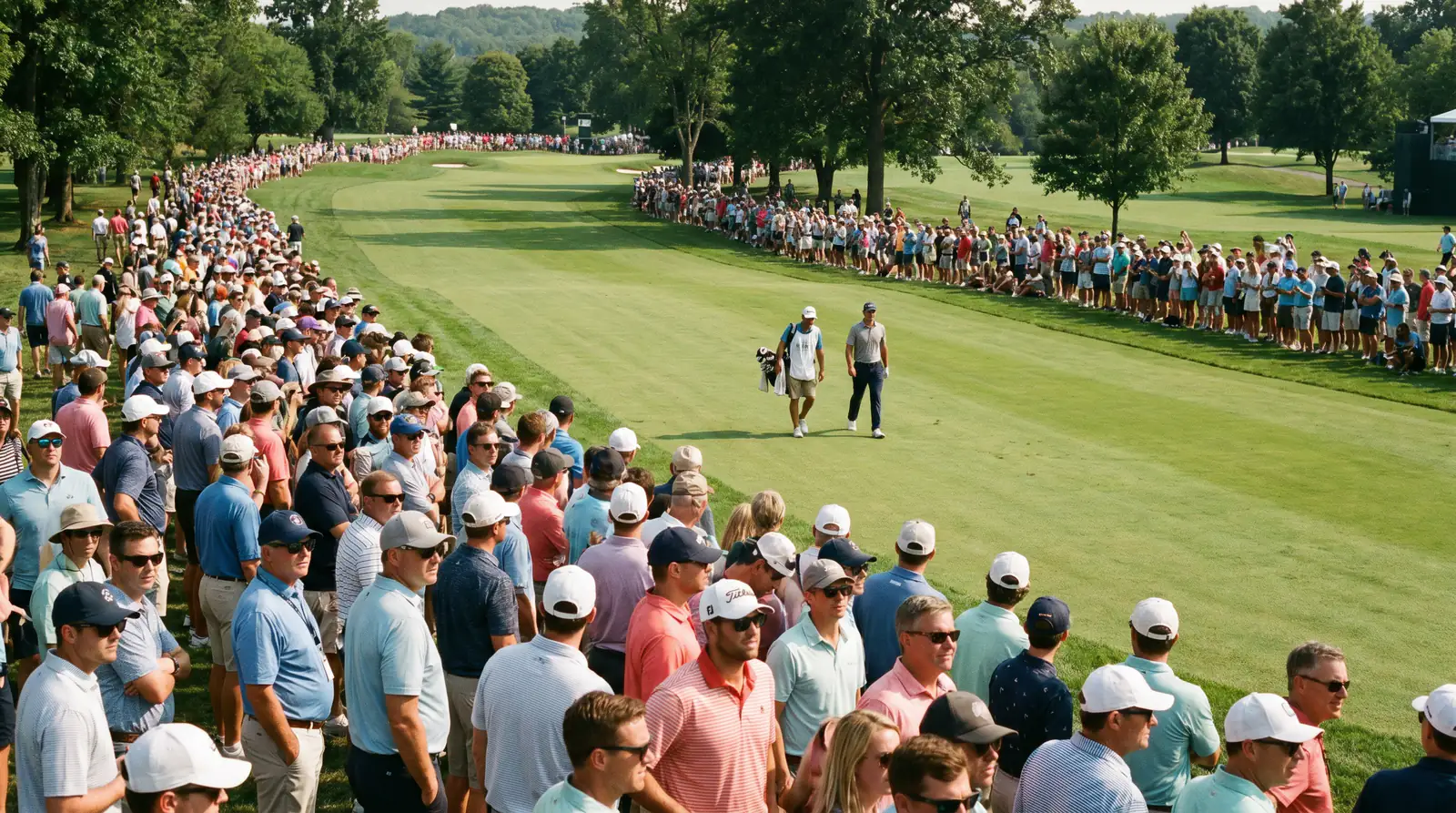
Whether you are placing your first each-way bet on The Open or refining a model that factors in SG: Approach and greens-in-regulation data, the goal is the same: make decisions based on evidence, not instinct. That is what I try to do every week, and that is what this guide is built to help you do.
The Numbers and Insights That Matter Most
- PGA Tour betting handle has grown 30-35% annually for several consecutive years, with Betcast coverage scaling to 400+ hours in 2026 — golf betting is not niche any more.
- Each-way betting remains the most effective entry point for UK punters, but comparing place terms (1/4 vs 1/5 odds) across bookmakers is non-negotiable.
- Strokes Gained data, matched to course-specific demands, replaces vague "research the course" advice with quantifiable analysis.
- The UK gambling market generates GBP 11.5 billion in GGY, and UKGC regulation provides deposit limits, self-exclusion and real protections — use them.
- Process beats picks: flat staking, a pre-bet checklist and a tracking spreadsheet will do more for your long-term results than any individual tip.
Golf Betting Markets: The Full Deck
The first time I opened a golf betting page on a major UK bookmaker, I counted nineteen different market categories for a single PGA Tour event. Nineteen. Coming from football, where the core markets fit on one screen, that felt overwhelming. It also felt like opportunity — because a sport with that many angles to attack is a sport where the bookmaker cannot be sharp on every single line.
Golf betting markets fall into a handful of families, and once you understand the logic behind each one, the full menu starts to make sense. Here is the landscape, from the broadest bets down to the most granular. For a deep breakdown of every bet type with odds examples, the complete golf betting markets guide covers each one individually.
Outright Winner
Pick the tournament winner from a field that typically numbers 156 players. Odds are long — often 10/1 to 100/1 for realistic contenders — because the probability of any single golfer winning is inherently low. The PGA Tour's total prize purse for the 2026 season sits at $450 million, with every Signature Event carrying a $20 million purse, which concentrates talent and makes these fields fiercely competitive.
Each-Way
Two bets in one: a win bet and a place bet. If your golfer finishes in the paying places (typically top five or top eight, depending on the bookmaker's terms), the place part pays out at a fraction of the win odds. This is the bread and butter of UK golf punting.
Head-to-Head Matchups
Two golfers paired against each other over 72 holes or a single round. Forget the rest of the field — all that matters is which of the two finishes ahead. This strips away the chaos of a full-field event and turns golf into a binary proposition.
Top 5 / Top 10 / Top 20 Finish
A softer landing than outright. You are betting on a player finishing inside a specified position range. Dead heat rules apply when multiple players tie on the boundary, which happens more often than newcomers expect.
First Round Leader
Who leads after 18 holes on Thursday. A one-day market with its own distinct form profile — some players consistently start fast, others grind into tournaments over the weekend.
Make / Miss the Cut
After 36 holes, roughly half the field goes home. This market asks whether a specific player survives to the weekend. It rewards knowledge of a player's consistency and recent short-term form.
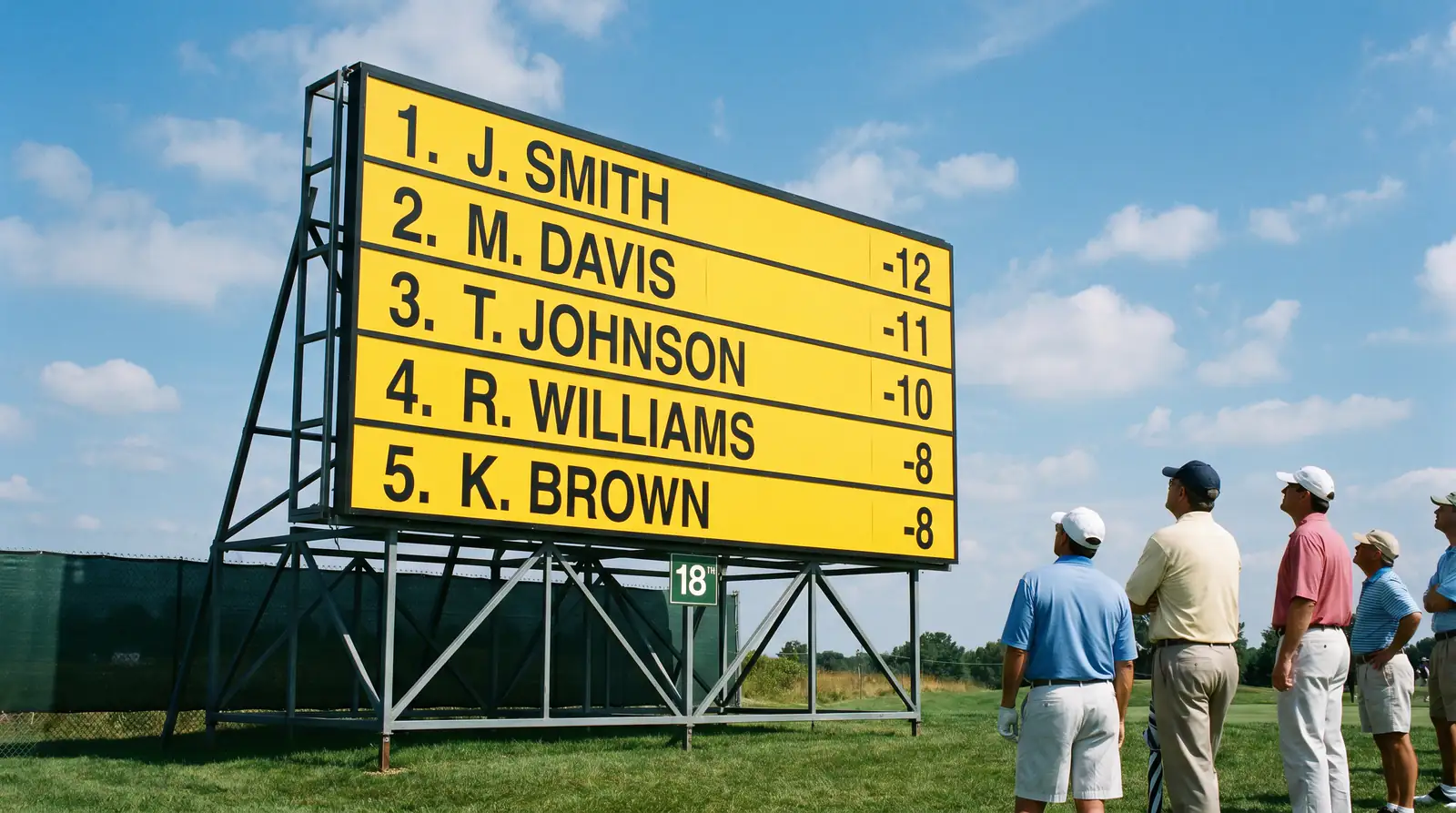
Beyond these core markets, you will find specials, props and same-game parlays that let you combine legs within one tournament. Accumulators chain selections across different events or markets. And the newest frontier — micro-markets — lets you bet hole by hole or even shot by shot during live coverage.
Ante-post — a bet placed before the tournament begins, often days or weeks in advance. Ante-post odds are typically longer because the bettor accepts the risk that a player might withdraw, in which case most bookmakers settle the bet as a loser.
Each-way (E/W) — a single stake split into two equal parts: one on the player to win outright and one on the player to finish in the designated place positions. If you bet GBP 5 each way, your total outlay is GBP 10.
The sheer number of markets is what makes golf distinctive as a betting sport. A 156-player field with four rounds, dozens of measurable performance metrics and multiple bookmakers pricing each market independently creates inefficiencies that do not exist in a two-team football match. The edge is there. The question is whether you know where to look.
Each-Way Betting in Brief
Each-way betting is the single most popular way UK punters engage with golf, and for good reason. In a sport where even the best player in the world wins maybe 15-20% of the events he enters, backing someone to win outright is a high-variance play. Each-way softens that variance by paying you if your selection finishes in the places, even without winning.
The mechanics are straightforward. An each-way bet is two separate bets of equal stake. The first is a win bet at the full advertised odds. The second is a place bet, paid at a fraction of those odds — typically 1/4 or 1/5 — if the player finishes inside the bookmaker's specified place range. The place terms vary by operator and by tournament, which is why comparing terms before you bet matters enormously.
Example: Each-Way Bet at 40/1
| Bet | Payout |
|---|---|
| GBP 5 win part at 40/1 (player wins) | GBP 200 + GBP 5 stake = GBP 205 |
| GBP 5 place part at 1/4 odds (10/1), player finishes top 5 | GBP 50 + GBP 5 stake = GBP 55 |
| Total outlay: GBP 10 | Total return if player wins: GBP 260 |
| Total return if player places but does not win: GBP 55 |
The difference between 1/4 and 1/5 place odds is not trivial. On that same 40/1 selection, 1/5 place odds pay 8/1 on the place part instead of 10/1 — that is GBP 40 plus stake rather than GBP 50 plus stake. Across a season of bets, the gap compounds. I always check terms before placing, because the cheapest-looking odds are not always the best value once you factor in the place fraction.
Place Terms at a Glance
Standard golf each-way terms typically offer five places at 1/4 odds for a full-field event. Some bookmakers extend to seven or eight places at 1/5 odds, particularly for majors and high-profile events. Extended place offers — paying out on the top eight or even top ten — are promotional tools that can shift expected value significantly. The full each-way golf betting guide walks through payout calculations at every common set of terms.
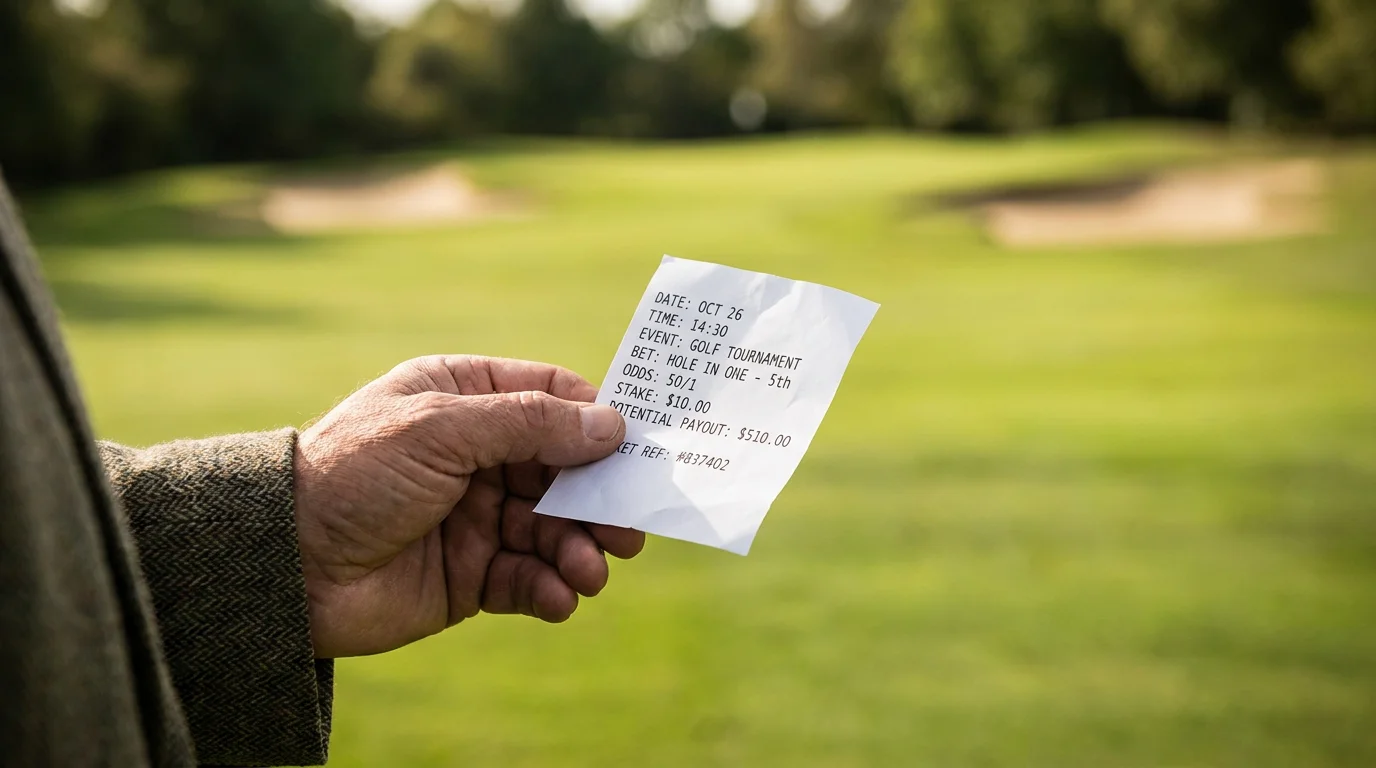
One trap I see constantly: punters who focus exclusively on the win odds and ignore the place terms. The place part is where your each-way bet survives most often, so the place fraction and the number of places paying are at least as important as the headline number.
Reading and Comparing Golf Odds
A number that changed how I think about golf odds: the global golf audience exceeded 450 million viewers in 2025. That is 450 million pairs of eyes, and a meaningful slice of them are placing bets. When that much attention flows into a market, the bookmaker's pricing becomes tighter on the favourites — but the tail of the field, those 80/1 and 100/1 outsiders, can still be wildly mispriced. Reading odds properly is how you spot the difference.
UK bookmakers display golf odds in two formats: fractional and decimal. Most British punters grew up with fractional odds, but decimal is increasingly common on betting apps and is the standard across continental Europe. Neither is better — they convey the same information in different notation.
| Feature | Fractional Odds | Decimal Odds |
|---|---|---|
| Format example | 25/1 | 26.00 |
| What it tells you | Profit relative to stake (win GBP 25 for every GBP 1 staked) | Total return per GBP 1 staked (GBP 26 back, including stake) |
| Stake included? | No — profit only | Yes — total return |
| Quick conversion | Add 1 to the fraction, express as decimal: 25/1 = 26.0 | Subtract 1, express as fraction: 26.0 = 25/1 |
| Common in | UK high-street bookmakers, racing heritage | European operators, betting exchanges, Asian markets |
| Best for | Calculating profit at a glance | Comparing across markets and calculating implied probability |
The real power of understanding odds is not the format — it is what sits underneath. Every set of odds implies a probability. If a bookmaker prices a golfer at 25/1 (26.00 decimal), the implied probability of that player winning is roughly 3.85%. But — and this is critical — the sum of all implied probabilities in a golf outright market does not add up to 100%. It adds up to something like 130-140% for a full 156-player field. That excess is the overround: the bookmaker's built-in margin.
Implied Probability from Decimal Odds
Formula: Implied Probability = 1 / Decimal Odds x 100
A golfer priced at 26.00 decimal: 1 / 26.00 = 0.0385, or 3.85%
A golfer priced at 11.00 decimal: 1 / 11.00 = 0.0909, or 9.09%
If you believe a golfer has a genuine 5% chance of winning and the bookmaker's implied probability is only 3.85%, you have found a positive expected value bet. The margin between your estimate and the market price is where the edge lives.

As betting volume surges year on year, the increased liquidity is sharpening the market at the top end. The favourite's price is usually efficient. But golf fields are enormous, and the bookmaker cannot dedicate equal modelling resources to every player from first to last. That asymmetry creates pockets of value in the middle and lower tiers of the market — precisely the territory where a disciplined punter with decent data can outperform.
For a thorough breakdown of overround calculations, line comparison techniques and how to identify when a price is moving for the right reasons, the golf betting odds guide goes considerably deeper than I can here.
Building a Golf Betting Strategy
I used to bet every single PGA Tour event. Every Thursday morning, I would scan the field, pick three or four names that "felt right" and fire off each-way bets before the first tee shot. My hit rate was dreadful. It took me two full seasons to accept that the problem was not my selections — it was the absence of a repeatable process.
A golf betting strategy is not a list of tips. It is a framework: a set of filters you apply consistently, week after week, to decide which tournaments deserve your attention, which players fit the course, and how much of your bankroll to risk. Scott Warfield, the PGA Tour's Vice President of Gaming, put it well when he said the Tour feels "pretty confident based on the stickiness" of engagement that once people get into golf betting properly, they stay. The challenge is getting past the trial-and-error phase without emptying your account.
The framework I use breaks down into four stages. First, tournament selection: not every event is worth betting. A 156-player no-cut invitational plays very differently from a Signature Event with 70 elite players and a $20 million purse. The field composition changes the maths. Second, field analysis: narrowing a triple-digit field to a shortlist of eight to twelve contenders using performance data rather than reputation. Third, data-driven research — Strokes Gained metrics, recent form trends, course history — to rank those contenders against the specific demands of that week's venue. Fourth, staking: deciding how much to allocate based on your confidence level and the available odds.
Do
- Specialise in one or two tours rather than spreading thin across every professional circuit
- Track every bet in a spreadsheet — stake, odds, market, result, closing line — so you can audit your process quarterly
- Compare odds across at least three bookmakers before placing, because golf lines can vary by 20-30% on mid-tier players
- Set a weekly budget that you treat as an operating cost, not as money you expect to get back immediately
Don't
- Bet every tournament on the schedule — selectivity is a strategy in itself
- Chase a losing week by doubling stakes the following week, no matter how "due" a winner feels
- Rely exclusively on world rankings as a proxy for current form — they lag real performance by weeks or months
- Ignore the cut line when building each-way bets — a player who misses the cut returns zero on both parts
The reason most golf punters lose long-term is not that they pick the wrong players. It is that they bet too many events, stake too aggressively and never review what went wrong. A structured approach will not guarantee winners — nothing can in a 156-player field — but it will stop you from hemorrhaging money on the weeks when the variance is against you.
Before You Bet
- Have I checked the field list and confirmed my selections are playing?
- Have I reviewed course-specific Strokes Gained data for my shortlist?
- Have I compared odds at a minimum of three UK-licensed bookmakers?
- Does my total stake for this event sit within my weekly budget?
- Am I betting because the data supports it, or because I want action?

The full golf betting strategy breakdown walks through each of these four stages in detail, including a weekly routine I follow myself and the most common strategic errors that drain bankrolls over time.
Course Analytics: Beyond "Research the Course"
Every competitor guide I reviewed while building this site says some version of "research the course". None of them tells you what that actually means in practice. Research the course how? Look at a photo of the 18th hole? Read the Wikipedia page? That advice is functionally useless without specifying which data points matter.
Course analytics for golf betting starts with Strokes Gained, the metric that revolutionised how professional golf performance is measured. Strokes Gained breaks a player's performance into discrete categories and measures each against the field average, which means you can quantify exactly where a player gains or loses strokes relative to the competition. The key categories are Off-the-Tee, Approach, Around-the-Green and Putting. Each category maps to specific course demands.
Strokes Gained Categories and What They Reveal
SG: Off-the-Tee measures driving performance — distance and accuracy combined. Courses with wide fairways and reachable par fives reward distance; tight, tree-lined tracks reward accuracy. SG: Approach measures iron play into greens and is the single strongest predictor of tournament success in most statistical models. SG: Around-the-Green covers chipping, pitching and bunker play within 30 yards of the green. SG: Putting measures performance on the greens, where surface type (bent, Bermuda, Poa annua) dramatically affects which players thrive.
The practical application is matching player strengths to course demands. A links course with firm, windswept conditions and deep pot bunkers favours a very different skill set from a long, soft parkland course with small, elevated greens. Before I bet on any tournament, I build a simple matrix: what does this course demand (long driving? precision approach play? scrambling?), and which players in the field rank highest in those specific SG categories over the last twelve to twenty-four events?
A standard PGA Tour event features 156 players in the starting field. After the 36-hole cut, roughly half go home. That means your outright pick has to outperform 155 opponents over 72 holes — which is why course-specific analysis matters more in golf than in almost any other betting sport.

The combination of a course-demand profile and player-specific Strokes Gained data is what turns a vague "he plays well on links" into a quantified assessment. It is not infallible — no model is — but it replaces opinion with evidence, and evidence compounds over a full season of bets in a way that gut instinct simply does not.
In-Play and Micro-Market Betting
Three years ago, live golf betting meant refreshing a leaderboard and placing an adjusted outright bet mid-round. The markets were slow, the options were limited, and the experience felt like an afterthought bolted onto a pre-tournament product. That has changed dramatically, and if you are not paying attention to in-play golf, you are ignoring the fastest-growing segment of the market.
The PGA Tour is expanding its live Betcast coverage from roughly 50 hours across six events in 2025 to more than 400 hours across twelve events in 2026. That is not an incremental improvement — it is an eightfold increase in live betting content integrated directly into tournament broadcasts. The Tour's VP of Gaming, Scott Warfield, framed the ambition clearly: they are trying to grow the pie and get more people engaged around the sport, and the stickiness they saw in 2025 convinced them to scale aggressively.
Over 400 hours of PGA Tour Betcast coverage in 2026 — up from 50 hours the previous year. Live golf betting is no longer a side product. It is becoming the primary engagement layer for a new generation of golf fans.
Live golf betting works differently from pre-tournament betting in several important ways. Odds update continuously as the tournament progresses, reflecting real-time leaderboard changes, weather conditions and momentum shifts. A player who birdies three of his first five holes will see his outright odds shorten rapidly; a player who double-bogeys a par three will drift. The speed of these adjustments varies by bookmaker and by market — some operators update within minutes, others lag — and that latency creates short windows of value for punters who are watching the action live.
Micro-markets take this a step further. Hole-by-hole betting — will this player birdie the next hole, what will his score be on the par five, who wins this individual hole in a group — has emerged as a new category powered by shot-tracking technology and real-time data feeds from providers like Sportradar. Some operators now offer 3D shot tracking overlaid with live odds, turning each hole into its own mini-event.

The risk with live betting, and I say this from expensive personal experience, is that the pace encourages impulsive decisions. Pre-tournament betting gives you days to research. In-play betting gives you seconds. Without a clear set of triggers — situations where you know the odds are mispriced because you have done the preparation beforehand — it is very easy to bet reactively and lose discipline. The in-play golf betting guide covers timing strategies, common mistakes and how the data infrastructure behind live markets actually works.
The UK Golf Betting Landscape in Numbers
I get asked regularly whether golf betting is "big enough" to justify the analytical effort. People assume it is a niche corner of the UK betting market, overshadowed by football, horse racing and tennis. The data tells a different story — not because golf dominates the handle figures, but because the intersection of a booming participation base and an expanding betting infrastructure creates conditions that barely existed five years ago.
The UK gambling industry generated GBP 11.5 billion in Gross Gaming Yield between April 2023 and March 2024, a 5.7% year-on-year increase. That is the entire regulated market — online and offline, from football accumulators to casino slots. Within that, online betting accounts for the lion's share, with 12.7 million active online gambling accounts per month recorded in the most recent quarterly data. Sports betting is a central pillar: roughly 24% of UK adults bet on sport online at least once a month, and a further 9% place sports bets on a less regular basis.
GBP 11.5bn
Total UK gambling industry GGY (April 2023 - March 2024), up 5.7% year on year
12.7m
Average monthly active online gambling accounts in the UK (Q3 2025/26)
108m
Adults and juniors playing golf across R&A-affiliated markets globally — a base of potential bettors that continues to expand
What makes golf particularly interesting for UK punters is the participation trend. The R&A's latest global report puts the total at 108 million golfers across its affiliated territories, with roughly 3 million more than the previous count. Phil Anderton, the R&A's Chief Development Officer, highlighted the significance: the sport has added 13 million on-course players since 2016 across R&A-affiliated markets. Europe alone accounts for 20.3 million adult participants, with England contributing 4.2 million on-course players.
Those participation numbers matter for betting because golf fans who play the game bring a deeper understanding of course dynamics, shot difficulty and scoring patterns. They are not casual spectators guessing which name they recognise — they have context that translates into more informed wagering. The World Handicap System in England recorded 5.75 million scorecards submitted in the first half of 2025 alone, a 29% jump on the previous year. More rounds played means more engaged fans, which means a more liquid and more sophisticated golf betting market.
36% of on-course golfers in England started through alternative formats — driving ranges, simulators or adventure golf — before ever playing a full 18 holes. The pathway into golf has diversified, and the betting market is following the same trajectory.

The UK market is also navigating structural changes. Stakes at unlicensed operators have risen sharply — from GBP 5 billion in 2019 to GBP 16.6 billion in 2025 — which means the regulated share of the market is under pressure even as absolute numbers grow. For punters, that reinforces the importance of betting with UKGC-licensed operators who are subject to oversight, dispute resolution and player protection requirements.
UKGC Regulation and Player Protections
The Gambling Act 2005 remains the legislative foundation for UK betting, but the regulatory landscape has shifted substantially through secondary legislation, licence conditions and Gambling Commission enforcement actions. If you are betting on golf with a UK-licensed operator, you are protected by one of the strictest regulatory frameworks in the world — and it is worth understanding what that protection actually looks like in practice.
The UK Gambling Commission licenses and oversees every legal online bookmaker operating in the British market. Licence Conditions and Codes of Practice — known as LCCP — set minimum standards for customer interaction, responsible gambling tools, marketing practices and anti-money-laundering procedures. Operators that breach these conditions face fines, licence reviews or, in the most serious cases, revocation.
Key Player Protection Tools
Stake limits: Since April 2025, online slots carry a maximum stake of GBP 5 for adults and GBP 2 for those aged 18-24. While this applies to slots rather than sports betting directly, it signals the direction of regulatory travel. Deposit limits: All licensed operators must allow customers to set daily, weekly or monthly deposit caps. Self-exclusion: GAMSTOP provides a single registration point to self-exclude from all UKGC-licensed online operators simultaneously, for a minimum of six months. Reality checks: Operators must offer session time alerts and activity statements showing net spend.
The regulated sector supports over 109,000 jobs, contributes GBP 6.8 billion to the UK economy and generates GBP 4 billion in tax revenue. That economic weight gives the industry lobbying power, but it also means the government has a vested interest in keeping the regulatory framework credible. For individual punters, the practical takeaway is straightforward: always bet with a UKGC-licensed operator, use the protection tools available to you, and understand that the regulatory environment is tightening, not loosening.
One development worth tracking is the ongoing conversation around prediction markets and how they fit within the existing licensing framework. The Gambling Commission has signalled interest in clarifying the boundary between regulated betting and unregulated prediction platforms, which could affect the range of golf-related propositions available to UK bettors in coming seasons.

Integrity and Fair Play in Golf Betting
When I started covering golf betting seriously, integrity was a footnote — something mentioned in passing at Tour press conferences but never central to the betting conversation. That has changed. As handle has grown and micro-markets have brought shot-level wagering into the picture, the PGA Tour has moved from passive monitoring to active enforcement, and for good reason.
PGA Tour Commissioner Jay Monahan established the Tour's Integrity Program on the principle that the bedrock of PGA Tour competition is the honesty of its members. That is not just rhetoric. The Tour now partners with U.S. Integrity and Genius Sports for proactive monitoring of betting activity across its events, and it has deployed ProhiBet — a geofencing and monitoring tool from IC360 — to ensure that players, caddies, referees and tournament staff are not placing bets on Tour events. The system works in real time, flagging anomalies and cross-referencing them against official data feeds.
No sport is fully immune from the potential influence of gambling. The PGA Tour's Integrity Program exists precisely because the growth of golf betting demands a proportionate response — protecting competition from betting-related issues is not optional when handle grows at double digits year after year.
For UK punters, integrity infrastructure matters because it underpins market reliability. If you are betting on a head-to-head matchup or a first-round-leader market, you need confidence that the competitive outcome is genuine. The PGA Tour's monitoring, combined with Sportradar's official data agreements covering the DP World Tour and The Open, creates a chain of custody from shot to data feed to odds update that is traceable and auditable.
Phil Anderton at the R&A captured the scale of what is at stake when he noted that there are now 13 million more golfers playing on-course since 2016 across R&A-affiliated markets. A sport growing that fast attracts money, and money attracts scrutiny. The integrity systems in place today are more robust than anything that existed five years ago, but they are also chasing a target that keeps moving as new markets and betting formats emerge.

From a practical standpoint, integrity also shapes which markets are available. Some events — particularly on smaller tours with less comprehensive monitoring — attract fewer betting markets because bookmakers and data providers cannot guarantee the same level of oversight. When you see a rich menu of in-play and micro-markets at a PGA Tour Signature Event, part of what you are seeing is the product of that integrity investment.
Responsible Gambling Essentials
I have seen sharp, data-literate bettors blow through their bankroll in a single major championship week because they abandoned the discipline that made them profitable in the first place. Responsible gambling is not a disclaimer I tack on because the regulations say I should. It is the foundation that every other section of this guide depends on. Without it, the strategy, the analytics and the market knowledge are worthless.
Golf's four-day tournament format creates unique psychological traps. After two rounds of watching your outright selection slide down the leaderboard, the temptation to chase — doubling down on in-play bets to "recover" the week — is intense. The continuous nature of the sport, with hours of live coverage and micro-markets refreshing hole by hole, can turn a planned single bet into a full afternoon of impulsive wagering. Recognising these patterns in yourself is the first and most important skill in golf betting.
Do
- Set a weekly and monthly betting budget before the season starts and treat it as a hard ceiling, not a guideline
- Use the deposit limit, loss limit and session timer tools that every UKGC-licensed bookmaker is required to offer
- Keep a complete record of every bet — winning and losing — so you can see your actual net position rather than a selective memory of big wins
- Take breaks between tournaments; not every week on the schedule deserves your attention or your money
Don't
- Bet with money allocated for essentials — rent, bills, savings are not a bankroll
- Chase losses during a tournament by switching to higher-variance markets you had not planned to bet
- Dismiss the idea that responsible gambling applies to you because you consider yourself a "sharp" bettor — the smartest people in any room can still develop unhealthy patterns
- Ignore the resources available if betting stops feeling like entertainment and starts feeling like obligation

If you recognise that your relationship with betting has changed — if you are spending more than you can afford, hiding bets from people close to you, or feeling anxious when you are not wagering — the support infrastructure in the UK is comprehensive. GAMSTOP offers self-exclusion across all licensed online operators. The National Gambling Helpline provides confidential support. GamCare delivers free counselling and practical tools. These services exist because they are needed, and using them is not a sign of weakness. It is the same discipline that this entire guide is built on: making evidence-based decisions, including the decision to stop.
Golf Betting FAQ
How does each-way betting work in golf?
An each-way bet is two separate bets of equal stake. The first part backs your player to win the tournament outright at the full odds. The second part backs the player to finish in the paying places — typically the top five or top eight, depending on the bookmaker and the event — at a fraction of the win odds, usually 1/4 or 1/5. If you stake GBP 5 each way, your total outlay is GBP 10. If the player wins, both parts pay out. If the player finishes in the places but does not win, only the place part pays. If the player finishes outside the places, both parts lose. Each-way is the most popular golf betting format in the UK because it gives you two chances of a return from a single selection in a sport where outright winners are inherently hard to pick.
What are the most common golf betting markets?
The core golf betting markets are outright winner (picking the tournament champion from the full field), each-way (win plus place), top 5/10/20 finish, head-to-head matchups (one player against another over a round or the full tournament), first round leader, and make or miss the cut. Beyond these, you will find specials and props such as top nationality, group matchups (three-balls), same-game parlays that combine multiple legs within one event, accumulators spanning different tournaments, and the growing category of micro-markets that offer hole-by-hole and shot-level betting during live coverage. Not every market is available for every event — the range depends on the tournament's profile and the bookmaker's product.
What happens in a dead heat in golf betting?
A dead heat occurs when two or more players tie for a position that is on the boundary of a paying market. For example, if you back a player in a top-five finish market and three players tie for fifth place, dead heat rules apply. Your payout is reduced proportionally: the bookmaker divides your bet by the number of players sharing the relevant positions and pays out accordingly. In a two-way dead heat, your effective stake is halved. In a three-way dead heat, it is divided by three. Dead heats are more common in golf than many punters expect, because ties at the cut line, at place boundaries and even for the lead are regular occurrences in a 156-player field. Understanding dead heat maths before you bet helps you assess the true expected value of place-related markets.
How do I find value in golf betting odds?
Value exists when the probability you assign to an outcome is higher than the probability implied by the bookmaker's odds. Finding it requires three things: a method for estimating your own probabilities (using Strokes Gained data, course form, recent results and field composition), an understanding of implied probability (which you derive by converting decimal or fractional odds into percentages), and the discipline to compare your numbers against the market. If you believe a player has a 5% chance of winning and the bookmaker prices him at 3.8% implied probability (roughly 26.00 decimal), you have a positive expected value bet. The edge is usually small, which is why staking discipline and volume over a full season matter more than any single selection.
What does "top nationality" mean in golf betting?
The top nationality market asks which country will produce the highest-finishing player in a given tournament. If you back "England", your bet wins if the best-placed English player finishes ahead of the best-placed player from every other country in the field. It is a niche market that rewards knowledge of international field composition and is particularly interesting at majors and World Golf Championship events where the field is geographically diverse. Dead heat rules can apply if the top finishers from two countries share the same position, and the market is not always available at every bookmaker or for every event.
Can you bet on golf in-play during a tournament?
Yes, and the range of in-play markets is expanding rapidly. UK-licensed bookmakers offer live outright, matchup and top-finish markets that update as the tournament progresses. The PGA Tour's Betcast integration, which is scaling to over 400 hours of live betting coverage in 2026, provides real-time odds overlaid on tournament broadcasts. Micro-markets now let you bet hole by hole — on hole winners, hole scores and even shot outcomes — powered by ShotLink tracking technology and official Sportradar data feeds. The pace of in-play golf betting is slower than live football or tennis because each shot takes time, but the markets move quickly after significant leaderboard changes, and punters who are watching live have an informational advantage over those who are not.
What is the best bankroll strategy for golf betting?
The most sustainable approach for most punters is flat staking: risking a fixed percentage of your starting bankroll on each bet, typically between 1% and 3%. Golf is a high-variance sport — even the best selections win infrequently — so your staking plan needs to survive long losing runs without exhausting the bankroll. More advanced bettors use a fractional Kelly criterion, which adjusts stake size based on the perceived edge on each bet, but this requires reliable probability estimates and the discipline to apply the formula consistently. Whichever method you choose, the non-negotiable principle is the same: never stake more than you can afford to lose, and never increase your unit size to chase losses from a previous tournament.
Sharpen Your Edge
Nine years of golf betting analysis have taught me one thing above all others: the punters who last are not the ones who pick the most winners. They are the ones who build a process and stick to it. They compare odds. They track their bets. They understand that a 156-player field means variance is the default, not the exception, and they size their stakes accordingly.
The UK golf betting market is in a genuinely unusual position right now. Participation in the sport is at record levels globally, feeding a growing audience of informed bettors who understand course dynamics, shot difficulty and scoring context. The PGA Tour is investing in betting integration at a pace that would have seemed absurd five years ago. Data that was once locked behind paywalls is increasingly accessible. And the sheer range of markets — from outright winners to hole-by-hole micro-bets — means there are more angles to exploit than ever before.
But more opportunity also means more noise. The guides and tipsters competing for your attention will multiply. The promotional offers will get louder. The temptation to bet every event, every market, every angle will intensify. Your edge is not in doing more. It is in doing less, better, with evidence behind every decision.
Start with the fundamentals — understand the markets, read the odds, learn the place terms. Then build from there: layer in course analytics, develop a staking plan, track everything. The data is there. The markets are deep. The question is whether you are willing to do the work.
