
 Available in US
Content
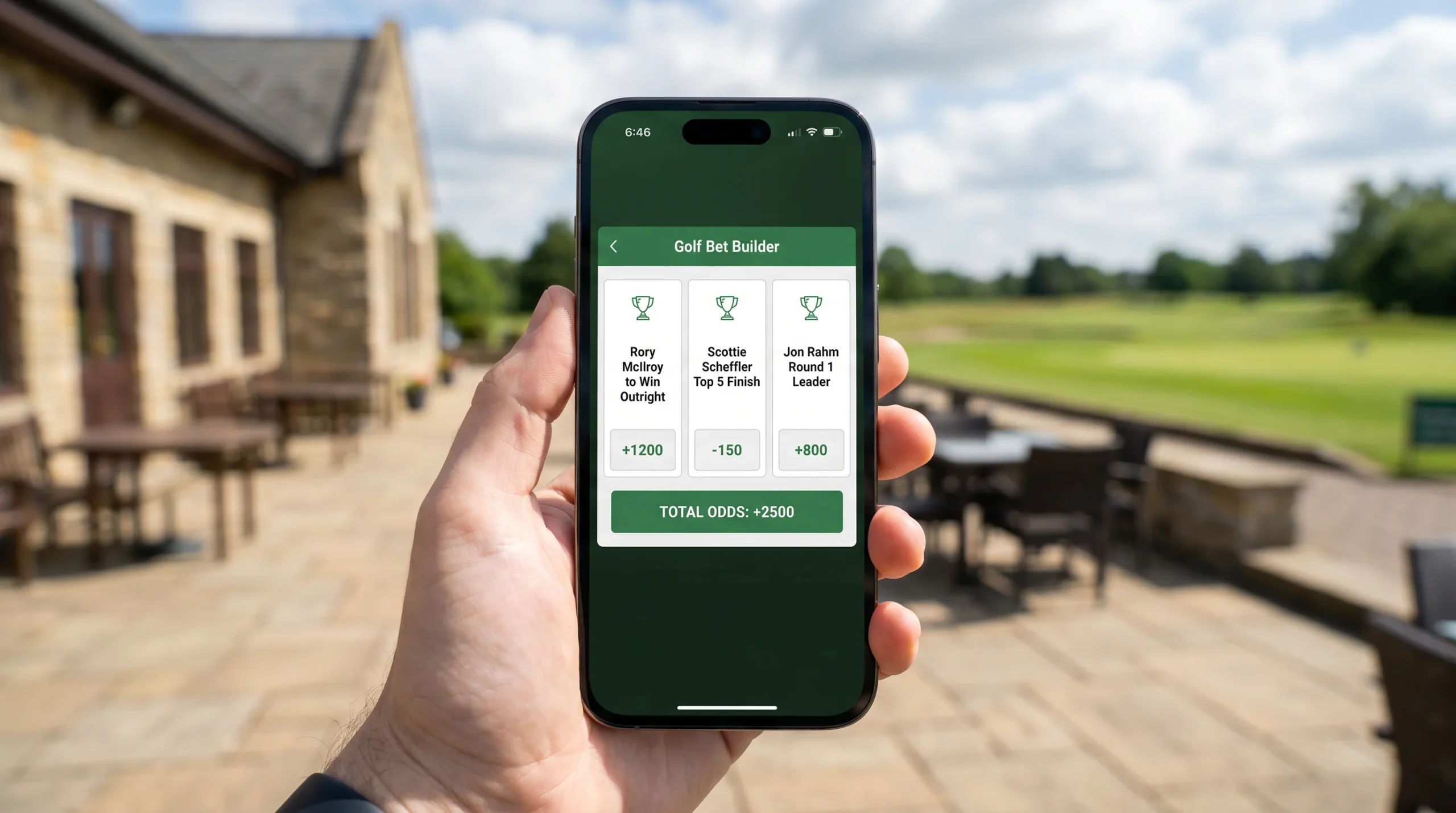
One Tournament, Multiple Legs, One Bet Slip
The first time I built a golf same-game parlay, I did not fully understand what I was buying. I combined a top-ten finish with a first-round under-par score for the same player, and the combined odds looked enormous. When the bet lost — the player finished 12th after a strong opening round — I realised the correlation between those two legs meant the true probability was much higher than the headline odds suggested. That experience taught me that SGPs are not just bigger accumulators. They are a different product entirely, and treating them like traditional multiples is the fastest way to lose money.
A same-game parlay combines two or more selections from the same event on a single bet slip. Unlike a standard accumulator, where each leg must be independent, an SGP explicitly allows correlated outcomes. The PGA Tour expanded its Betcast from 50 hours across six tournaments in 2025 to more than 400 hours covering twelve tournaments in 2026, and that expansion has fuelled the growth of in-play SGPs alongside the pre-tournament versions. Hard Rock Bet has launched micro-markets for PGA Tour events including hole winner and hole score, with 3D shot tracking across ten US states — all of which feeds into the SGP ecosystem by creating more combinable markets.
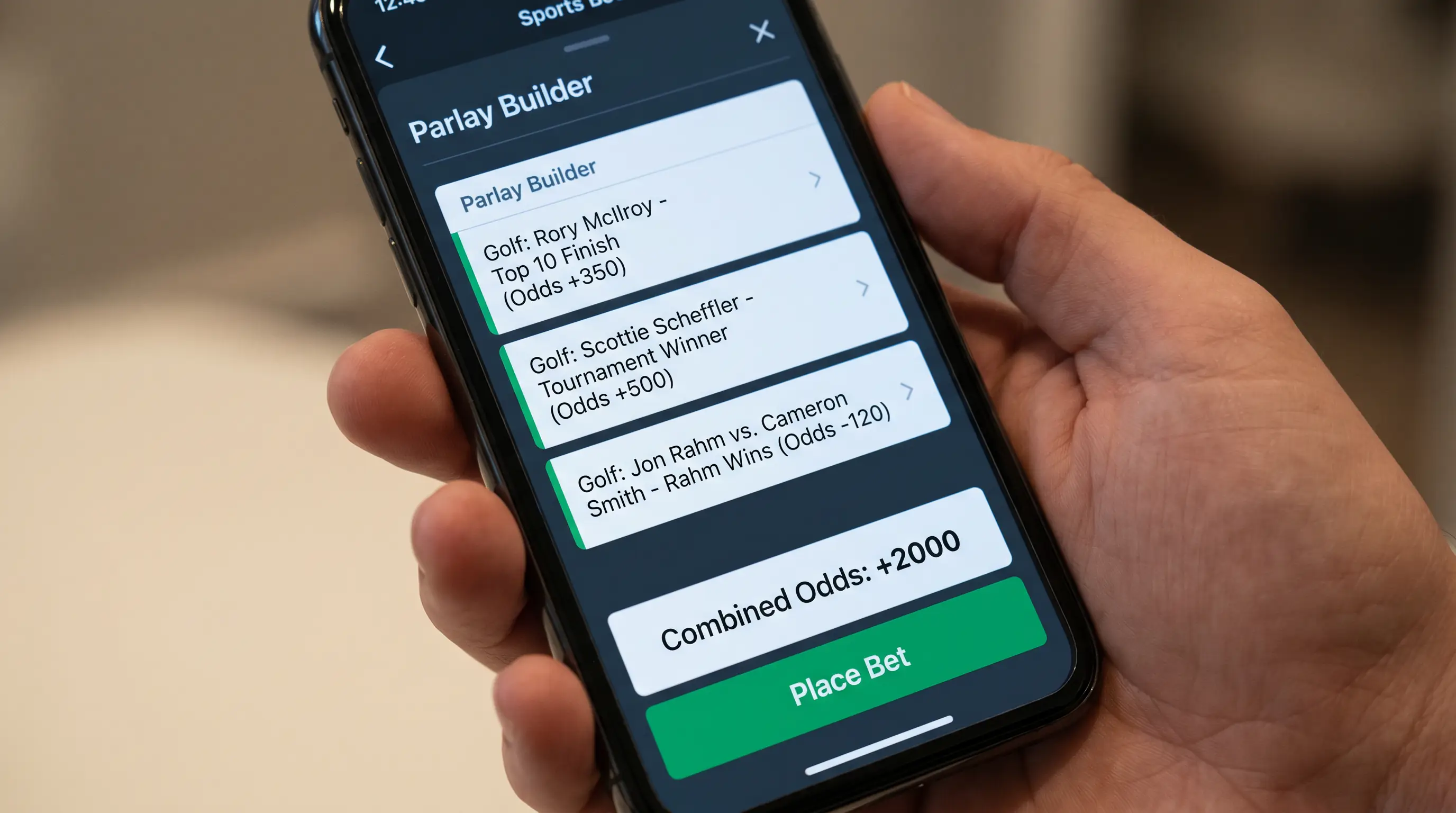
Which Legs Combine Well in a Golf SGP
The art of building a golf SGP is understanding which legs add genuine value and which merely inflate the price without improving your edge. I have settled on a few combinations that work consistently.
A top-twenty finish combined with a round-one scoring prop is my go-to structure. The top-twenty finish is the anchor: it covers a wide range of outcomes and has a relatively high base probability (roughly 13% for a mid-tier player in a 156-player field). The round-one prop — say, the player to shoot under par in round one — is the kicker. These two legs correlate positively: a player who starts well on Thursday is more likely to finish in the top twenty. The bookmaker adjusts the combined price downward to account for that correlation, but the adjustment is not always perfectly efficient. When my analysis gives the player a higher probability of both outcomes than the SGP price implies, I have a bet.
Another structure I favour: a matchup win combined with a top-ten finish. If I believe Player A will beat Player B in their head-to-head and also finish in the top ten, those outcomes overlap significantly. A top-ten finisher almost always beats a player who finishes 40th. The SGP pricing accounts for this, but the degree of adjustment varies between bookmakers — and that variance is where value hides.

What I avoid: combining low-probability legs that have minimal correlation. “Player X to win outright and to have the most birdies in round three” sounds interesting, but the correlation is weaker than you think (a player can win a tournament without leading in birdies on any single day), and the combined probability is tiny. The SGP should reinforce a coherent narrative about the player’s performance, not stack unrelated long shots.

Correlation and Pricing: What Bookmakers Adjust
When you build an SGP, the bookmaker does not simply multiply the individual odds together. If they did, the combined price would be far too generous, because correlated legs make the joint probability higher than the product of individual probabilities. Instead, the bookmaker applies a correlation model that reduces the combined odds.
Here is a simplified example. Suppose Player A has a 20% chance of finishing in the top ten (4/1) and a 50% chance of making a birdie on hole one (1/1). If these events were independent, the joint probability would be 10% (20% times 50%), giving combined odds of 9/1. But they are not independent — a player who starts with a birdie is in a slightly better position for a top-ten finish. The true joint probability might be 12%. The bookmaker prices the SGP closer to 7/1 instead of 9/1, pocketing the difference.
The key insight: the bookmaker’s correlation model is not perfect. It uses historical data and statistical models, but golf has so many variables — weather, course conditions, player form fluctuations — that the models leave gaps. Those gaps are small, but over a season of SGP bets, they accumulate. My approach is to calculate my own rough joint probability for each SGP I consider and compare it to the offered price. If my number exceeds the implied probability by a meaningful margin — at least 3–5 percentage points — the SGP goes on the slip.

SGP vs Traditional Acca
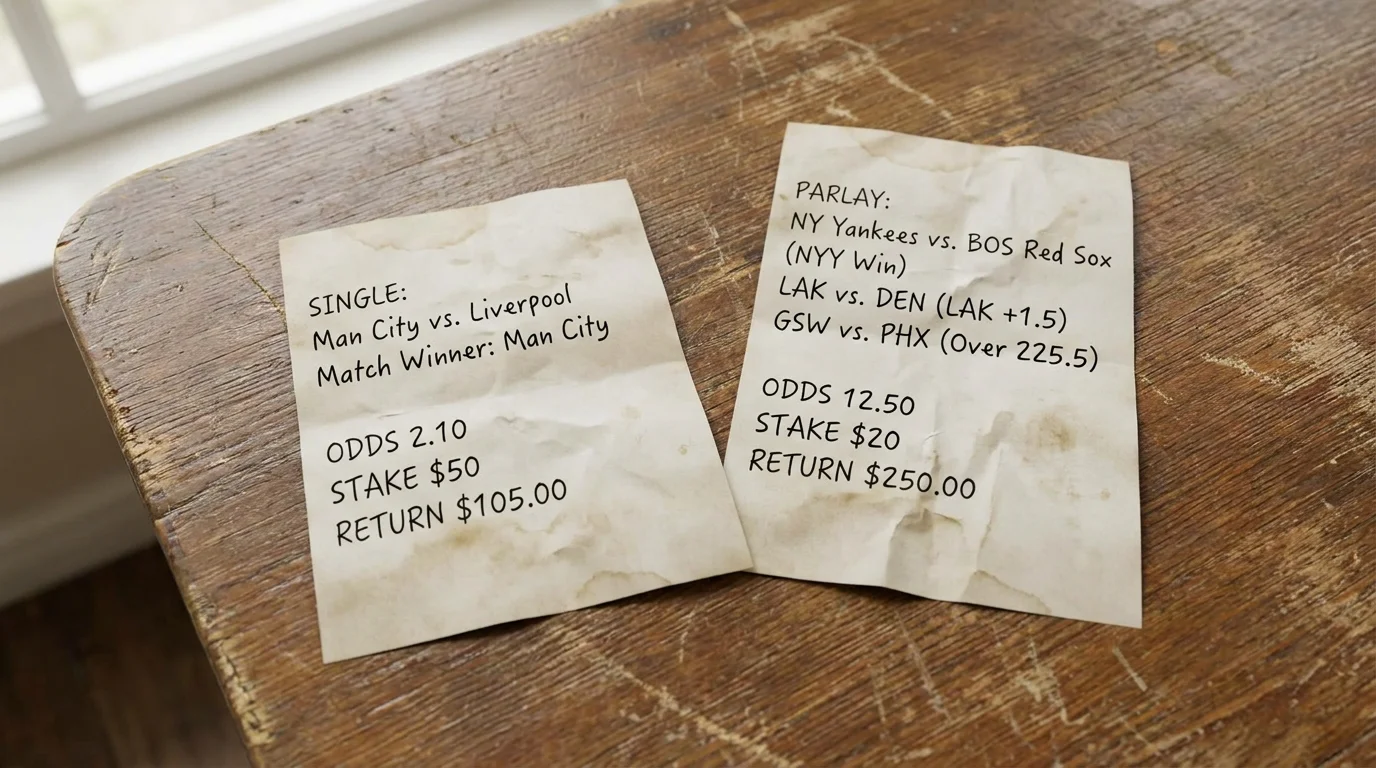
The practical difference comes down to correlation. A traditional golf accumulator requires independent legs — different matchups, different players, different events. An SGP lets you stack opinions about the same player in the same event. That means an SGP is a deeper bet on a single thesis, while an acca is a broader bet across multiple theses.
I use SGPs when I have strong conviction about one player’s trajectory for the week — when the course fits their game, their form is peaking, and I want to express that view across multiple dimensions. I use accas when my edge is spread across different pairings or different events. Both instruments serve a purpose, and neither should consume more than a small fraction of the weekly bankroll. The margin compounds in both formats, but the margin on an SGP is often less transparent because the correlation adjustments are opaque. If you cannot estimate the joint probability yourself, the SGP is a black box — and betting into a black box is gambling without edge.
Same-Game Parlay FAQ
Do all UK bookmakers offer golf same-game parlays?
No. SGP availability for golf varies between operators. Some major UK-licensed bookmakers offer a dedicated SGP builder for PGA Tour events and majors, while others limit the feature to football and other sports. The range of combinable markets also differs — one bookmaker might allow top-finish and scoring props, while another restricts combinations to matchup-style legs. Check the bet builder section of your bookmaker’s golf page to see what is available.
Can I add a same-game parlay to a wider accumulator?
Some bookmakers allow you to fold an SGP into a larger accumulator as a single leg. This means your SGP functions as one selection within a multi-event acca. The combined odds can be substantial, but the compounding margin is severe — the SGP already carries a correlation-adjusted margin, and adding further acca legs multiplies that margin further. I treat these hybrid bets as pure entertainment with minimal stakes.
